
Summarize this article with:
Walk into any taqueria and you’ll face a choice: corn or flour gorditas.
Most people pick based on habit, not knowing how different these thick Mexican flatbreads actually are.
One’s been around since pre-Hispanic times with bold, earthy flavor. The other arrived after Spanish colonization, offering soft, buttery comfort.
The texture, taste, nutrition, and even the fillings that work best change completely depending on which you choose.
This guide breaks down everything from masa harina versus wheat flour dough to cooking temps, regional traditions, and which gordita fits your meal.
You’ll know exactly when to reach for corn and when flour makes more sense.
Corn Gorditas
What are Corn Gorditas
Corn gorditas are traditional flatbreads made from masa harina, water, and salt.
They’re shaped into thick rounds and griddle-cooked until they puff, forming a pocket inside.
The nixtamalized corn gives them a distinctive earthy flavor that’s been part of Central Mexican cuisine for centuries.
Corn Gordita Ingredients
Masa harina is the foundation (nixtamalized corn flour that’s different from regular cornmeal).
You’ll need water and salt at minimum.
Many cooks add lard or vegetable oil for richer texture and flavor.
The dough should feel like Play-Doh when properly mixed.
How to Make Corn Gorditas

Mix masa harina with warm water and salt until you get a soft, pliable dough.
Let it rest 15-20 minutes so the masa fully hydrates.
Divide into golf ball-sized portions and flatten to about 1/2 inch thick (thicker than regular tortillas).
Cook on a medium-high griddle (375-400°F) for 2-3 minutes per side.
They’ll puff up when ready, creating that signature pocket.
Split them open while still warm and stuff with your choice of fillings like carnitas, beans, or cheese.
Corn Gordita Texture

The exterior develops a slight crust with characteristic brown spots from the griddle.
Inside, the texture is dense but tender, not fluffy like bread.
They’re sturdy enough to hold heavy fillings without falling apart.
The pocket creates a natural separation that makes stuffing easy.
When fresh, they’re slightly chewy with some give.
Corn Gordita Taste
Corn masa brings an earthy, slightly sweet flavor.
Nixtamalization adds depth you won’t find in regular cornmeal products.
There’s a mineral quality that pairs incredibly well with rich meats and spicy salsas.
The taste is more assertive than flour versions, standing up to bold fillings.
Some describe it as nutty with subtle sweetness.
Nutritional Content of Corn Gorditas

One corn gordita (about 100g) contains roughly:
- 210-240 calories
- 42-45g carbohydrates
- 4-5g protein
- 2-4g fat (depending on added oil or lard)
- 3-4g fiber
Nixtamalized corn provides more available niacin and calcium than untreated corn.
They’re naturally gluten-free, making them suitable for celiac diets.
The fiber content is higher than wheat flour versions.
Best Fillings for Corn Gorditas
The corn flavor demands fillings that can hold their own.
Traditional options:
- Chicharrón in salsa verde
- Picadillo (seasoned ground beef)
- Carnitas with onion and cilantro
- Rajas con crema (poblano strips with cream)
- Frijoles refritos with queso fresco
The earthy masa taste works best with bold, well-seasoned ingredients.
Avoid delicate fillings that get lost against the corn’s assertive flavor.
Taco toppings like fresh cilantro, diced onion, and lime wedges complement them perfectly.
Flour Gorditas
What are Flour Gorditas
Flour gorditas originated in Northern Mexico where wheat cultivation was more common.
They’re made with wheat flour, baking powder, fat, and liquid.
The result is softer and more pliable than corn versions.
They’re popular in border regions and Tex-Mex cuisine.
Flour Gordita Ingredients
All-purpose or wheat flour forms the base.
Baking powder provides lift and creates flaky layers.
Fat is crucial (lard, shortening, or butter) for tenderness and flavor.
Salt for seasoning, plus water or milk to bind.
The fat-to-flour ratio affects final texture significantly.
How to Make Flour Gorditas
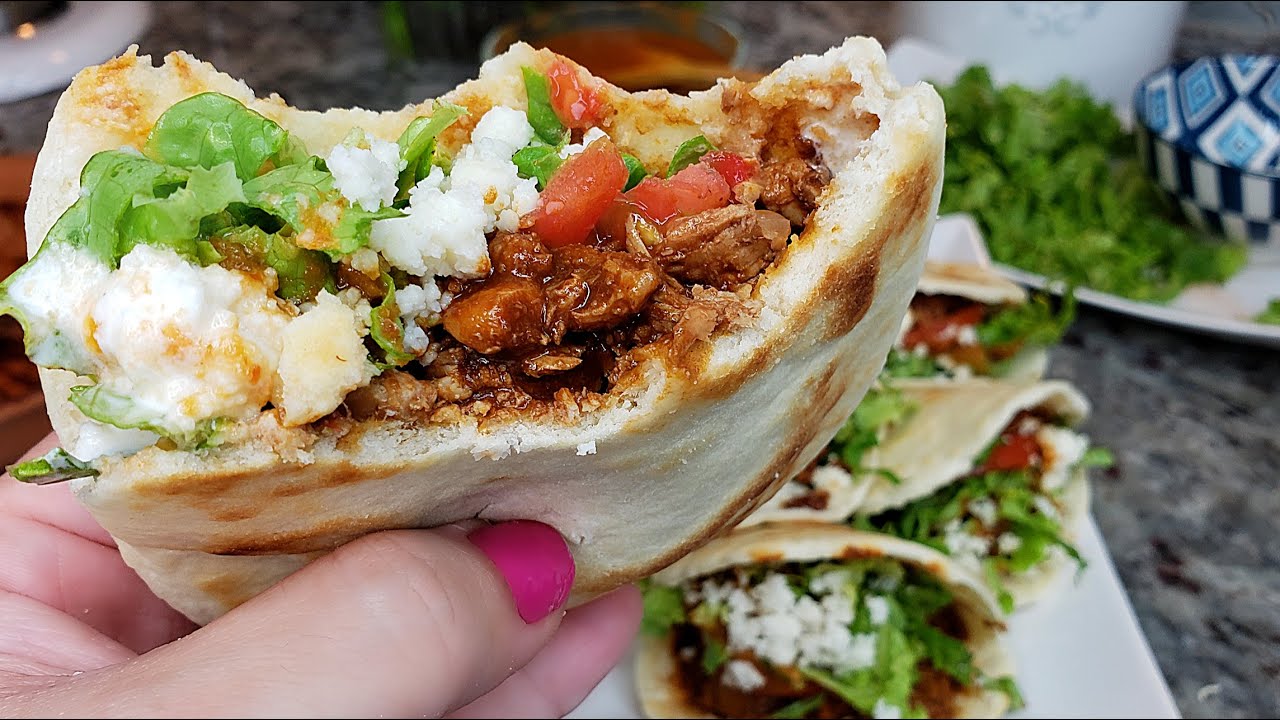
Mix flour, baking powder, and salt in a bowl.
Cut in the fat until the mixture resembles coarse crumbs.
Add liquid gradually, mixing until dough forms.
Knead briefly (30 seconds), then let rest 20-30 minutes covered.
Divide into portions and roll to 1/4 inch thickness.
Cook on medium-high griddle (350-375°F) for 1-2 minutes per side until puffy with golden spots.
They should feel light when done.
Flour Gordita Texture

Much softer and more tender than corn versions.
The baking powder creates flaky layers inside.
They’re flexible and easy to fold without cracking.
Less dense overall with a bread-like quality.
The surface develops a slight crisp while staying pliable.
Flour Gordita Taste
Wheat flour provides a neutral, slightly sweet base.
The fat (especially lard) adds rich, savory notes.
There’s a buttery quality that makes them almost biscuit-like.
The flavor is milder, letting fillings take center stage.
Some find them reminiscent of naan or pita bread.
Nutritional Content of Flour Gorditas
One flour gordita (about 100g) typically contains:
- 280-320 calories
- 38-42g carbohydrates
- 5-6g protein
- 10-14g fat (higher due to added fats)
- 1-2g fiber
The fat content is notably higher than corn versions.
Less fiber compared to masa-based gorditas.
Contains gluten, unsuitable for celiac or gluten-sensitive individuals.
Best Fillings for Flour Gorditas
The neutral flavor accommodates a wider range of fillings.
Popular choices:
- Barbacoa with onions and cilantro
- Scrambled eggs with chorizo (breakfast favorite)
- Refried beans with melted cheese
- Carne asada with guacamole
- Shredded chicken in green sauce
Their softness works well with creamy or saucy fillings.
You can use similar fillings to what you’d serve with gorditas as side dishes.
The mild taste won’t compete with subtle ingredients like fish or vegetables.
Corn vs Flour Gorditas Comparison

Texture Differences Between Corn and Flour Gorditas
Corn gorditas are dense and sturdy with a slightly chewy bite.
Flour versions feel soft, pillowy, almost biscuit-like.
Corn holds shape better under heavy, wet fillings while flour can get soggy faster.
The pocket in corn gorditas is firmer; flour pockets are more delicate and tear easily.
Taste Differences Between Corn and Flour Gorditas
Corn brings bold, earthy flavor that dominates the eating experience.
Flour gorditas taste neutral and buttery, acting as a backdrop for fillings.
Nixtamalized corn has mineral notes; wheat flour leans sweet and mild.
Corn pairs with aggressive spices; flour works with everything.
Nutritional Differences Between Corn and Flour Gorditas
Corn wins on fiber (3-4g vs 1-2g per serving).
Flour packs more calories (280-320 vs 210-240) due to added fats.
Corn provides naturally gluten-free option with better niacin and calcium availability.
Protein content is similar (4-6g), but corn offers slightly better micronutrient profile.
Fat content: corn 2-4g, flour 10-14g.
Cooking Time Comparison
Corn dough needs 15-20 minutes rest; flour requires 20-30 minutes.
Cooking time on griddle is nearly identical (2-3 minutes per side for both).
Total prep-to-plate: corn takes 30-35 minutes, flour needs 35-45 minutes.
Corn dough is ready to use immediately if you’re in a rush; flour must rest or it’ll be tough.
Cooking Temperature Requirements
Corn gorditas cook best at 375-400°F on the griddle.
Flour versions prefer slightly lower heat (350-375°F) to prevent burning before the inside cooks.
Corn tolerates higher temps better due to lack of added fats that can scorch.
Both need medium-high heat to achieve proper puffing and those characteristic brown spots.
Regional Origins and Cultural Context
Corn gorditas are traditional in Central and Southern Mexico where corn cultivation dates back millennia.
Flour versions emerged in Northern Mexico after Spanish colonization introduced wheat farming.
The border regions prefer flour; interior states stay loyal to corn.
This mirrors the broader Mexican culinary divide between corn-dominant south and wheat-friendly north.
Cost Comparison
Masa harina typically costs $3-5 per pound (makes 20-25 gorditas).
All-purpose flour runs $2-4 per pound but requires added fats that increase total cost.
Corn is cheaper overall at roughly $0.15-0.20 per gordita versus $0.20-0.30 for flour.
Masa harina has longer shelf life (stored properly, it lasts 6-12 months).
Shelf Life and Storage
Fresh gorditas last 2-3 days wrapped in the fridge.
Corn versions dry out faster than flour (their lower fat content means they stale quicker).
Both freeze well for up to 3 months in airtight bags with parchment between layers.
Reheat on a dry griddle or wrap in damp paper towel and microwave 30-45 seconds.
For best results when reheating gorditas, use a skillet to restore the exterior texture.
Which is Easier to Make
Flour dough is more forgiving (overworking corn masa makes it crumbly, but flour just gets tougher).
Corn requires less technique for mixing but demands more precision in water ratios.
Flour offers visual cues (it should look like biscuit dough); corn feels right or it doesn’t.
Beginners often find flour more intuitive, though corn is technically simpler.
When to Choose Corn Gorditas
Pick corn when you want authentic Central Mexican flavor that stands up to bold fillings.
Gluten-free diets require corn.
They’re better for street food-style eating (sturdier structure, less mess).
Choose corn for traditional preparations like chicharrón or picadillo where the earthy taste is part of the experience.
Lower calorie option if you’re watching intake.
When to Choose Flour Gorditas
Go flour for Northern Mexican authenticity or Tex-Mex dishes.
Their soft texture works better with delicate fillings like scrambled eggs or fish.
Breakfast gorditas almost always use flour in border regions.
Choose flour when feeding people unfamiliar with masa (it’s a gentler introduction to Mexican cuisine).
The neutral taste accommodates fusion experiments.
Common Mistakes When Making Corn Gorditas
Dough too dry: Masa should feel like Play-Doh, not crumbly. Add water by the tablespoon.
Skipping rest time: The masa needs to hydrate fully or gorditas crack during cooking.
Rolling too thin: They should be 1/2 inch thick, not tortilla-thin, or they won’t puff.
Heat too low: Insufficient temperature means no puff and dense texture.
Not splitting them immediately: Wait too long and the pocket seals shut as they cool.
Common Mistakes When Making Flour Gorditas
Over-kneading: This develops gluten, making them tough instead of tender. 30 seconds max.
Wrong fat ratio: Too little fat makes them dry; too much makes them greasy and heavy.
Skipping rest time: The gluten needs to relax or they’ll shrink when rolled and be chewy.
Rolling too thick: Unlike corn, flour gorditas should be thinner (1/4 inch) or they taste doughy inside.
Adding too much liquid at once: This creates sticky dough that’s hard to work with.
Corn Gorditas in Traditional Mexican Cuisine
Corn gorditas represent pre-Hispanic cooking traditions that survived Spanish colonization.
They appear in markets across Central and Southern Mexico as street food staples.
Traditional vendors cook them on large comals over wood or charcoal for authentic smoky notes.
Regional variations include gorditas de nata (with cream in the dough) in some areas.
They’re typically served for breakfast or as antojitos (snacks) rather than main meals.
The cooking method hasn’t changed much in centuries, just the filling options expanded.
Flour Gorditas in Northern Mexican Cuisine
Wheat agriculture in states like Sonora and Chihuahua made flour gorditas practical in the 1800s.
They share DNA with flour tortillas common in Northern Mexico and border cuisine.
Modern variations include gorditas de azúcar (sweet versions with cinnamon sugar).
They’ve become breakfast favorites in Tex-Mex culture, often stuffed with eggs and chorizo.
The softer texture aligned with Northern preferences for wheat-based breads alongside corn.
You’ll find them at Northern Mexican restaurants alongside dishes like different types of tamales and pozole varieties.
FAQ on Corn vs Flour Gorditas
Are corn gorditas healthier than flour gorditas?
Corn gorditas contain fewer calories (210-240 vs 280-320), more fiber, and are naturally gluten-free. Flour versions have higher fat content due to added lard or shortening. Corn offers better micronutrient availability from nixtamalization, making it the healthier choice overall.
Can I substitute corn for flour in gordita recipes?
Not directly. Masa harina and wheat flour behave completely differently. Corn dough needs only water and salt; flour requires baking powder and fat. The textures, cooking times, and final results are distinct. Each type demands its own specific recipe.
Which gorditas are more authentic?
Corn gorditas predate Spanish colonization and represent traditional Central Mexican cuisine. Flour versions emerged later in Northern Mexico after wheat introduction. Both are authentic within their regional contexts. Neither is “more Mexican” than the other.
Do corn and flour gorditas use the same fillings?
They work with different fillings. Corn’s bold flavor pairs with assertive ingredients like chicharrón, carnitas, and spicy salsas. Flour’s neutral taste accommodates delicate fillings like scrambled eggs, fish, or mild vegetables. Choose fillings that complement each base.
Why don’t my corn gorditas puff up?
Common causes: dough too dry, rolled too thin, or heat too low. Masa needs proper hydration and 1/2 inch thickness. Cook at 375-400°F. The steam inside creates the pocket. If dough cracks at edges, add more water.
Can I make gorditas ahead of time?
Yes. Cook them fully, cool completely, then refrigerate 2-3 days or freeze up to 3 months. Separate layers with parchment paper. Reheat on a dry griddle or wrapped in damp paper towel in microwave for 30-45 seconds.
What’s the difference between a gordita and a thick tortilla?
Gorditas are intentionally thick (1/2 inch for corn, 1/4 inch for flour) and designed to puff and split for stuffing. Tortillas stay flat and thin. Gorditas create pockets; tortillas wrap around fillings. The cooking method and final use differ completely.
Are flour gorditas the same as pupusas?
No. Pupusas are Salvadoran, made from masa, and stuffed before cooking. Flour gorditas are Mexican, can use wheat flour, and are split after cooking to add fillings. The preparation technique and cultural origins are distinct.
Which type is easier for beginners?
Flour gorditas are more forgiving. The dough provides visual cues and handles minor mistakes better. Corn masa requires precise water ratios and feels right or doesn’t. Flour’s biscuit-like texture is familiar to most home cooks.
Can I use regular cornmeal instead of masa harina?
No. Regular cornmeal isn’t nixtamalized and won’t form proper dough. Masa harina undergoes lime treatment that changes the corn’s structure, allowing it to bind. Cornmeal creates crumbly, inedible results. Use proper masa harina or instant masa mix.
Conclusion
The corn vs flour gorditas debate comes down to what you’re making and who you’re feeding.
Corn brings authentic Central Mexican flavor, better nutrition, and gluten-free benefits. Flour offers softer texture, milder taste, and more forgiving preparation.
Neither is objectively better.
Regional traditions matter here. Central and Southern Mexico stayed loyal to masa harina for centuries. Northern border states embraced wheat flour after Spanish colonization introduced new ingredients.
Your choice depends on the fillings you’re using, dietary needs, and the eating experience you want.
Bold, spicy ingredients demand corn’s earthy backbone. Delicate breakfast fillings shine against flour’s neutral canvas.
Try both. Your griddle will tell you which one feels right for your kitchen, and your taste buds will confirm it.


