

Arugula in a lemon vinaigrette is what I’d put next to tomato soup nearly every time. Caesar comes second, then cucumber with dill, then a Greek salad with the tomatoes taken out. A wedge sits last.
The soup is warm and smooth, and the canned kind runs sweet. So the salad should be cold and crunchy, with a little bitterness if you can get it.
Most people reach for grilled cheese here. It’s fine, but it piles more fat and more bread onto a plate that already has both. Crunch and acidity are what it can’t supply.
The sweetness comes straight off the label. Campbell’s condensed tomato soup lists sugar fourth, after tomato puree, water and wheat flour, and that’s the reason bitter greens beat mild lettuce.
Which Salads Go Best With Tomato Soup?
The order below follows how much contrast each salad adds to the bowl. More contrast, higher spot.
| Salad | What it adds | Best dressing | Watch out for |
|---|---|---|---|
| Arugula | Peppery bite, crisp leaves | Lemon vinaigrette | Sweet glazes |
| Caesar | Salt, crunch, creamy fat | Classic Caesar, light hand | Salt stacking with canned soup |
| Cucumber with dill | Cool, watery crunch | Lemon or yogurt-dill | Mild flavor on its own |
| Greek, no tomatoes | Brine and tang | Red wine vinaigrette | Feta plus olives runs salty |
| Wedge | Cold iceberg crunch | Thin buttermilk or blue cheese | Adds fat, not acid |
Arugula Salad With Lemon Vinaigrette

A sweet, smooth soup has no bitterness in it, and arugula brings exactly that.
Back to the Campbell’s label, where sugar sits fourth. Peppery leaves push against that sweetness. Mild lettuce just agrees with it.
I keep the dressing to lemon juice, olive oil and salt. Nothing sweet. Balsamic glaze looks nice on the plate but it puts sugar on top of sugar, so I leave it off.
Caesar Salad
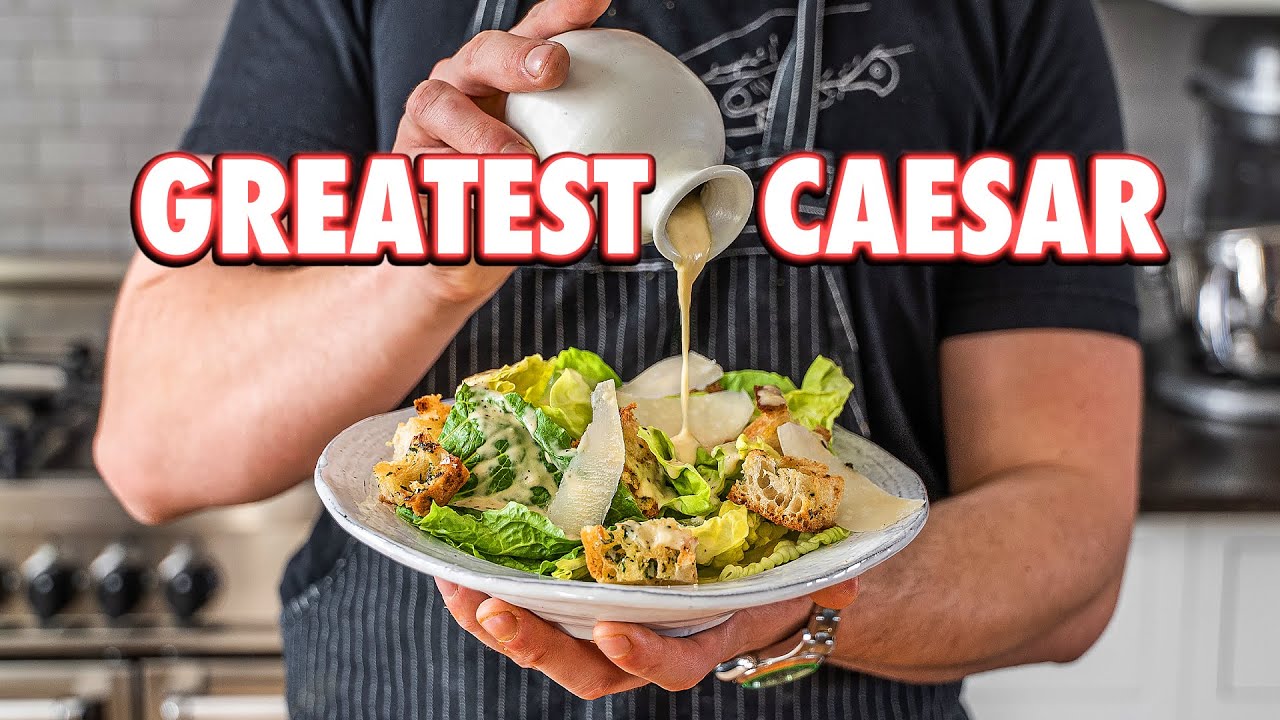
Caesar earns its spot when the soup is eaten without a sandwich, because the dressing and croutons cover the fat and crunch that grilled cheese would have brought. A bit of shaved Parmesan adds salt.
Put it beside grilled cheese and the fat doubles. Go with arugula in that case.
Cucumber and Greek Salads

Cucumber with dill is mild, and that’s the point. It cools the plate down and stays out of the soup’s way.
The Greek salad is louder. Feta and olives make it briny, and it holds its own against a rich bowl, though I’d drop the tomatoes. Cucumber, red onion, olives and feta are plenty.
Wedge, Spinach and Fennel Salads

A wedge is the coldest and crunchiest of the lot. Iceberg doesn’t taste like much, so the dressing does all the work, which is why it lands at the bottom.
Baby spinach with toasted nuts and a light vinaigrette is the better call if arugula is too sharp for you.
Shaved fennel with a citrus dressing is the one I think gets overlooked. It stays crisp, it tastes clean, and the anise note cuts through a creamy bowl.
How Acidity, Fat and Crunch Decide the Pairing
A salad works beside tomato soup when it brings something the bowl lacks, usually crunch and a cool temperature, plus some bitterness or sharpness. It falls flat when it repeats the soup’s acid, sweetness or softness.
The soup is smooth and acidic, and creamy versions add fat on top. Whatever the rest of the plate leaves empty is the job for the salad.
Pairing guides split on this. Some choose a salad with a little acidity of its own so it sits comfortably with the tomato flavor. Others pick bitter greens to cut the sweetness. I side with giving the plate what the soup doesn’t have.
So a creamy or sugar-sweetened canned soup gets a bitter, acidic, crunchy salad. A thin, sharp roasted soup gets something gentler with a little fat in it (olive oil, nuts or cheese), otherwise the whole plate ends up acidic.
Choosing a Dressing for Salad With Tomato Soup
Lemon vinaigrette is the safe pick. Creamy dressing only works when the soup is the one rich thing on the plate.
Lemon, Red Wine and Balsamic Vinaigrettes

Milk Street’s 2021 test of nearly 30 vinaigrettes found tasters clearly preferred white balsamic at 5.5 percent acidity over white wine vinegar at 7 percent.
That matters here. Next to an already acidic soup, a gentler vinegar keeps the plate from turning sharp.
Lemon is my default for arugula and cucumber since it’s bright and adds no sweetness. Red wine vinegar is drier and sharper, which suits a creamy soup. Balsamic is sweeter, so go easy with it next to a sweet soup.
The same Milk Street testing landed on 3 parts oil to 1 part acid. It also blamed the oil, not the acid, for wilting leaves, and a little Dijon mustard binds the two and slows that down.
Creamy Dressings and Where They Fail
On a thin soup, creamy dressing is fine. On a cream-based one it fails, since cream on cream leaves nothing sharp anywhere.
USDA FoodData Central lists regular Caesar dressing at 8.5 g of fat and 178 mg of sodium per tablespoon. Use less than the recipe says.
I’d only go creamy when the soup is thin with no cream in it and there’s no grilled cheese on the plate. With a creamy or canned soup, skip it.
Ingredients to Add and Ingredients to Skip
Crunchy, salty or fatty things belong on the plate. Croutons, toasted nuts and shaved Parmesan all qualify. Anything that echoes the soup doesn’t, so raw tomato, sweet glazes and extra salt stay out.
What to Add
- Croutons or pita chips, for the crunch a smooth soup doesn’t have
- Toasted nuts or seeds, which add fat and texture and stand in for cheese on a vegan plate
- Shaved Parmesan for salt and savory depth
- Cucumber, fennel or radish
Croutons go in last. They go soggy the second dressing touches them.
What to Skip
- Raw tomato in any form
- Pasta-heavy salads, since the bread or sandwich already supplies the starch
- Dried fruit and sweet glazes
- Bacon, anchovy, feta and Parmesan all in one bowl
Tomato Salads Next to Tomato Soup
Corrie Cooks lists Caprese salad as a match, and Platings and Pairings lists tomato-cucumber salads. I lean the other way, with one exception.
The argument for it is easy to see. The shared flavor ties the two dishes together, and raw cold tomato is a real contrast to cooked hot soup.
The argument against is stronger, though. Acid and tomato sweetness pile up, the salad brings nothing new, and tomatoes out of season taste flat anyway. Panzanella is the worst version, because tomato-soaked bread sits next to a soup that’s already meant for bread.
The exception is a cream-based soup in late summer, with properly ripe tomatoes in the salad.
Where Salt Stacks Up
Campbell’s lists 480 mg of sodium, 21% of the daily value, per 1/2 cup of condensed tomato soup (the label’s serving size). Two tablespoons of regular Caesar dressing add 356 mg more, going by the USDA figure above.
That makes 836 mg, about 36% of the 2,300 mg daily value, and no crouton or Parmesan has been added yet.
Campbell’s also sells an unsalted condensed tomato soup (labeled as not sodium free), which leaves room for a Caesar. With the regular canned soup, arugula and lemon is the smarter side.
Does the Type of Tomato Soup Change the Salad?
Yes, quite a bit. Cream-based, thin roasted, tomato basil, canned and gazpacho each want something different, and a sandwich on the plate shifts the answer again.
| Soup | With grilled cheese | Without a sandwich | Skip |
|---|---|---|---|
| Cream-based | Arugula, lemon vinaigrette | Spinach with toasted nuts | Creamy dressings |
| Thin roasted | Cucumber with dill | Caesar, light hand | Sharp balsamic |
| Tomato basil | Fennel, citrus dressing | Greek, no tomatoes | Basil-heavy salads |
| Canned | Arugula, lemon vinaigrette | Cucumber with dill | Caesar, extra Parmesan |
| Gazpacho | Room-temperature quinoa salad | Arugula, lemon, toasted croutons | Cucumber and onion salads |
Tomato basil soup already leans on basil, so use other herbs in the salad, like dill with cucumber or chives with arugula. If the salad needs a second herb and you’re not sure what works, this herb pairing chart is a quick way to check what goes with basil.
Gazpacho Flips the Temperature Rule
Dictionary.com defines gazpacho as a cold Spanish soup of chopped tomatoes, cucumbers, onions, garlic, oil and vinegar.
The cold serving comes from the hot summers of Andalusia, according to Chowhound.
With the soup already cold, the salad shifts to room temperature and should bring something starchy or toasted. A quinoa salad with fresh herbs does that, and so does arugula with lemon and toasted croutons.
Skip salads built on cucumber or onion. The soup carries both already.
When Grilled Cheese Joins the Plate
Grilled cheese brings fat and starch, so the salad should be the lightest, sharpest thing on the plate.
Arugula, cucumber or fennel with a lemon or red wine vinaigrette all fit. Leave off creamy dressing and cheese-heavy toppings, and skip the croutons too (that’s bread twice).
Without a sandwich the same salad can handle more. Nuts, Parmesan and a creamier dressing are all fair game then.
How to Serve Salad With Tomato Soup
Serve the salad cool but not ice cold, on its own small plate, and dress it at the last minute. Greens straight from the fridge next to hot soup make both taste off.
- Wash the greens and dry them completely, because dressing slides off wet leaves.
- Let chilled greens lose their fridge chill while the soup heats.
- Shake or whisk the vinaigrette again so it is emulsified.
- Toss the greens with a light coat of dressing just before the plates go out.
- Add croutons, nuts and Parmesan last.
- Plate the salad beside the soup, not in it.
How Much Salad per Bowl of Soup
Restaurants set the benchmark here. Panera Bread’s You Pick Two, as Tasting Table describes it, pairs half-size portions of each item.
At home that works out to a salad about the same volume as the soup when the pair is dinner. Next to grilled cheese a smaller handful is plenty, since the sandwich fills the plate.
Side Plate or Same Bowl?
| Format | Upside | Downside |
|---|---|---|
| Side plate | Crisp leaves, separate temperatures | One more dish |
| Shared wide bowl | Fewer dishes | Salad warms and softens fast |
Side plate for guests and for dinner. The shared bowl is only worth it for a quick lunch you eat right away.
Vegan, Gluten-Free and Lighter Versions
These changes are small. The Caesar needs rebuilding for vegans, the croutons need swapping for gluten-free guests, and the dressing is where the calories hide.
Vegan Side Salads
Traditional Caesar dressing relies on anchovies and egg yolk, and Worcestershire sauce hides more anchovy. Parmesan is dairy.
Arugula, fennel and cucumber with lemon vinaigrette need no changes. Vegan Caesar recipes, such as the one from Goop, rebuild the flavor from other ingredients. Miso or capers stand in for anchovy, vegan Worcestershire covers the sauce, nutritional yeast replaces Parmesan, and vegan mayonnaise brings the creaminess.
Check the soup as well. A cream-based version needs a plant-based cream or plain water to stay vegan.
Gluten-Free Croutons and What the Label Means
The FDA’s gluten-free rule, published in August 2013 and enforced from August 2014, allows the claim only on foods with less than 20 parts per million of gluten.
On packaged croutons, look for the claim on the bag. Seeds and nuts are naturally gluten-free, and the label is voluntary for them. Toasted chickpeas are the crunchiest swap and they hold up under dressing.
Some canned tomato soups thicken with wheat flour, so the soup needs the same label check as the croutons.
Lighter Versions
A light salad stops being light once the dressing goes on.
USDA FoodData Central puts raw arugula at 25 kcal per 100 g, while one tablespoon (14.7 g) of regular Caesar dressing carries 80 kcal.
So a single tablespoon of dressing has more than three times the calories of a 100 g pile of leaves. Switch to a lemon and olive oil vinaigrette and measure it out.
The USDA introduced MyPlate in 2011 with the advice to fill half the plate with fruits and vegetables. In January 2026 the 2025–2030 Dietary Guidelines for Americans replaced it with an inverted food pyramid that puts vegetables and fruits at the top. Either way, a generous bed of greens with a measured spoonful of dressing fits better than a few leaves under a pour.
A Mediterranean-style version, built on olive oil, lemon, leafy greens and a few nuts, follows the same logic.
Salad With Tomato Soup FAQ
Should the salad come before, with or after the soup?
With the soup. The salad is there for contrast, and that only works when both are on the table together.
At a formal dinner with separate courses, soup goes first and the salad second.
Can the salad be made ahead?
Partly. Wash and dry the greens, chop the vegetables and shake the vinaigrette in advance.
Dress the leaves and add croutons only when the plates go out, or the salad turns limp.
Is a packaged salad kit good enough?
Yes, with a couple of tweaks. Pick a plain greens or arugula kit and swap the sweet dressing packet for a lemon vinaigrette.
Caesar kits come with a salty dressing and Parmesan, which pile onto a canned soup.
Do soup and salad make a full meal without grilled cheese?
Yes, once the salad has protein in it. Chickpeas, white beans or a hard-boiled egg turn it into dinner.
Keep the salad about the size of the soup portion.
Does kale work in place of arugula?
It does. Kale is sturdier, so it tolerates dressing longer, and massaging it with the dressing softens the leaves.
With a cream-based soup, keep the dressing lemon-based, since a creamy one doubles the richness.
Which salad suits a dinner party?
Arugula with lemon vinaigrette, shaved Parmesan and toasted nuts plates quickly and looks finished.
For a head start, shaved fennel with chickpeas in a citrus dressing keeps its crunch, so most of it can be prepped earlier in the day.
The Default Salad With Tomato Soup
When nothing else is decided, arugula in a lemon vinaigrette is the default. It takes 4 pantry ingredients: arugula, lemon, olive oil and salt.
If you’re choosing between options, start with whether there’s a sandwich on the plate, since that fixes how much fat is already there. Then look at the soup, whether it’s cream-based, roasted or canned. Dressing comes last, measured and tossed at the end.
The downside of the default is richness, or the lack of it. Lemon vinaigrette adds none, so a dinner without a sandwich needs toasted nuts or shaved Parmesan on top to feel finished.


