

Make Hungarian cucumber salad (uborkasalata). Cabbage salad and pickled vegetables come close behind, and a plain tomato salad works when you’re short on time. A paprika stew has no acid in it and nothing cold or crisp, so whatever sits next to it has to cover that.
In Hungary this is the default pairing. Diplomatic Kitchen (2012) says a traditional Budapest restaurant with no cucumber salad on the menu is a rare find.
Which pot you’re serving changes the answer, though. Szegedin goulash already has sauerkraut in it. American goulash is a macaroni dish, so it doesn’t want the same side as a Hungarian beef stew.
Best Salads to Serve With Goulash
Cucumber salad wins. After it come cabbage salad, pickled vegetables, and a plain tomato or green salad. Whatever you pick should be cold and sour, and crisp if you can manage it.
Hungarian cooks see salad as something that goes with a heavy meat dish, not a course by itself. That’s how XpatLoop’s 2016 overview of Hungarian salads describes it.
Hungarian cucumber salad

Offbeat Budapest recommends it beside goulash, chicken paprikash and schnitzel. The salad itself is thin cucumber slices with salt, vinegar, sugar and a spoonful of sour cream.
The slices sit with salt for 30 minutes and then get pressed before the dressing goes on (XpatLoop, 2016). Thick, warty-skinned cucumbers are the traditional choice. Pepper, paprika or chopped parsley finishes it, with the sour cream placed on the paprika.
That paprika-dusted sour cream ties the salad to a stew built on sweet paprika and often finished with sour cream too.
Cabbage salad and pickled vegetables

Kaposztasalata starts with finely grated white or red cabbage. It gets salted for 1 hour and pressed, then dressed with chopped onion and caraway (XpatLoop, 2016).
Caraway goes into the goulash pot too, so the salad echoes a flavor the stew already has.
Savanyusag is the Hungarian pickle tradition, and it takes in peppers, onions, cucumbers and red beetroot. Budapest Report (2012) says people eat it like a garnish, one spoonful per bite, since a full plate of it would be too sour.
So pickles take the least effort, and they’re the weakest option if what you want is an actual salad.
Tomato, green and other everyday salads
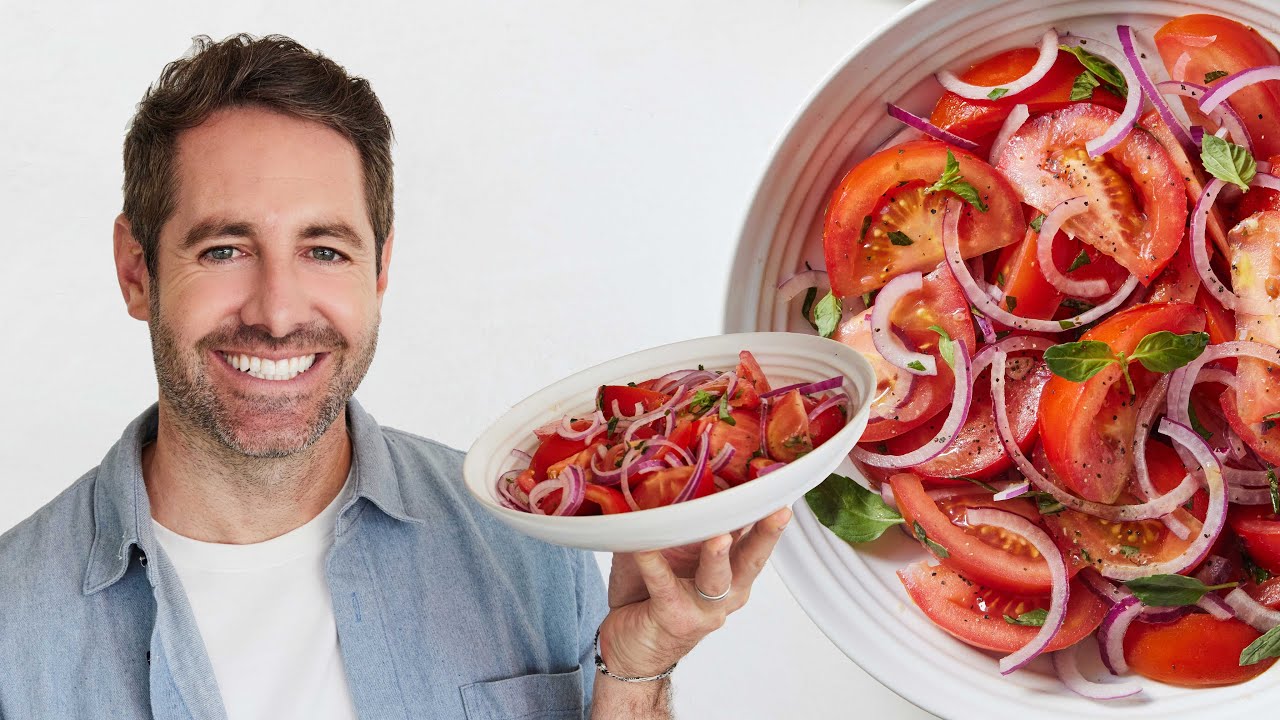
Plain salads work when the dressing supplies all the acid.
XpatLoop’s 2016 list of Hungarian salads has a few that suit goulash. Paradicsomsalata is just sliced tomatoes with oil, parsley and onion rings. Bell pepper rings left in the dressing for an hour make paprikasalata. And fejes salata is quartered lettuce with a dressing, sometimes with boiled egg and lemon slices.
Beet salad belongs with the pickles, since red beetroot is a standard savanyusag (Budapest Report, 2012).
Mayonnaise coleslaw is the odd one out. It adds fat where the stew already has plenty, while a vinegar slaw behaves like kaposztasalata.
Here’s how they compare side by side.
| Salad | Pros | Cons |
|---|---|---|
| Cucumber salad | Cold, crisp, sour cream echoes the stew | Turns watery if the slices skip the salting step |
| Cabbage salad | Sharp acid, sturdy crunch, caraway link | Needs about an hour of salting |
| Pickled vegetables | Strongest acid, no preparation | Too sour to eat as a full salad |
| Tomato or green salad | Fast and mild | Acid comes from the dressing only |
| Mayonnaise coleslaw | Familiar | Adds fat instead of cutting it |
Why Does a Cold Salad Work With a Rich Paprika Stew?
Acid does most of the work. Vinegar, lemon juice or fermented brine strips off the fat that paprika-red stock leaves on the tongue. Raw cucumber, cabbage or pepper gives the mouth something firm after braised meat and soft dumplings, and a chilled salad cools things down between spoonfuls of a stew that arrives steaming hot.
Chef Mike Buononato of Creative Food Solutions told US Foods that citrus acid cuts fat and softens mouthfeel so fats do not sit on the tongue. Vinegar does the same job in a Hungarian dressing.
A cold, crisp salad with no acid fixes texture and temperature but leaves the fat exactly where it was.
Cucumber salad covers every base. Vinegar supplies the acid and the raw slices give the crunch. The cold comes from chilling the bowl until it goes to the table, which is what Offbeat Budapest’s recipe does.
How Does the Type of Goulash Change the Salad?
Look at what’s already in the pot and pick a salad that doesn’t repeat it. The table has the specifics.
| Goulash | In the pot | Salad that fits | Salad to skip |
|---|---|---|---|
| Hungarian gulyas, porkolt | Beef, onion, sweet paprika, caraway | Cucumber salad, kaposztasalata | Mayonnaise slaw |
| Szegedin goulash | Pork, sauerkraut, sour cream | Tomato or lettuce salad | A second sour cabbage salad |
| American goulash | Ground beef, macaroni, tomato sauce | Cucumber or green salad, vinegar dressing | Macaroni or pasta salad |
| Czech gulas | Beef, paprika gravy, bread dumplings | Kaposztasalata, pickles | Potato salad |
Recipes From Europe pairs its cucumber salad with Hungarian goulash and marhaporkolt, the beef stew served with nokedli.
The Daring Gourmet’s Szegedin goulash stirs 1 cup of packed, drained sauerkraut into 1.5 pounds of meat and tops each bowl with sour cream. The acid is already in the bowl, so the salad should add freshness, not more sour.
American goulash has very little in common with the Hungarian stew, according to Taste of Home. It’s a pasta dish of ground beef, elbow macaroni and tomato. The name has drifted over time, too. A newspaper recipe from 1909 used it for cubed steak baked with rice, tomato and onion, before the macaroni version took over.
Some roundups list macaroni salad as a side for it. A pasta salad beside a macaroni dish repeats the starch and adds mayonnaise, so a vinegar-dressed cucumber or green salad does more.
Czech gulas usually comes with bread dumplings, according to Jayway Travel, which calls them fluffy and quite tasteless. They’re bland and carry no acid, which is why pickled cabbage or kaposztasalata earns the spot beside them.
Which Salad Pairs With the Starch on the Plate?
The starch decides how sharp the salad needs to be.
Nokedli, the Hungarian egg-and-flour dumplings, can take a creamy cucumber salad. Food Network’s Hungarian goulash by Elizabeth Molnar serves spaetzle, the German cousin, with cucumber salad and an extra dollop of sour cream.
Czech bread dumplings are steamed and sliced like bread, per Wikipedia’s Czech cuisine entry, and they need the sharper kaposztasalata or pickles.
Potatoes are trickier. Many goulash recipes cook them right in the pot (Molnar’s uses 4 or 5), so a potato salad on the side stacks starch on starch. Go with a raw, vinegar-led salad instead.
Egg noodles are neutral and take any cold salad above. Crusty or rye bread only needs a light green salad.
Egg noodles leave the most freedom. For the rest of the plate, this guide to side dishes that suit noodle dishes covers the options beyond salad.
A soft starch wants something sour next to it. A firm or plain one is fine with almost anything. When in doubt, cucumber salad fits all of them.
How to Dress and Make a Salad for Goulash

Sweetened vinegar is the safest default, because it adds acid and no fat. It suits cucumber and cabbage salads, and Diplomatic Kitchen (2012) describes the Budapest restaurant version as sliced cucumbers in a sweetened vinegar marinade with no oil of any kind.
A creamy cucumber salad uses sour cream and dill instead, dolloped on top or stirred in, depending on the cook. Tomato and green salads take oil with vinegar or lemon. So does cabbage salad in some versions, where William Penn Life (2012) pairs cider vinegar with oil and brown sugar.
Sources disagree on oil in cucumber salad. Offbeat Budapest’s recipe, built from historical Hungarian cookbooks, uses far more olive oil than vinegar, while Diplomatic Kitchen says Budapest restaurants leave it out.
Next to a stew that already carries plenty of fat, the oil-free version fits better.
They split on the vinegar itself, too. Recipes From Europe says regular white vinegar works. Unsophisticook prefers apple cider vinegar and treats white as a fallback, and Healthy Recipes Blogs advises against distilled white because it’s too acidic.
Cider vinegar is the safer pick for a sweetened dressing.
Cucumbers are roughly 95–96% water, so pressing the slices is what keeps the salad crisp instead of a puddle. Any water released after dressing thins a sour cream dressing too.
Here’s the cucumber salad from start to finish.
- Peel the cucumbers and slice them into thin rounds.
- Salt the slices and press out the liquid.
- Dissolve the sugar in the vinegar, then thin with water until the sharpness suits the stew.
- Pour it over the slices and marinate for 30 minutes for a crisp salad, or 1 hour for a more pickled one (Diplomatic Kitchen).
- Chill, then serve with a slotted spoon and add the sour cream and paprika at the table.
The usual way to ruin it is too much sugar. Sugar only softens the vinegar’s bite (Kids With Food Allergies), so add it in small steps against a paprika stew.
The cream can also separate. Fine Foods Blog notes that sour cream and vinegar can split, so stir before serving.
Can You Make the Salad Ahead?
Yes, mostly. Cucumber and cabbage salads get better in the fridge, while tomato and green salads belong in the bowl only at the last minute.
Cucumber salad can be assembled and chilled up to overnight (Ahead of Thyme). Cabbage salad dressed with vinegar, oil and sugar tastes better the next day, according to Kifli’s recipe. Pickled vegetables are ready straight from the jar.
Green salad is the opposite, because the leaves wilt once dressing sits on them. Tomato salad too, since the tomatoes release juice into the dressing.
The salad is the cold half of the plate, so it leaves the fridge right before serving. USDA guidance, relayed by Michigan State University Extension, says cold perishable food should stay at or below 40°F and food left at room temperature for two hours or longer should be discarded.
Recipe authors give wildly different storage times, which is why the lowest number is the one to plan around.
Unsophisticook says to make cucumber salad up to 1 day before serving and stir it again if liquid collects. Storage claims in recipes run from 1 to 2 days (Oh Sweet Basil) through 3 days (Just a Taste) to 5 days with a softer texture (Enchanted Cook). The USDA Food Safety and Inspection Service, via Michigan State University Extension, puts the refrigerator ceiling for leftovers at 3 to 4 days.
Read together, the quality claims run from 1 to 5 days and the USDA window is 3 to 4. Two days is the number that holds up for a sour cream version.
Don’t freeze it. Foodology Geek notes that cucumbers turn mushy after thawing.
When a Salad Is the Wrong Side for Goulash
A salad is the wrong side when it piles onto the plate instead of balancing it.
Baking Mischief’s goulash, adapted from The New York Times Magazine, stirs 1 cup of sour cream into 2 to 3 pounds of beef chuck.
Add a sour cream cucumber salad and the plate carries dairy twice. Switch to the sweetened vinegar version with no cream.
Cheese-and-oil salads fail for a similar reason, yet several roundups still list them as goulash sides. Caesar has cheese, egg and oil in the dressing. Caprese is mozzarella and olive oil, and Greek is feta and olive oil.
Each one adds fat to a stew that already has plenty. They cut nothing.
Sugar-forward salads miss the point as well. In a cucumber salad the sugar only softens the vinegar, so a fruit salad with no acid has nothing left to do the cutting.
Goulash soup is its own case. Gulyasleves is the brothy version, served as a main with crusty rye bread (William Penn Life, 2011). Just Budapest says outside Hungary the name often gets applied to a thick stew instead. That split matters, because a soup leaves little room on the table for a full salad plate.
Beside a bowl of soup, a few pickles do the job of a salad without adding anything.
Salad With Goulash FAQ
Which salad is lightest beside goulash?
The oil-free vinegar cucumber salad. Diplomatic Kitchen (2012) describes the Budapest version as made without oil, and leaving off the sour cream removes the only dairy.
Plain tomato salad with onion comes next.
Should the salad go on the same plate as the goulash?
No, give it a separate small plate or bowl. Diplomatic Kitchen serves cucumber salad on individual salad plates, which keeps the dressing out of the stew and the salad cold.
Can leftover cucumber salad be stored with leftover goulash?
No, store them in separate containers. The salad releases liquid and stays cold, while the stew gets reheated.
Several recipes, including one on Food.com, also add the sour cream to goulash only after reheating.
Do English cucumbers work for the salad?
Yes. Diplomatic Kitchen says any fresh variety works and pictures English cucumbers in its recipe, while XpatLoop (2016) prefers thick, warty-skinned ones.
English cucumbers have fewer seeds and are firmer and less watery, according to Healthy Recipes Blogs.
Getting Salad, Starch and Goulash to the Table Together
Run it in a fixed order. The salad goes first, so the cucumbers marinate while the stew simmers, and the starch goes into the water only when the stew is done.
That means the salad is salted, dressed and chilling before anything else. The stew simmers meanwhile with the sour cream held back, and the nokedli go in last for about 10 minutes.
Where Is My Spoon gives that 10-minute simmer for nokedli, which fits inside the last stretch of the stew. Elizabeth Molnar’s Food Network recipe makes the cucumbers before the goulash so they finish marinating alongside it.
Dairy timing is the catch. My Dinner advises adding sour cream only at serving, because stirred-in cream rules out reheating later.
Cooking the stew a day ahead still works, since the Daring Gourmet says it tastes better the next day. Stir the cream in after reheating.


