

Almost any green salad will do next to French onion soup, as long as the dressing has some real bite. If you want specifics, the good ones are a simple green salad, frisee, arugula, Belgian endive and shaved fennel, dressed with a Dijon or lemon vinaigrette. They all bring acid and crunch, most bring a little bitterness, and none of them add fat.
The bowl already has a thick Gruyere crust over beef broth, with bread soaked through underneath. That’s plenty of company, so the salad’s job is to push back.
There’s some science behind the instinct. A 2012 Current Biology study from Rutgers University and the Monell Chemical Senses Center found that astringent compounds build in intensity with repeated tasting and counter the greasy feel of fatty food.
Caesar and Salade Lyonnaise show up on a lot of roundups, and both add fat instead of countering it.
Which salads go best with French onion soup?
Start with a simple green salad in a sharp Dijon vinaigrette. Bitter or peppery leaves such as frisee, Belgian endive and arugula come close behind, since the acid and the bite cut through the melted Gruyere and the beef broth.
The ranking below goes by acidity first, then bitterness, with crunch as a tiebreaker. Anything that adds more fat drops out.
| Salad | Dressing | Weight | What it offsets |
|---|---|---|---|
| 1. Simple green salad | Dijon vinaigrette | Light | Cheese and broth richness |
| 2. Frisee bistro salad | Sherry or red wine vinaigrette | Light to medium | Fat, with a bitter edge |
| 3. Arugula salad | Lemon and olive oil | Light | Onion sweetness |
| 4. Endive, pear and walnut | Red wine vinaigrette | Medium | Soft, soaked bread |
| 5. Shaved fennel | Lemon vinaigrette | Light | Heavy feel, adds crunch |
The pairing has French precedent. On the first season of The French Chef, Julia Child served onion soup as a main course with a vegetable salad, sliced French bread and cold meats, according to The Takeout.
Number one is plain on purpose. A mixed-leaf salad with a mustardy dressing does the job most nights, and the other four are upgrades for when you want the salad to say something.
Why a salad balances a rich soup
It doesn’t remove any fat. What it does is change how the next spoonful tastes. Acid sharpens the palate after cheese and broth, and bitterness pushes back on the sweetness of the caramelized onions.
Raw leaves also give you something to crunch against soaked bread and stretchy cheese. Temperature matters a little too, since cold leaves are a relief between spoonfuls of bubbling-hot soup.
The 2012 Current Biology study from Rutgers University and the Monell Chemical Senses Center had volunteers rate three mildly astringent solutions over 80 sips, then alternate sips of tea with bites of dried meat. Astringency built up with repeated sampling, and the alternation countered the slippery, greasy feel of the fat.
The researchers tested astringent compounds against dried meat, not vinegar against cheese. Applying the result to a vinaigrette is an inference, but the direction of the effect fits the pairing.
It breaks down when the salad brings its own fat. A creamy dressing or a pile of bacon hands the richness straight back, and extra cheese does the same.
Which greens work best with French onion soup?
Bitter greens win. Frisee and Belgian endive lead the list, with radicchio right there too, and peppery arugula is the easy second choice. Bibb lettuce is the fallback for guests who dislike bitterness, though it gives the least contrast.
Bitter greens

Evergreen State College’s radicchio tasting guide notes that bitter leaves balance rich ingredients such as cheese, nuts and fruit. That is the job here.
Frisee has frilly, slightly peppery leaves, according to Diane Rossen Worthington. The Phoenix New Times advises buying smaller heads, which are more tender, and paler leaves, which are less bitter.
With Belgian endive, pick white or pale yellow heads, since very green ones run bitterer (Diane Rossen Worthington, 2012).
Radicchio is the sharpest of the group, so soak it before slicing it into the salad. Evergreen’s guide says about 30 minutes in very cold water mellows chopped radicchio, because the bitter compounds dissolve in water.
Other published guides run from 10 minutes to several hours. They disagree on how far to take it, not on whether soaking works.
Peppery greens
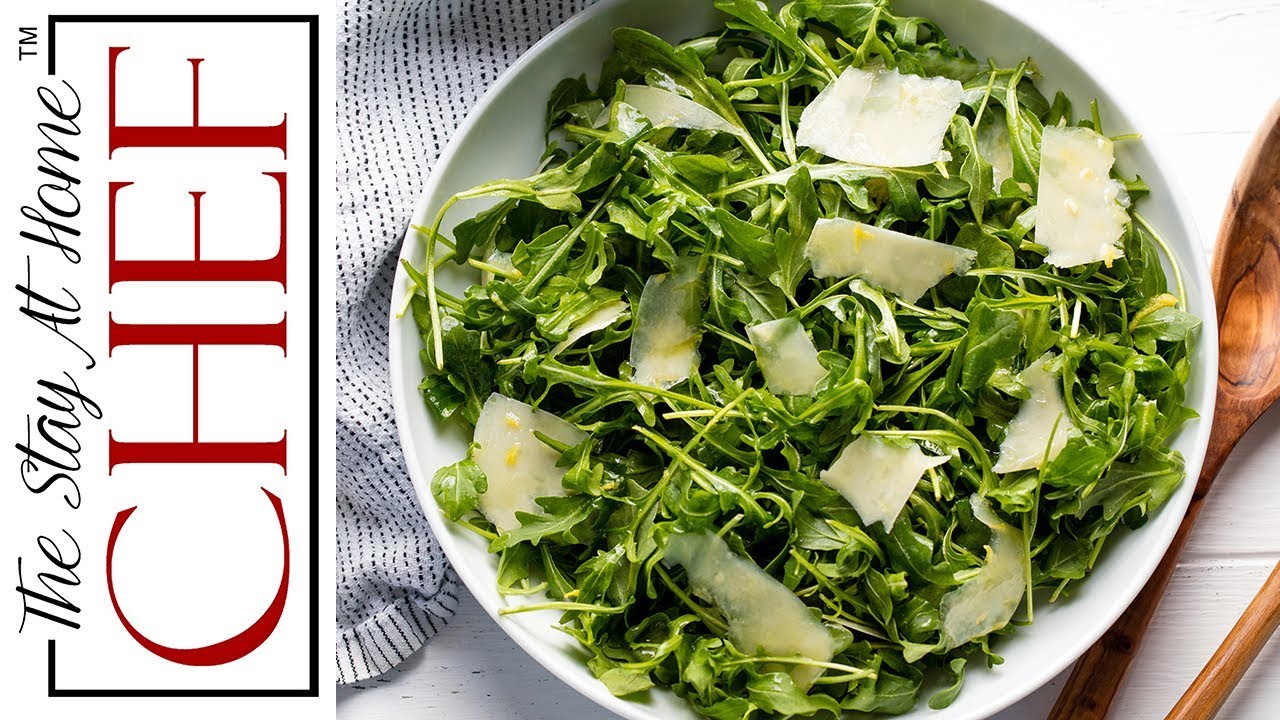
Arugula is the easiest pick. Every supermarket sells it, and it needs lemon juice and olive oil, plus a pinch of salt.
The pepper bite holds up against onion sweetness without the bitterness some guests object to.
Skip the Parmesan shavings if the soup already carries a full Gruyere crust.
Mild greens

Bibb lettuce suits guests who avoid bitter leaves and kids at the table, or any meal where a sharp dressing does the heavy lifting. The downsides are that soft leaves wilt quickly under dressing, and there’s little contrast against a sweet, soft soup.
Bibb needs the sharpest vinaigrette in this article. Without it, the salad disappears next to the soup.
How to make a vinaigrette that suits the soup

Make it sharper than the textbook ratio, somewhere between 2 and 3 parts oil to 1 part acid, bound with Dijon and built on red wine or sherry vinegar. The soup is rich and slightly sweet, so the dressing should be the sharpest thing on the table.
Choosing the acid
Red wine vinegar is the dependable default, sharp without much sweetness. Sherry vinegar is rounder and nuttier, which suits endive and pear. Lemon is the brightest and simplest, and it’s the natural partner for arugula.
Go easy on balsamic. Caramelized onions already supply the sweetness, and sweet on sweet flattens the contrast.
Ratio and emulsifier
Wayne Gisslen’s Professional Cooking (8th edition, 2014) sets the basic vinaigrette at 3 parts oil to 1 part vinegar. Less oil makes the dressing more tart, he adds.
Two published recipes for bitter chicory salads run sharper than that. The Williams Sonoma Test Kitchen’s endive and pear salad works out to about 2.7 to 1, worked out from 3 tablespoons of red wine vinegar and 1/2 cup of olive oil. Diane Rossen Worthington’s two-endive salad (2012) goes to 2 to 1, from 3 tablespoons of sherry vinegar plus 1 tablespoon of lemon juice against 1/2 cup of olive oil.
Both dress bitter leaves, the same job as here. Treat 2 to 1 as the sharp end and 3 to 1 as the mild end.
Mustard earns its place in the bowl. America’s Test Kitchen found that a Dijon dressing held for 2 hours without separating, and tasters unanimously preferred its mellow bite, while dry mustard powder never came together at all.
Building and tossing it
- Measure the vinegar or lemon juice into a bowl and add salt.
- Whisk in a teaspoon or two of Dijon, the starting point in Serious Eats’ base method.
- Pour in the oil in a slow stream while whisking, so the mustard can coat each droplet.
- Dip a leaf in and taste it.
- Add vinegar for a sharper dressing or oil for a milder one.
- Toss with the greens just before serving, using less than looks necessary.
Too much oil tastes flat next to the soup, and a bottled creamy dressing repeats the richness you were trying to cut.
Fruit, nuts and vegetables worth adding
Pear or a tart apple, toasted walnuts and raw shaved fennel all suit the soup, and roasted beets work in small amounts. Keep it to one sweet element, since the caramelized onions already cover the sweetness.
Pear should be ripe but firm, so its soft sweetness works against bitter chicories. Granny Smith keeps the acid up if you’d rather use apple, as in the Philadelphia Inquirer’s apple and fennel salad.
Walnuts give the crunch the soaked bread lacks, though they bring their own fat. Fennel goes in thinly sliced and raw, with a mild licorice sweetness and a clean snap. Roasted beets are earthy and sweet, so give them the sharpest dressing.
Toast the walnuts first. Guiding Stars, the Hannaford nutrition program, calls for 350 degrees F for 5 to 7 minutes, stirred once or twice, in its pear and fennel salad.
Sweetness stacking is where this goes wrong. Caramelized onions already sweeten the soup. Add a pear and a honey vinaigrette and that’s three sweets in one meal, and the contrast the salad is there to provide disappears.
Once Upon a Chef pairs roasted beets with a honey-Dijon vinaigrette. The Inquirer’s apple and fennel salad adds 1 tablespoon of honey to its dressing on top of the apple.
Both are good salads on their own. Next to this soup, drop the honey.
Pick one sweet add-in, not two. Dress with lemon or red wine vinegar instead of honey, and take your crunch from nuts and fennel, not sugar.
Should the salad come before, with or after the soup?
Serve it with the soup or right after it. Before the soup, a salad has no richness to cut.
| Situation | Order | Salad size | Dressing |
|---|---|---|---|
| Soup as a starter | Small salad beside the cup, or after the main | Small | Sharp vinaigrette |
| Soup as the main course | Beside the bowl or right after | Medium, leaves only | On the side |
| Cup of soup, salad as the meal | Soup first, then salad | Large, with protein | On the side |
The French habit points the same way. Transparent Language’s French blog reports that French diners typically eat salad after the main course, on a clean plate, and credit it with aiding digestion.
That leaves the soup in the first-course slot, which is where it belongs on a French menu.
When the soup is the meal, put the salad on its own plate so the leaves never sit in broth. Dress lightly and pass extra dressing at the table.
Skip the protein, since the Academy of Nutrition and Dietetics notes that added protein is what turns a salad into a hearty main, and a bowl topped with Gruyere and bread needs no help.
WW’s Italian soup and salad combo serves about 2 cups of salad with 1 cup of soup, with grilled chicken in the salad. Copy that ratio only when the soup is the cup-size part of the meal.
Salads to skip or limit with French onion soup
Skip anything that adds cheese, bacon, egg or a creamy dressing, which rules out Caesar, Salade Lyonnaise, wedge and BLT salads. They repeat the fat the salad is there to cut.
Roundups from Corrie Cooks, Platings and Pairings and Pip and Ebby all list Caesar as a pick. Tasting Table calls Salade Lyonnaise a bright, light contrast to the soup.
Neither pick is wrong in every case, but I wouldn’t call either one a safe default.
Caesar salad
A classic Caesar repeats the soup. Taste of Home’s dressing is built from egg yolks, anchovy paste, olive oil and Parmesan.
The salad then gets croutons and more Parmesan on top, which is cheese and bread again.
In its favor, Caesar is familiar and guests rarely object, romaine is crisp, and a homemade dressing carries real acid from lemon juice and red wine vinegar.
Against it, the Parmesan and croutons echo the Gruyere and bread in the bowl, and mild romaine gives little bitter contrast. Bottled versions lead with oil too. The label on Cardini’s Original lists soybean oil first, water second and the vinegars third.
If Caesar is the request, shrink the portion and drop the croutons, then add extra lemon.
Salade Lyonnaise

Cook’s Illustrated found that a standard vinaigrette left salade Lyonnaise flabby and greasy, and fixed it with a dressing of equal parts fat and acid.
The lardons and the poached egg are the cause. Add a bowl of French onion soup and the meal has three rich elements before anyone reaches a leaf.
The base is sound, because frisee supplies the bitterness and the vinaigrette is tangy. It’s also the bistro classic, which is why Tasting Table likes the pairing.
The lardons and egg, though, add the fat a salad here is meant to cut. MasterClass describes it as a starter or a light meal on its own, so it competes with the soup for the same course.
Both views hold. A plain frisee salad with vinaigrette stays on the approved list, while the full Lyonnaise belongs on its own as the main, with a cup of soup first.
Wedge, BLT and creamy-dressed salads
Scarlati Family Kitchen’s roundup includes a steakhouse wedge and a BLT salad among its picks. Both lean on bacon, and a wedge usually arrives with a creamy dressing.
The same goes for a wedge with blue cheese dressing, a kale Caesar with croutons and Parmesan (that’s how Platings and Pairings builds it), and anything dressed from a creamy bottle.
A rich salad is fine when the soup is a cup-size starter, the salad is the main course and the dressing comes on the side.
FAQ About Salads That Go With French Onion Soup
Can you make the vinaigrette ahead of time?
Yes, if the dressing is built on whole-grain mustard. America’s Test Kitchen found that whole-grain mustard held oil and vinegar together for a full week in the fridge, while a Dijon dressing held for 2 hours.
Shake or whisk it before use, and toss the leaves only at the last minute.
Can you use bagged salad mix?
Yes, with one fix. A mild spring mix gives little contrast, so add a handful of arugula or sliced radicchio.
Mixes that already include frisee or radicchio work as they are. Pair either with the sharper end of the vinaigrette range.
How much salad should you plan per person?
Plan about 2 cups of loosely packed leaves for a side salad. USDA MyPlate counts 2 cups of raw leafy greens as 1 cup of vegetables.
Drop to a generous handful when the soup is the heavy first course.
Does a tomato, lentil or other non-leafy salad work?
Yes, if it is acid-forward. Platings and Pairings lists a French lentil salad in Dijon vinaigrette and a tomato cucumber salad in red wine vinaigrette among its sides.
Caprese is the weaker choice, since the mozzarella repeats the cheese already melted on the soup.
Adjusting the Salad When the Soup Changes
Salads that go with French onion soup scale with the fat in the bowl. A thicker Gruyere crust calls for a sharper vinaigrette and lighter leaves.
The published dressing ratios form a scale when read together: about 3 parts oil to 1 part acid for plain leaves, 2 to 2.7 parts for chicory beside the soup, and 1 to 1 for a salad that carries its own lardons and egg.
Sharpen the vinaigrette first, then shrink the salad, then drop the sweet add-ins. The dressing goes first because it is the quickest element to change at the table.
The trade-off is that sharper acid and bitter leaves lose guests who dislike bitterness, and no ratio fixes that.


