

Cold and crunchy wins, with some acid in it. Kachumber suits most Indian curries. Thai coconut curries get a sweet-sour cucumber salad, and Japanese curry rice goes with sunomono.
Look at the sauce before you count the chillies. A salad has to push back against cream or coconut milk, or against a lot of oil, so the base of the curry narrows the choice more than the heat does.
Cleveland Clinic, summarizing a 2019 beverage study, notes that capsaicin does not dissolve in water, so water brings cooling relief and little more.
A cucumber-based salad is mostly water, so it behaves the same way. It lowers the sensation of heat without removing it.
Which salads go best with curry?

For Indian-style curries, kachumber is the most reliable pick. It’s a chopped salad of cucumber, tomato and onion dressed with lemon or lime juice. Thai coconut curries take a sweet-sour cucumber salad, and Japanese curry rice takes vinegared cucumber.
Kachumber salad

Diced cucumber, tomato and red onion, fresh coriander, lemon juice and a little green chilli. That’s the whole recipe.
Shweta in the Kitchen treats it as a fixture of Indian home cooking and restaurant menus.
It goes with dal, rajma, kadhi, biryani and the richer, creamier curries. The dressing is lemon or lime juice and coriander, with chilli if you want it. The weak spot is the crunch, which disappears quickly, so mix it right before serving.
Tomato salad with mint dressing
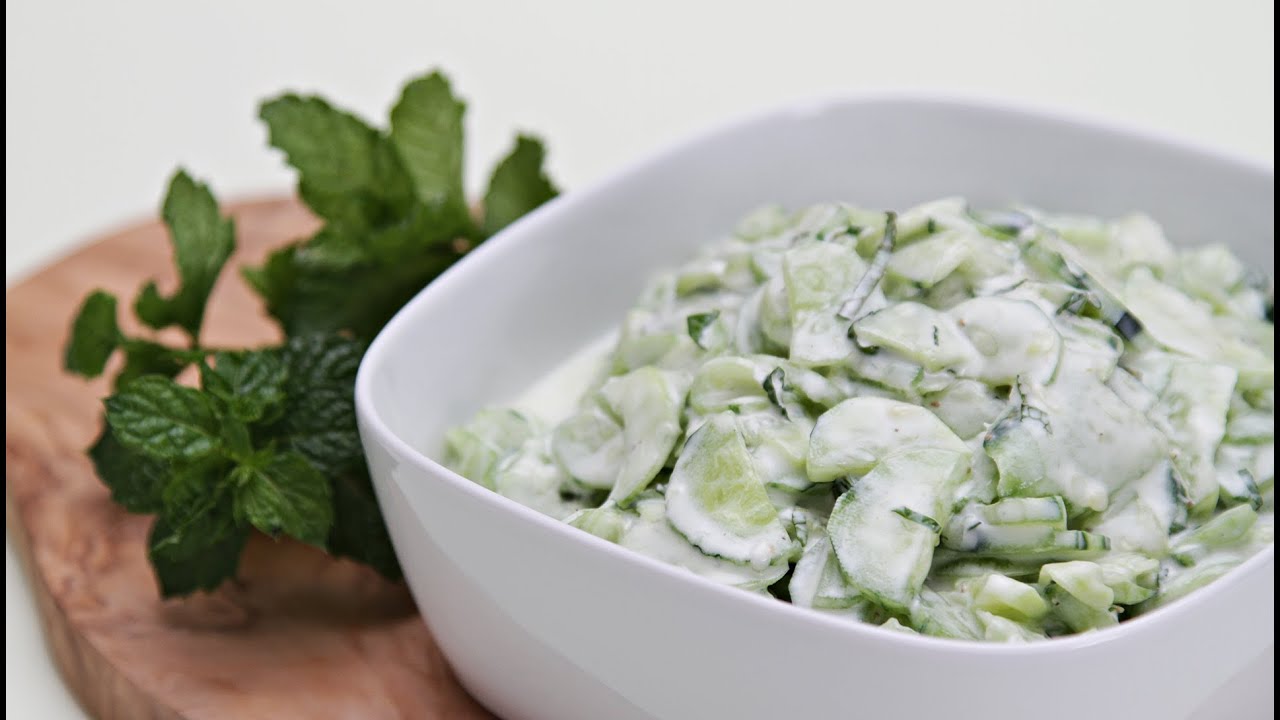
RecipeTin Eats builds this one from sliced tomato and red onion, drizzled with a blended mint dressing and finished with a pinch of garam masala.
The dressing batch makes over a cup. The leftovers go on the table as a sauce beside the curry.
It suits rich, spicy curries that can take a sharp herb note. Skip it when the curry is already tomato-heavy.
Thai cucumber salad

A 2020 consumer study in the journal Foods (120 participants in China, 139 in Denmark) found that sucrose suppressed the sourness of both citric and tartaric acid.
Thai cucumber salads rely on exactly that balance. Sugar softens the lime or vinegar, so the salad tastes sweet-sour instead of sharp.
Marks and Spencer’s green Thai curry with coconut rice and cucumber salad, a Clodagh McKenna recipe, dresses the cucumber with lime juice, fish sauce, sugar, garlic and a little oil, then tosses in red onion, chilli and chopped roasted peanuts.
Coconut-milk curries like green and yellow Thai curry are where it belongs.
Sunomono (Japanese cucumber salad)

Sunomono translates as “vinegared things”, though on a menu the word almost always means cucumber salad.
The usual version uses thin-sliced Japanese or Persian cucumber, salted and squeezed dry, in a dressing of rice vinegar, sugar, salt and a little soy sauce. Wakame seaweed is optional.
Chili Pepper Madness recommends it with fried food, rich dishes and anything fiery, and names Japanese-style curry among the pairings.
Mango and green papaya salad
Pantry and Larder counts mango salad among the best sides for Thai curry. The fruit’s sweetness sits against the richness of coconut milk.
Som tam, the Thai green papaya salad, is built around bird’s eye chilies, so it adds heat instead of cooling it. It suits mild coconut curries better than very hot ones.
Raw mango also works in kachumber. The Spice Mess lists raw mango (keri) as an optional vegetable for its kachumber and links to a separate keri kachumber recipe.
Carrot slaw

Carrot salads hold their crunch beside a soft sauce.
Pantry and Larder describes its Thai carrot slaw as sweet with a subtle heat, and says the carrots give a crunchy bite against the curry’s tender textures.
Delicious magazine publishes a carrot kachumber as an Indian curry side, which shows that carrot works in both the Indian and the Thai tradition.
Why does a cold, sharp salad balance curry?
The salad gives the palate what the sauce doesn’t: sharpness against the fat, crunch against the softness. It’s cold too, which takes the edge off the heat. Each bite of curry then tastes fresher and less heavy.
Lemon, lime or vinegar brightens sauces built on cream or coconut milk, or finished with plenty of ghee. Real Thai Recipes says a sweet-sour cucumber salad cuts the weight of coconut milk and oil.
Chilled raw vegetables lower the temperature of a mouthful and reset the palate between bites. And thinly cut raw vegetables give your teeth something to do when everything else on the plate is tender meat and soft sauce.
Raita and mint chutney do the same cooling job as condiments, and either one can sit beside the salad.
Recipe writers such as Searching for Spice recommend kachumber for all kinds of curries, especially the richer, creamier ones, because that is where the contrast shows most.
Cold lowers the sensation of heat. It does not remove it.
How do you match a salad to the curry?
Start with the sauce base, then think about heat. Creamy and tomato-cream curries want a sharp onion-and-lemon salad, and coconut curries want sweet-sour cucumber. Lentil dishes just want kachumber.
| Curry style | Salad | Why it works |
|---|---|---|
| Butter chicken, tikka masala, korma | Kachumber | Onion and lemon bite cut cream and butter |
| Dal, rajma, kadhi | Kachumber with extra lemon | Soft, starchy dishes need crunch and acid |
| Tomato-heavy curries (rogan josh) | Cucumber-led, little tomato | Avoids tomato on tomato |
| Thai green, red, yellow | Sweet-sour cucumber, mango salad | Sugar and acid against coconut milk |
| Japanese curry rice | Sunomono | Mild vinegar against a thick roux |
| Very hot curries (vindaloo) | Plain cucumber, no chilli | Cold relief without added heat |
Fat and sweetness are what the salad has to answer, which is why the sauce base decides the first cut. Heat refines the choice afterward.
Creamy tomato curries are the most common request, and a dedicated guide covers which salad suits butter chicken in more detail.
Japanese curry rice has a traditional side of its own. Fukujinzuke (pickled radish, eggplant and other vegetables) and rakkyo (pickled scallion) are the usual condiments, according to The Salty Whisk.
They are pickles, not salads, but they do the same acidic job.
How does the heat level of the curry change the salad?
Mild curries take a salad with chilli in it, and hot curries take a plain, cold one. The hotter the sauce, the more the salad should act as relief and the less it should add.
With a mild korma or butter chicken, keep the green chilli in the kachumber. Down to Earth’s recipe calls for 1 to 3 chillies per batch of 4 to 6 servings. A medium curry can have one deseeded chilli, or none at all if you’d rather let the lemon do the work. For vindaloo and anything near it, go cucumber-led with no chilli, and serve it cold.
Cleveland Clinic, summarizing a 2019 beverage study, notes that capsaicin does not dissolve in water. Plain water brings cooling relief and little else.
A yogurt dressing has more going for it, but the research splits. Penn State researchers (Journal of Food Science, 2023) tested 89 untrained participants and found that casein binds free capsaicin, though among the protein rinses only 5% micellar casein beat water.
An Aarhus University trial (Journal of Sensory Studies, 2024) rinsed capsaicin-exposed tongues with 5% casein, 5% whey protein or water and found no robust effect.
The protocols differ (a 5 ppm capsaicin solution in one, an 8-minute tongue exposure in the other). Treat a yogurt dressing as a small bonus, not a fix.
Heat lovers can go the other way. Som tam and chilli-spiked slaws echo the curry instead of cooling it.
Vindaloo is the stress case. Serve plain chilled cucumber with no chilli at all, and put a bowl of yogurt on the table.
What ingredients, dressings and textures hold up beside curry?
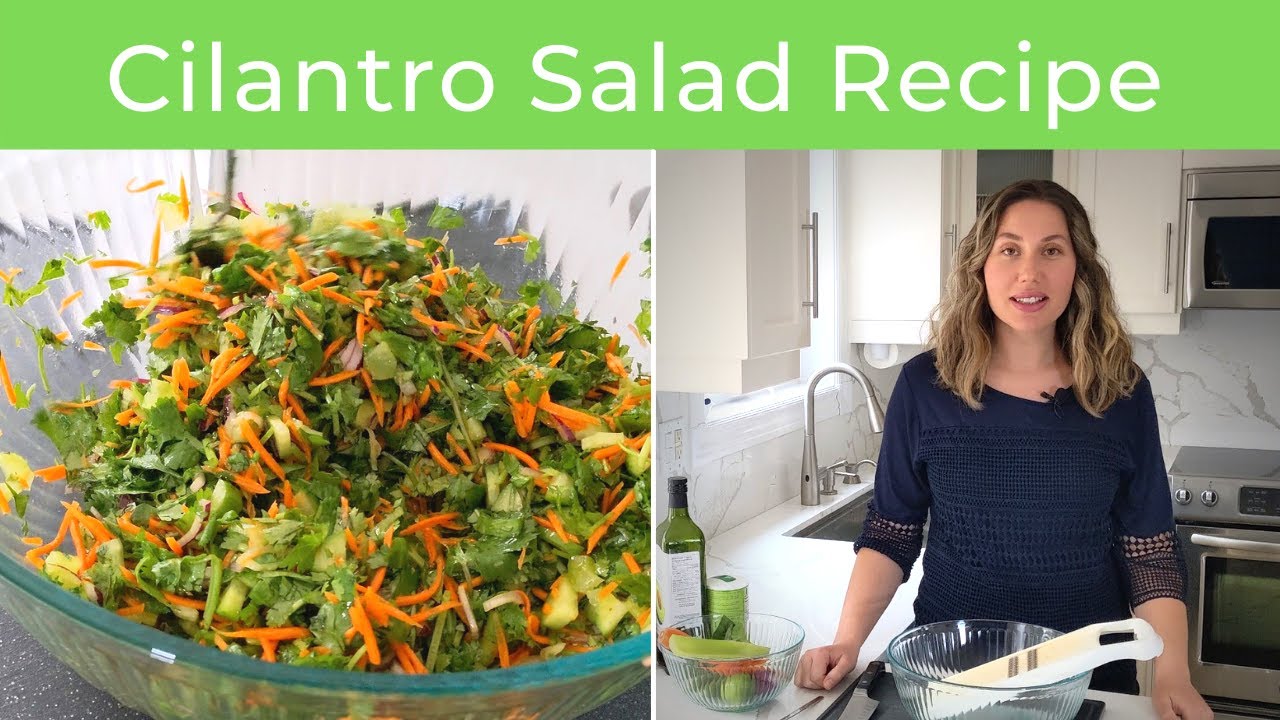
Firm vegetables in a small, even cut hold up best against a thick sauce. Anything that dumps water quickly, or needs a heavy dressing to taste of something, loses to the curry.
Vegetables and fruit
The Ciqual food composition table (2020), published through Aprifel, puts raw cucumber at 96.3 g of water per 100 g.
That water explains both jobs cucumber does. It cools the mouth, and it floods a salad that sits too long.
Just One Cookbook prefers thin-skinned, small-seeded Japanese or Persian cucumbers for sunomono, with English as a substitute, and peels them only in alternating strips for a striped look. Culinary Hill advises peeling or seeding the thick-skinned ones.
Tomatoes should be ripe but still firm, according to Skinny Spatula, so the pieces keep their edges. Red onion suits Indian salads and shallot suits Thai ones, and both get cut small.
Carrot and raw mango have firmer flesh than cucumber or tomato, so they take a dressing without going limp.
Acid and dressing
Penn State food scientists (Food Quality and Preference, 2026) tasted equal amounts of five organic acids. Citric acid, the one in lemon and lime, produced the strongest sourness and puckering, and lactic acid, the sour of sauerkraut, pickles and milk, produced the least.
So the acid you pick changes how sharp the salad tastes, and that matters more than people expect.
Lemon or lime juice is the answer for the richest, creamiest sauces. Rice vinegar suits delicate salads, and The View from Great Island calls it milder than other vinegars. Yogurt gives the gentlest finish, as in Hiroko Liston’s cucumber and tomato yoghurt salad with cumin, which she serves with curry-flavoured rice dishes.
Cut and crunch
Cut size decides how a salad meets the sauce.
Small dice spreads across the plate in kachumber and thin slices lie flat in a sunomono bowl. Shredded carrot stays upright in a slaw.
Seeds hold most of a cucumber’s water, according to Tasting Table, so scraping them out removes the main source of runoff before any salt is involved.
How do you make and serve the salad?
Cut the vegetables, keep them cold, and combine them with the dressing only when the curry is ready. Salted or syrup-dressed cucumber tolerates waiting, while raw vegetables in lemon juice do not.
Step-by-step build
- Cut firm, ripe vegetables and keep them cold. Seed thick-skinned cucumbers.
- For vinegar-dressed salads, salt the cucumber slices, let them release liquid, then squeeze them dry.
- Mix the dressing in a separate bowl. For sweet-sour versions, dissolve the sugar and salt first (Real Thai Recipes suggests warming the water to help).
- Keep the vegetables and the dressing refrigerated apart.
- Combine them just before the curry reaches the table.
- Taste, then adjust the acid and salt.
Sources split on rinsing. Culinary Hill rinses the salt off the cucumber, while Simply Recipes skips the rinse because the salt seasons the dish.
How long can it wait?
Recipe sources set different limits for kachumber. Skinny Spatula serves it immediately because it turns watery within hours.
Easy Peasy Foodie says to cover and refrigerate it if serving is more than 30 minutes away.
Read next to the sweet-sour recipes, the pattern holds. Raw vegetables in lemon juice get a short window, and cucumber that has been salted or sits in a vinegar and sugar syrup gets a longer one.
Some of the actual numbers are worth having on hand. Easy Peasy Foodie refrigerates kachumber once the wait passes 30 minutes, and Just One Cookbook salts sunomono cucumbers for 5 minutes. Real Thai Recipes’ sweet and sour cucumber salad chills for up to 3 hours at the longest. On the food-safety side, USDA guidance restated in July 2026 sets the room-temperature limit for perishable food at 2 hours, cut to 1 hour above 90 degrees F.
Serving
A small bowl on the side beats spooning the salad onto the plate. The juices stay off the rice, and each person decides how much goes against the sauce.
The FDA Food Code (2022 edition) classes cut tomatoes and cut leafy greens as time/temperature control for safety foods, so the bowl goes back in the fridge once everyone has served themselves.
Which salads clash with curry, and when does salad not work?
A salad fails beside curry when it repeats the sauce, brings no acid, or is asked to do a job that belongs to rice or bread.
Plain lettuce is the obvious offender. UK Indian takeaways list a simple salad of lettuce, tomato, cucumber and lemon as a standard side, and Abington Tandoori’s menu on Just Eat is one example, where it appears as the vegetarian salad. The lemon does the work there, because lettuce on its own adds crunch and nothing else.
Creamy dressings are the other mistake. A curry sauce already carries cream or coconut milk, so a mayonnaise or yogurt-heavy salad doubles up. Culinary Hill adds a practical problem: a dairy or mayonnaise dressing can curdle when watery cucumbers release liquid.
Then there’s the question of whether salad can move sauce from plate to mouth. Forum posters on Singletrack World split on this one. One argues that salad cannot carry sauce the way chapati, naan or rice does, while another offers salad as the low-carb option.
Both are right about different jobs. A salad contrasts the curry, and it does not carry it.
Salad With Curry FAQ
Is raita a salad?
Not quite. Kitchen Sanctuary describes raita as a plain yogurt-based sauce or dip flavoured with vegetables such as cucumber and mint, so it sits closer to a cooling condiment than a salad.
It works well beside one.
Is curry chicken salad the same thing as a salad served with curry?
No. Curry chicken salad is a cold dish of chopped chicken, apple, red onion and raisins bound in a curry-flavoured dressing, typically served on bread or croissants.
The salad that goes beside a curry is a separate, vegetable-led side.
Is it traditional to serve salad with curry?
Yes, in several cuisines. Shweta in the Kitchen calls kachumber a staple in most Indian homes and restaurants, and Real Thai Recipes says sweet-sour cucumber salad is usually served with coconut-based curries.
Japanese curry rice takes pickled sides instead.
Which salads for curry are vegan?

Kachumber is naturally vegan, according to Skinny Spatula. Plain sunomono, made with rice vinegar, sugar, salt and soy sauce, also contains no animal ingredients.
Check Thai cucumber salads, because some versions use fish sauce, while the vinegar-and-sugar version does not.
Where Salad With Curry Fits on the Plate
A salad with curry works as the contrast, never the carrier.
Easy Peasy Foodie photographs its kachumber beside butter chicken and basmati rice, and Chili Pepper Madness sets sunomono next to a bowl of rice. Both keep a starch on the plate to move the sauce.
Build the plate in this order:
- Rice or bread to carry the sauce
- Salad for acid and crunch
- Raita or mint chutney for extra cooling
The order flips only at vindaloo-level heat, where the cooling condiment moves ahead of the salad.
The trade-off is more bowls and one last-minute step, because the salad gets combined only when the curry is ready.


