


Cold, vinegar-led salads win with teriyaki chicken, and cucumber salad (sunomono) takes the top spot, with Asian sesame ginger slaw and spinach goma-ae behind it. Contrast against the glaze did most of the ranking. Effort and how often cooks actually serve the pairing broke the ties.
Rice plates need that contrast the most, since a sticky glaze has nothing else to cut it.
Kikkoman’s original teriyaki sauce lists 580 mg of sodium per tablespoon (retailer label listings checked October 2026), so the salad should bring acid and crunch instead of more soy sauce.
Which Salads Go Best With Teriyaki Chicken?

Cucumber salad comes out ahead of Asian sesame ginger slaw and spinach goma-ae. All of them are cold, quick, and built on vinegar or sesame. Pantry and Larder puts cucumber salad on its teriyaki chicken list, and so do Corrie Cooks and Greedy Girl Gourmet.
| Salad | Core ingredients | Dressing | Contrast it adds |
|---|---|---|---|
| Cucumber salad (sunomono) | Japanese cucumber, optional wakame | Rice vinegar, sugar, salt | Acid, cool |
| Sesame ginger slaw | Napa cabbage, carrot, green onion | Sesame ginger | Crunch |
| Spinach goma-ae | Blanched spinach | Ground sesame, soy sauce | Earthy, nutty |
| Edamame crunch salad | Edamame, cabbage, carrot | Sesame or citrus | Crunch, protein |
| Cold soba salad | Soba, cucumber, scallion | Ponzu or sesame | Cool, nutty |
| Wakame seaweed salad | Wakame, sesame seeds | Rice vinegar, sesame oil | Brine, acid |
| Green salad | Mixed greens, carrot, cucumber | Ginger dressing | Mild freshness |
Cucumber salad (sunomono)

Just One Cookbook’s sunomono dressing runs 4 tablespoons of unseasoned rice vinegar to 2 tablespoons of sugar, with half a teaspoon each of salt and soy sauce.
Salt the cucumber slices for 5 minutes and squeeze them dry so their water doesn’t thin the dressing. Japanese or Persian cucumbers hold their snap better than the watery supermarket kind.
You get the sharpest acid on this list for almost no work. The catch is that it gives up moisture and crunch fast once dressed, so mix it right before the chicken hits the plate.
Asian sesame ginger slaw
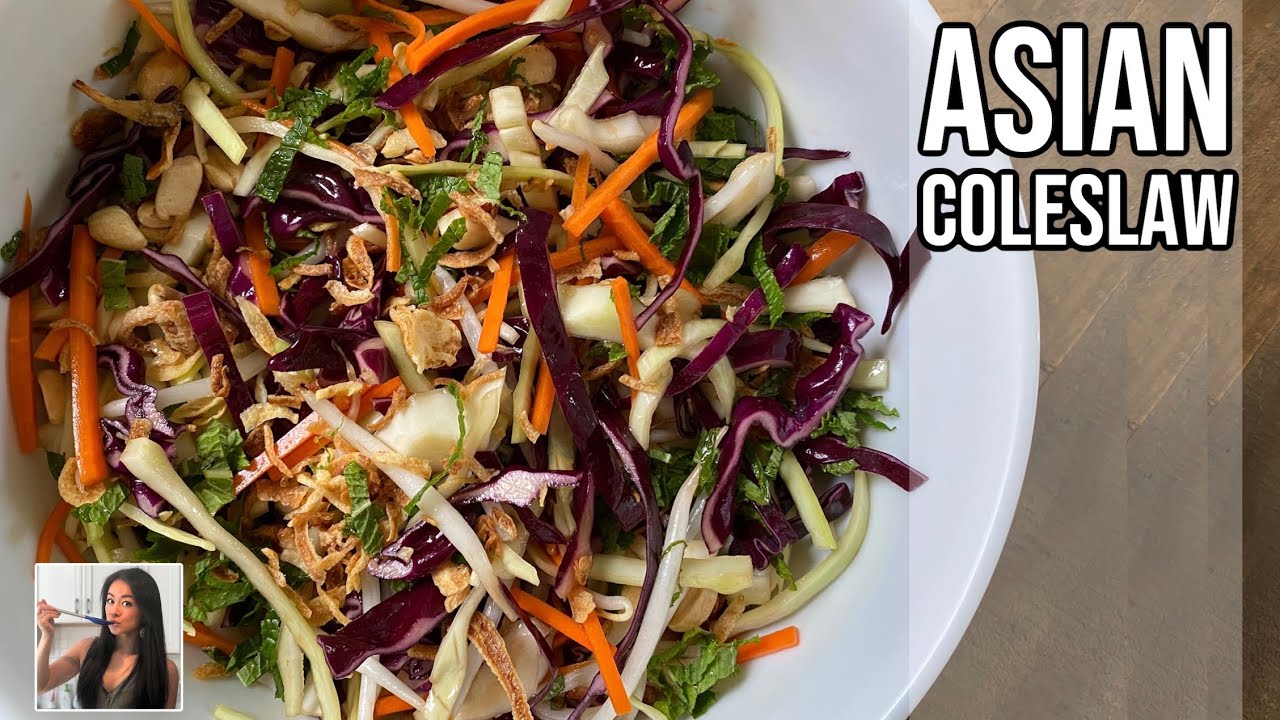
Slaw is the sturdiest option here.
Shredded napa or green cabbage and carrot ribbons, with green onion sliced over the top, all under sesame ginger dressing and a scatter of toasted sesame seeds.
Pantry and Larder credits the earthy sesame in this slaw with mellowing the sweetness of the glaze. Cabbage holds its texture for hours, so it’s the better pick when you’re pulling dinner together in stages.
Volume is the downside. A full bowl of slaw is more salad than most plates want.
Spinach goma-ae

Blanched spinach gets pressed dry and tossed with ground toasted sesame, soy sauce and sugar. The contrast is earthy and nutty rather than sharp, and there’s no real crunch to speak of.
I’d watch the dressing, though. Its soy and sugar stack on top of a glaze that already has both.
People who find vinegar-heavy salads too bright next to chicken tend to prefer goma-ae.
Edamame crunch salad

Shelled edamame, shredded cabbage and carrot, dressed with sesame or citrus. It’s the only salad on this list that adds protein.
Nothing wilts, and it’s crunchy and filling in one bowl. The chopping and shelling take longer than slaw or cucumber salad, which is the only real complaint.
Cold soba noodle salad
Soba only works when there’s no rice on the plate.
Chilled buckwheat noodles with cucumber, scallion and a ponzu or sesame dressing give a cool, nutty contrast. Next to steamed rice they pile starch on starch, and the salad stops doing its job.
Used the right way, it turns the chicken into a full meal. It’s heavy, though, and the noodles have to replace the rice, not join it.
Wakame seaweed salad
Rehydrated wakame with sesame seeds and a dressing of rice vinegar and sesame oil gives a briny, slippery contrast. Just One Cookbook folds the same seaweed into its sunomono.
Wakame carries its own salt, so keep soy sauce out of the dressing.
It’s light and low effort, and the texture is unlike anything else on the plate. Not everyone likes that texture, and the seaweed does add salt to a plate that’s already salty.
Green salad with ginger dressing

Mixed greens, shredded carrot and cucumber under a ginger dressing is the least exciting pick, and often enough.
Corrie Cooks lists a simple green salad with a light dressing among its picks for chicken teriyaki. If there’s no cabbage or Japanese cucumber in the fridge, this is the easier route that still works.
It’s the cheapest and fastest of the seven, and it brings the least contrast.
Why a Salad Balances Teriyaki Chicken
The glaze is sweet, salty and sticky, and a salad balances it by adding what it lacks. That means acid, crunch and a cool temperature.
Kikkoman traces teriyaki to a simple mixture of soy sauce and mirin, and the name combines “teri” (luster) and “yaki” (grilled or broiled). Traditional versions are commonly built from soy sauce, mirin, sugar and sake, cooked down until glossy. Each pass of the glaze builds a thicker, sweeter coat.
Bottled sauce leans further toward sugar. Japanese-Americans in Hawaii added pineapple juice and brown sugar, among other ingredients, per Kikkoman USA, and sugar sits among the first three ingredients on Kikkoman’s original teriyaki sauce.
Acid does most of the work against that coat. Rice vinegar or citrus cuts through sugar, and cucumber salad and wakame salad lead here.
Crunch matters too. Raw cabbage, carrot and edamame break up the soft, sticky bite of glazed chicken.
Cool is the quiet one. Cucumber, avocado or chilled noodles lower the temperature of a hot plate.
Pick one dominant contrast and let the rest follow. A salad that is sharp, crunchy and cold all at once competes with the chicken instead of balancing it.
Salt needs the same attention. The glaze is already salty, so the contrast should come from vinegar and texture, not from a second soy-based sauce.
Which Dressing Works With Teriyaki Chicken?

A light rice vinegar or sesame ginger dressing with little or no soy sauce works best, because the chicken already carries the salt and the sugar.
- Unseasoned rice vinegar with a little sugar and a pinch of salt is the sunomono base.
- Sesame ginger (rice vinegar, toasted sesame oil, grated ginger and a small splash of soy) suits slaw and greens.
- Miso whisked into rice vinegar and sesame oil is savory and thicker, and it’s good on spinach and mixed greens.
- Ponzu is citrus-seasoned soy sauce, which Kikkoman sells as a dressing when mixed with a little oil. It fits cold soba.
- Lemon, lime or mandarin juice with neutral oil and no soy fits edamame and avocado salads.
Sodium is where dressings go wrong. The Dietary Guidelines for Americans 2025-2030, released in January 2026, keep the cap at less than 2,300 mg of sodium per day for people 14 and older, and the chicken uses a large share of that before the salad is dressed.
The figures below come from Kikkoman label listings checked in October 2026. Reformulations move them slightly, and older bottles of the teriyaki sauce may still show a higher figure.
| Kikkoman product | Sodium per tablespoon | Role on the plate |
|---|---|---|
| The Original Teriyaki Marinade & Sauce | 580 mg | Already on the chicken |
| Seasoned Rice Vinegar | 510 mg | Skip for dressings |
| Ponzu Citrus Seasoned Dressing & Sauce | 480 mg | Use sparingly |
| Rice Vinegar (unseasoned) | 0 mg | Default base |
Seasoned rice vinegar is the trap. It looks like plain vinegar, but Kikkoman’s seasoned bottle lists salt and sugar and carries 510 mg per tablespoon against 0 mg for the unseasoned one.
Sunomono dressing is sweet by design. Just One Cookbook uses 2 tablespoons of sugar per 4 tablespoons of vinegar, and warns that less sugar makes the vinegar taste too strong. Its fix is a splash of dashi or water.
On a teriyaki plate, cut the sugar and dilute the dressing that way.
Cafe Delites and Tefal both put teriyaki sauce in the dressing, which looks like a contradiction. Their recipes put the chicken on top of the salad, so the dressing echoes the marinade. That doesn’t carry over to a side salad.
On a side salad, the dressing should be the sharpest thing on the plate.
How to Serve the Salad: Side, Bowl, or Topped With Chicken
Serve the salad on the side by default. Put it in the bowl when the meal is built on rice, and put chicken on top only when the salad has to carry the whole dinner.
A side salad is a small plate next to the chicken, dressed at the table. Cucumber salad (sunomono) and slaw suit this format best.
In a bowl, rice goes on the bottom with sliced chicken and the salad piled to one side. Keep the dressing light, because extra runs straight into the rice.
Sliced chicken over greens turns the plate into a main-dish salad. Cafe Delites builds its teriyaki glazed chicken salad from avocado, cucumber, carrot and nori strips, and avocado earns its place there because it adds a cool, soft bite without competing with the glaze.
What decides it is the starch already on the plate. Steamed rice wants a vinegar-led salad (cucumber salad or wakame seaweed salad) or slaw. Teriyaki noodles or yakisoba also take slaw or cucumber salad, and cold soba is out. With no starch at all, cold soba noodle salad or edamame crunch salad can carry the bulk.
Soba next to rice stacks starch on starch and flattens the plate.
Noodle plates follow the same logic, and the side dishes that suit a noodle plate lean on crunch and acid instead of more carbs.
Which Salad Fits Your Time and Diet?
Wakame seaweed salad is the fastest, at 5 minutes of hands-on work plus a 10-minute soak. Cucumber salad, Asian sesame ginger slaw and edamame crunch salad each take about 15.
Prep time and make-ahead

The times and holding rules below come from published recipes by Tara’s Multicultural Table, Peel with Zeal, Chopstick Chronicles, Craving California, Running on Real Food and The Subversive Table.
| Salad | Hands-on time | Make-ahead rule |
|---|---|---|
| Cucumber salad (sunomono) | 15 min plus 10 min resting | Dress just before serving |
| Asian sesame ginger slaw | 15 min | Prep vegetables and dressing a day ahead, keep apart |
| Spinach goma-ae | 10 min prep, 5 min cooking | Best the day it is made |
| Edamame crunch salad | 15 min | Hold the dressing back for long storage |
| Wakame seaweed salad | 5 min plus 10 min soak | Chills well |
Published storage windows for the same salad disagree, and the disagreement matters.
- The USDA Food Safety and Inspection Service puts the refrigerator ceiling for leftovers at 3 to 4 days.
- Dressed slaw gets 24 hours from The Kitchen Girl and 3 days from Peel with Zeal.
- My Plantiful Cooking says wakame salad keeps 2 to 3 days, while The Subversive Table says 4 to 5.
- Edamame crunch salad runs 2 to 5 days across recipes, with crunch fading after day two (Family Food on the Table).
The recipes measure different things. Some count the days until crunch fades, others the days until the food is unsafe.
Two recipes quote up to 5 days, past the FSIS figure. Go with the shorter number.
Low-carb and gluten-free

USDA FoodData Central lists 5.8 g of carbohydrate per 100 g of raw cabbage, against 21.4 g per 100 g of cooked soba noodles.
That gap makes slaw the safe low-carb pick and cold soba salad a replacement for rice, not an addition to it. Cucumber salad, goma-ae and wakame salad are vegetable-led as well.
Gluten is a bigger problem than it looks. San-J says ordinary soy sauces contain about 40% to 60% wheat, so every dressing in this article that uses soy (goma-ae, slaw, wakame, soba) needs a swap to tamari. Check the label for a gluten-free certification, since San-J brews its gluten-free tamari from 100% soybeans and certifies that line.
Soba trips people up too. Many brands blend buckwheat with wheat, so only noodles labeled 100% buckwheat qualify, according to The Plant-Based Wok.
And then there’s the chicken. Regular bottled teriyaki sauce is built on soy sauce too, so a gluten-free salad next to it does not make a gluten-free plate.
When a Salad Does Not Work With Teriyaki Chicken
Creamy mayonnaise-based salads and sweet fruit salads clash with teriyaki chicken, because they add richness or sugar where the plate needs acid.
Pantry and Larder lists Japanese potato salad among its sides, and the Hawaiian plate lunch pairs teriyaki chicken with macaroni salad and two scoops of rice (Hawaii.com).
Both traditions are real. They solve a different problem than balance.
A plate lunch is built to be filling, and a mayonnaise-based salad adds fat to a plate that already has sugar and salt. It cannot supply the acid.
Heirloom Pantry’s list includes a spicy kani salad (imitation crab, cucumber, panko and Kewpie mayo), which is rich enough to eat in small scoops, not as the salad that cuts the glaze.
Fruit salads fail on sugar. University Hospitals’ teriyaki chicken and mango salad recipe lists 47 g of sugar per serving, from a honey marinade, two mangoes and a poppy seed dressing.
Mango works when something sharp or cool sits beside it. Greedy Girl Gourmet’s mango salad pairs it with cucumber.
If you’re stuck with a creamy salad, serve a small scoop next to a vinegar-based side. A fruit salad needs lime juice, cucumber or chili to cut the sweetness. Caesar and ranch are better swapped for rice vinegar dressing, because garlic, cheese and dairy fight a soy-and-ginger glaze.
Salad With Teriyaki Chicken FAQ
How much salad do I need per person?
About 1 cup. Peel with Zeal’s Asian coleslaw serves 6 from roughly 5.5 cups of cabbage and carrot, and Tara’s Multicultural Table gets 4 to 6 servings of cucumber salad from 3 Japanese cucumbers.
Does the salad have to be served cold?
No, though cold suits most of them. My Plantiful Cooking calls wakame salad a traditionally cold dish, spinach goma-ae works warm or cold, and slaw tastes better after resting 30 minutes with its dressing.
Which cooked vegetables work if I skip the salad?

Pantry and Larder names bok choy, broccoli, green beans and stir-fried peppers.
Greedy Girl Gourmet leans toward bok choy or Chinese broccoli, since garlic and ginger echo the aromatics in the glaze.
Is store-bought sesame ginger dressing good enough?
Yes, if the label passes a sodium check. University of Connecticut Extension treats 5% Daily Value or less per serving as low and 20% or more as high.
Pick a bottle near the low end. Skip any dressing that is mostly soy sauce.
Which Salad to Make First
Start with cucumber salad (sunomono). Buy Japanese or Persian cucumbers, unseasoned rice vinegar, sugar, salt and toasted sesame seeds.
One tablespoon of teriyaki sauce uses about 25% of the 2,300 mg daily sodium limit, and unseasoned rice vinegar adds 0 mg. A vinegar-based dressing leaves the rest of that budget untouched.
If you move down the list, the effort climbs a little each time. Cucumber salad needs no cooking, slaw needs knife work, and goma-ae needs boiling water and an ice bath.
Cucumber salad does have one gap. It adds no protein or starch, so the chicken and rice carry the meal.
Label figures were checked in October 2026, and a reformulated sauce changes the arithmetic.


