

You’ve seen the label at the fish counter. But what is sushi grade salmon, exactly, and does it actually mean anything?
The short answer: it’s not a regulated term. No government agency certifies it. What it signals is a combination of sourcing quality, handling speed, and parasite destruction through proper freezing.
Most people buying raw salmon for home use don’t know what separates safe from risky. The difference comes down to how the fish was frozen, where it came from, and whether the seller actually knows their supply chain.
This guide covers the FDA freezing requirements, the farmed vs. wild salmon debate, parasite risk, where to buy, and how to handle raw salmon safely at home.
What Is Sushi Grade Salmon
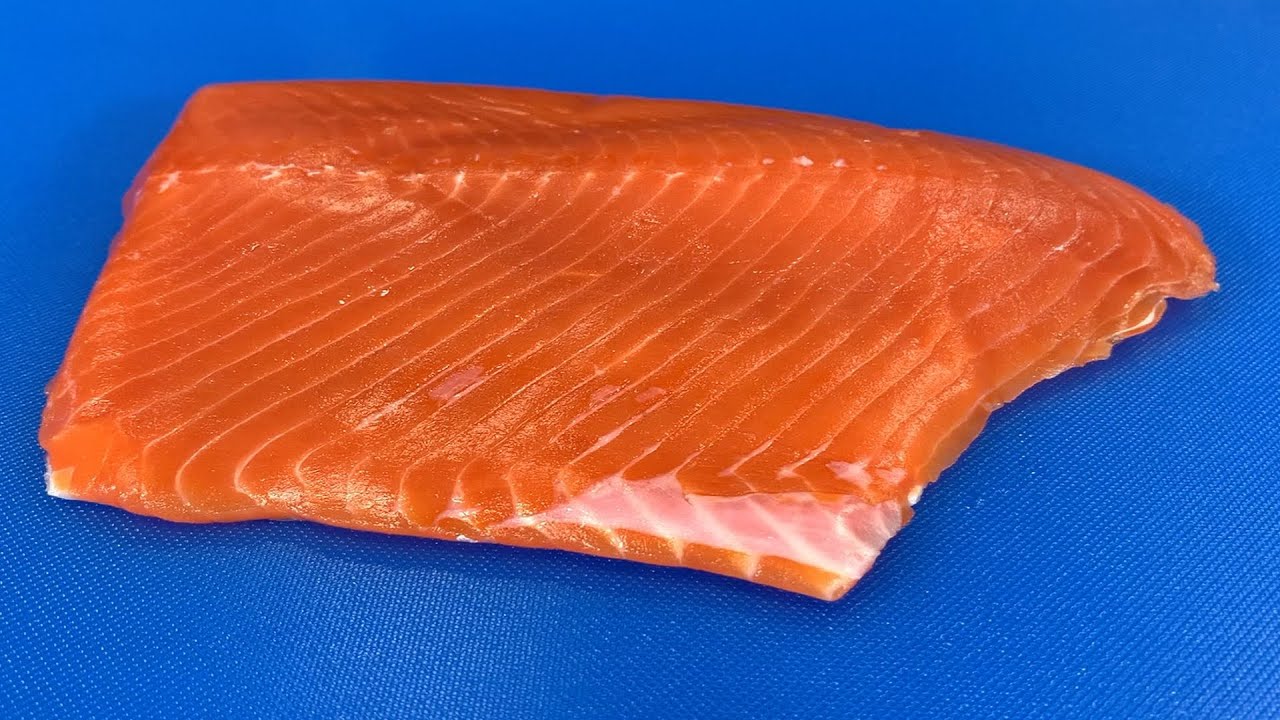
Sushi grade salmon is salmon that has been handled, sourced, and frozen in a way that makes it safe to eat raw.
That sounds simple enough. But here’s where most people get tripped up: “sushi grade” is not a regulated term. No government body, not the FDA, not the USDA, certifies or defines it.
The label is applied at the distributor or retailer level. A fishmonger calls something sushi grade because they believe it meets the handling standards for raw consumption. There is no third-party check, no official stamp, no certification body behind it.
What the term actually signals (when used honestly) is that the fish has been:
- Sourced from a supplier focused on raw fish quality
- Kept at proper cold-chain temperatures throughout handling
- Frozen to kill parasites, per FDA guidelines (with some exceptions for farmed Atlantic salmon)
- Handled quickly to preserve freshness and minimize bacterial growth
So when you buy sushi grade salmon from a reputable Japanese grocery store or a specialized seafood supplier, you’re mostly buying into their reputation and sourcing standards, not a legal guarantee.
Think of it like “restaurant quality” on a food product. It means something. It just doesn’t mean anything official.
—
FDA Freezing Requirements for Raw Fish Consumption
The closest thing to a real standard behind the sushi grade label comes from FDA Food Code Section 3-402.11, which covers parasite destruction in fish intended for raw consumption.
The FDA does not define “sushi grade.” But it does require that most fish served raw be frozen first, under one of these protocols:
| Method | Temperature | Duration |
| Standard Freezing | $-4^{\circ}\text{F}$ ($-20^{\circ}\text{C}$) or below | 7 days (total time) |
| Blast-to-Storage | $-31^{\circ}\text{F}$ ($-35^{\circ}\text{C}$) until solid | 24 hours (at storage temp) |
| Full Blast Freezing | $-31^{\circ}\text{F}$ ($-35^{\circ}\text{C}$) or below | 15 hours (minimum) |
These freezing requirements exist to kill Anisakis simplex larvae, the primary parasite concern in raw salmon. Freezing does not remove the larvae from the fish. It kills them, making them harmless to eat.
One key exemption: farmed Atlantic salmon raised in net pens and fed controlled, parasite-free feed is generally exempt from the mandatory freezing requirement. The FDA considers the parasite risk low enough that freezing is not legally required, though many suppliers freeze it anyway for texture and quality reasons.
Most commercial flash freezing happens on fishing boats or at processing facilities, long before the fish reaches a retailer. This is why “previously frozen” fish can still carry the sushi grade label.
Why Japan Handles This Differently
Japan, where sushi culture originated, actually has no legally binding freezing requirement for raw fish. The Ministry of Health, Labour and Welfare recommends freezing at -4°F for at least 24 hours, but these are guidelines, not law.
High-end Japanese sushi restaurants often serve fresh, never-frozen wild fish. The trade-off is real: Japan reports approximately 20,000 anisakiasis cases per year (CDC, Emerging Infectious Diseases 2022), by far the highest in the world.
In the US, the FDA mandate significantly reduces that risk. Most “sushi grade” fish sold here has been frozen to the required temperature thresholds, whether or not it says so on the label.
—
Farmed vs. Wild Salmon for Raw Consumption

This is one of the most misunderstood aspects of buying salmon for sushi or sashimi at home.
Wild salmon carries a higher parasite risk than farmed. Wild Pacific salmon (Sockeye, Chinook, Coho) spend part of their life cycle in freshwater, where exposure to Anisakis and other parasites is much higher. Pacific salmon is actually the most frequently implicated fish in Anisakis transmission in the US, according to research published in PubMed.
Farmed Atlantic salmon is a different story. A 2024 EFSA scientific opinion confirmed that farmed Atlantic salmon raised in net pens on heat-treated, controlled feed shows no evidence of zoonotic parasite infection based on surveillance data across multiple salmon-producing countries, including Norway.
The Norwegian Food Safety Authority goes further: it explicitly states that farmed Atlantic salmon and rainbow trout from Norway are safe for raw consumption without prior freezing, provided farming conditions meet specific criteria.
Side-by-Side Comparison
| Factor | Farmed Atlantic Salmon | Wild Pacific Salmon |
| Parasite Risk | Very Low (EFSA 2024) | Higher (especially Anisakis) |
| FDA Freezing | Exempt (if net-pen farmed) | Yes, strictly mandatory |
| Common Sources | Norway, Chile, Canada | Alaska, Pacific Northwest |
| Flavor Profile | Richer, fattier, milder | Leaner, more “oceanic,” firm |
Most salmon served raw at sushi restaurants in the US and Europe is farmed Atlantic salmon, sourced from Norway or Chile. That’s not a quality compromise. It’s actually the safer and more consistent choice for raw consumption.
Wild salmon for raw use absolutely needs to have been properly frozen first. No exceptions.
—
How Salmon Gets Labeled Sushi Grade
No licensing body issues a sushi grade certificate. The decision happens at the distributor or retailer level, and it’s based on their assessment of handling quality, sourcing, and freezing history.
The Supply Chain Behind the Label
Speed matters above everything else. The time between catch and cold storage directly affects whether a fish is suitable for raw consumption. Sushi grade handling means getting the fish into controlled temperatures as fast as possible after harvest.
For wild-caught fish, most commercial flash freezing happens on the boat or at the dock, at temperatures as low as -40°F. This is what suppliers like Catalina Offshore Products and Vital Choice do: the fish is blast frozen before it ever reaches a warehouse or a store shelf.
For farmed Atlantic salmon, the supply chain is more controlled from the start. Norwegian and Chilean producers operate under strict cold-chain protocols, and the fish often goes from farm to processing facility to export with careful temperature monitoring throughout.
What Japan Actually Does
The Toyosu fish market in Tokyo (which replaced the famous Tsukiji market) uses a real grading system based on fat content, color, texture, and origin. These grades affect price at auction but do not translate directly into the “sushi grade” label used in Western markets.
Japanese chefs distinguish quality by the fish’s lineage and handling. That knowledge doesn’t come from a sticker. It comes from a relationship with a specific supplier and knowing exactly where the fish was caught and how it was handled.
A 2024-2025 meta-analysis published in ScienceDirect found an overall seafood mislabeling rate of 39.1% across US studies, with retailers showing the highest rates. This is worth keeping in mind when shopping for sushi grade fish at general supermarkets versus specialized Japanese grocery stores or dedicated online seafood suppliers.
—
Parasite Risk in Raw Salmon
The main parasite concern in raw salmon is Anisakis simplex, a nematode larvae that lives in the muscle tissue of marine fish.
Here’s how it works: Anisakis larvae begin their life cycle infecting crustaceans and krill. Those crustaceans get eaten by fish. The larvae migrate from the gut into the muscle tissue. When a human eats infected raw fish, the larvae attempt to burrow through the gastrointestinal wall, triggering an immune response that causes severe abdominal pain, nausea, and vomiting.
Japan documents around 20,000 anisakiasis cases annually. Spain reports over 7,000 per year. In the US, reported cases are much lower, largely because of the FDA’s mandatory freezing requirement for most raw fish.
What Freezing Actually Does
Proper freezing kills Anisakis larvae. It does not remove them from the fish. You may still see or eat a dead larva in properly frozen fish. This is harmless.
Visual inspection alone is not reliable. Anisakis larvae are small (roughly 2 cm when uncoiled) and often coiled inside muscle tissue. Professional candling (backlighting fish fillets) can identify some larvae, but it’s not foolproof.
Salting and marinating do not kill Anisakis. Research from Italy found that two-thirds of anisakiasis cases there were linked to anchovies marinated in lemon or vinegar, treatments that people commonly assume would eliminate parasites (Wikipedia, Anisakis).
Wild Salmon Specifically
Pacific salmon, including Sockeye and Chinook, is the species most commonly linked to Anisakis transmission in the United States, according to PubMed research on human marine parasite infections. Wild salmon spend time in both freshwater and marine environments, increasing parasite exposure throughout their life cycle.
If you’re buying wild salmon for raw use, confirm it was blast frozen by the supplier. “Fresh” wild salmon from a general supermarket seafood counter is almost certainly not safe to eat raw.
—
Where to Buy Sushi Grade Salmon
This is where most home cooks make mistakes. Not all “fresh fish” counters are created equal when it comes to raw consumption.
Best Sources
Japanese grocery stores (H Mart, Mitsuwa Marketplace) are the most reliable retail option. These stores specifically source for raw consumption and understand what their customers are doing with the fish. Staff can often tell you the origin and whether the fish was blast frozen.
Online specialty suppliers are increasingly the best option for home cooks who want verified raw-consumption quality:
- Catalina Offshore Products (San Diego-based, supplies many restaurants)
- Vital Choice (wild-caught, blast frozen at sea)
- Sea to Table (flash frozen at dock or on-boat)
These suppliers freeze their fish at the source and ship frozen, so the cold chain is maintained from catch to your door.
General Supermarkets: Proceed Carefully
Most standard supermarket fish counters do not source specifically for raw consumption. The fish may be “fresh” in the sense that it was never frozen, which actually makes it riskier for raw use if it’s wild-caught.
Chain grocery stores also show seafood mislabeling rates of around 12% in Oceana’s 2022 testing, lower than restaurants (26%) but still worth knowing.
What to ask at any fish counter:
- Was this fish blast frozen? At what temperature?
- Is it farmed or wild-caught?
- Where was it sourced from?
If they can’t answer those questions, that’s your answer. A fishmonger who knows their product can always tell you where it came from and how it was handled.
If you’re pairing your raw salmon with wine for sushi night, the sourcing quality of your fish matters just as much as what’s in the glass.
How to Handle Sushi Grade Salmon at Home

Freezing kills parasites. It does not stop bacteria. Once your salmon is thawed, the clock starts immediately.
Most food safety failures with raw fish at home happen after purchase, not before. Temperature abuse during prep is the biggest real risk, according to Sea to Table’s food safety notes.
Storage and Thawing
Target storage temperature: 32-38°F (0-3°C). The colder the better, short of refreezing.
Use within 1-2 days of purchase. After 48 hours in the fridge, quality and safety both decline regardless of how well it was sourced.
Thaw frozen sushi grade salmon in the refrigerator overnight. Never on the counter, never under warm water. Rapid temperature shifts break down muscle texture and create conditions for bacterial growth.
The FDA is clear: bacteria multiply fast between 40°F and 140°F. Raw fish left at room temperature for more than 2 hours should be discarded. In temperatures above 90°F, that window drops to 1 hour.
Prep and Cross-Contamination
Dedicated board, dedicated knife. Using the same cutting surface for raw salmon and anything else, like vegetables or cooked proteins, creates cross-contamination risk that freezing cannot fix.
Keep the fish cold while you work. Take out only what you plan to slice immediately. Put the rest back in the fridge.
- Wash hands for at least 20 seconds before and after handling raw fish
- Sanitize surfaces and knives after use
- Wrap unused portions tightly in plastic wrap before refrigerating
Re-Freezing After Purchase
You can re-freeze sushi grade salmon, but texture takes a hit. Each freeze-thaw cycle breaks down cell walls further, resulting in softer, sometimes mushy flesh when thawed.
Best practice: portion before freezing. Freeze only what you won’t use within 48 hours, and do it immediately after purchase rather than after it has been sitting in the fridge for a day.
—
Sushi Grade Salmon vs. Sashimi Grade Salmon
Both terms are marketing labels. Neither is regulated. And in practice, they are almost entirely interchangeable.
Food Republic noted in December 2024 that the two terms mean the same thing in most retail and restaurant contexts. The only real distinction sometimes applied: “sashimi grade” occasionally signals a fattier, higher-quality cut, like belly (harasu) or a premium portion intended specifically for serving sliced without rice.
Where the Terms Come From
Fish suppliers started using both labels in the early 2000s to reassure buyers about raw consumption safety. The word “grade” implies a grading system, like USDA beef grades. No such system exists for fish in the US.
WebstaurantStore puts it plainly: since neither term is regulated, it can technically be applied to any fish without consequences. The label is only as good as the seller using it.
| Term | Regulated? | Practical Meaning | Sometimes Implies |
| Sushi Grade | No | Seller claims it is safe for raw use | Properly frozen to kill parasites |
| Sashimi Grade | No | Seller claims it is safe for raw use | Higher fat content or a more aesthetic cut |
What Actually Matters
Forget the label. Ask these questions instead:
- Was this fish blast frozen? At what temperature?
- Is it farmed or wild, and from where?
- How was it handled between catch and sale?
A fishmonger who answers those questions clearly is worth more than any label. One who can’t answer them is a red flag, regardless of what’s printed on the packaging.
Omakase-style restaurants take this seriously because the stakes are high. A chef serving omakase sushi builds a direct relationship with their suppliers and knows the exact sourcing details of every fish on the menu. That’s the standard to aim for when buying for home use.
—
Nutritional Profile of Raw Sushi Grade Salmon
A standard 3-ounce (85g) serving of raw salmon sashimi contains approximately 121 calories, 17g of protein, and 5g of fat, with virtually zero carbohydrates (SnapCalorie, 2026).
That fat is mostly unsaturated. Farmed Atlantic salmon specifically delivers around 1,820mg of combined EPA and DHA per 3-ounce serving, roughly a week’s recommended intake of marine omega-3s in a single portion (The Biome Kitchen, sourcing USDA data).
Omega-3 Content: Farmed vs. Wild
This is one area where farmed actually outperforms wild, at least by volume.
Farmed Atlantic salmon contains 20-70% more omega-3 fat per serving than most wild Pacific species, according to data compiled from USDA Nutrient Lab testing. The higher fat content comes from the controlled diet.
Wild sockeye salmon delivers around 730mg of combined EPA and DHA per 3 ounces, compared to 1,820mg in farmed Atlantic. The omega-6 to omega-3 ratio is better in wild salmon, but the raw omega-3 volume per serving is lower.
For most people eating sashimi a few times a week, the difference is not dramatic enough to drive sourcing decisions. Both are excellent omega-3 sources compared to almost any other common food.
Other Key Nutrients
Beyond omega-3s, a 100g serving of raw salmon sashimi provides:
- Vitamin D: up to 50% of daily value, one of the few non-fortified natural food sources
- Vitamin B12: often exceeds 100% of daily value
- Selenium: high levels supporting antioxidant function and thyroid health
- Potassium, phosphorus, and B vitamins (niacin, B6)
Does Raw Preserve More Nutrients Than Cooked?
Marginally, yes. Heat-sensitive enzymes and some water-soluble B vitamins are better retained in raw fish. But the difference is not dramatic enough to make raw salmon significantly more nutritious than well-prepared cooked salmon.
The real nutritional argument for sashimi is not raw vs. cooked. It’s the absence of added fats, heavy sauces, or high-calorie preparations that often come with cooked fish dishes.
If you’re pairing raw salmon with a light white wine, a crisp Sauvignon Blanc or a mineral-driven Albarino both work well with the clean, fatty flavor of sashimi-grade fish. For those who prefer red, a very light Pinot Grigio handles the delicate texture without overpowering it. The wine pairing for salmon depends a lot on how it is prepared, but raw preparations generally favor lighter, high-acid wines.
On the food side, the right salad with salmon or a well-chosen side dish for salmon can round out a sashimi meal into something more substantial without overwhelming the fish itself.
FAQ on What Is Sushi Grade Salmon
Is sushi grade salmon actually regulated?
No. Neither the FDA nor the USDA defines or certifies the term. It is a marketing label applied by distributors and retailers. The only real standard behind it is the FDA’s freezing requirement for fish intended for raw consumption.
Can you eat any raw salmon labeled sushi grade safely?
Generally yes, if it came from a reputable supplier. But the label alone guarantees nothing. Sourcing, freezing history, and cold-chain handling matter far more than what’s printed on the package.
What is the difference between sushi grade and sashimi grade salmon?
Practically nothing. Both terms are unregulated and used interchangeably. “Sashimi grade” sometimes implies a fattier, higher-quality cut, like salmon belly, but there is no official distinction between the two labels.
Does sushi grade mean the salmon was never frozen?
Often the opposite. Most sushi grade salmon has been blast frozen to kill Anisakis parasites, per FDA guidelines. “Previously frozen” is not a quality downgrade. For wild salmon especially, it is a safety requirement.
Is farmed or wild salmon better for raw consumption?
Farmed Atlantic salmon is generally safer for raw use. EFSA’s 2024 opinion confirmed it carries negligible parasite risk when raised on controlled feed. Wild Pacific salmon has higher Anisakis exposure and must be properly frozen before eating raw.
What parasites are found in raw salmon?
Anisakis simplex is the primary concern. These nematode larvae live in fish muscle tissue and can cause severe gastrointestinal symptoms if eaten alive. Proper freezing kills them. Visual inspection alone is not a reliable way to detect them.
Can you use supermarket salmon for sushi at home?
It depends. Farmed Atlantic salmon that has been blast frozen is often safe. Wild salmon from a general supermarket counter with no freezing history is risky. Always ask about the freezing process and sourcing before eating any salmon raw.
How long does sushi grade salmon last in the fridge?
Use it within 1-2 days of purchase, stored at 32-38°F. After 48 hours, both safety and quality decline. The FDA recommends discarding raw fish left at room temperature for more than 2 hours.
Where is the best place to buy sushi grade salmon?
Japanese grocery stores like H Mart or Mitsuwa, and online suppliers like Catalina Offshore Products or Vital Choice, are the most reliable options. They source specifically for raw consumption and can answer questions about freezing and origin.
What wine goes well with sushi grade salmon?
High-acid whites work best with raw salmon’s clean, fatty flavor. A crisp Sauvignon Blanc, a light Riesling, or a mineral Albarino all complement sushi and sashimi without overpowering the fish.
Conclusion
This conclusion is for an article presenting what is sushi grade salmon, and the core takeaway is straightforward: the label means nothing without knowing the supplier.
Farmed Atlantic salmon from a verified source, properly blast frozen and handled through a clean cold chain, is your safest option for raw consumption at home.
Wild Pacific salmon carries real Anisakis parasite risk and must meet FDA freezing standards before eating raw. No exceptions.
Skip the vague “sushi grade” sticker. Ask about freezing temperatures, sourcing, and handling instead.
Whether you’re slicing sashimi at home or learning how to make sushi, the fish quality and food safety handling you bring to the process matter far more than any label on the package.


