

A bowl of menudo on its own is a lot of fat and chile, so the table around it does real work. Lime and chopped onion go on top, bread sits beside the bowl, and a cold drink finishes it. Small sides are optional.
Bread is where the regions disagree. Corn tortillas come with the soup across most of Mexico, while El Paso and other border towns serve toasted bolillo, according to Borderzine (2026).
Then there’s the broth. Menudo rojo carries its chile in the pot. Menudo blanco, usual in Sonora and Sinaloa, leaves the heat to the table.
Which garnishes belong on a bowl of menudo?

The standard set is chopped white onion, cilantro, lime wedges, dried oregano and a crushed dried chile. The broth is fatty and heavy on chile, so these bring the crunch, freshness, acid, aroma and heat it doesn’t have on its own.
| Garnish | Flavor role | How it goes on |
|---|---|---|
| White onion | Raw crunch, sharp bite | Finely chopped, stirred in |
| Cilantro | Fresh herb lift | Coarsely chopped, scattered on top |
| Lime | Acid against the fat | Squeezed over each bowl |
| Dried oregano | Earthy, citrusy aroma | Crumbled between the fingers |
| Crushed chile | Table-side heat | A pinch at a time |
Pati Jinich’s red menudo for PBS Food (2021) feeds 8 to 10 people and calls for 2 cups each of chopped cilantro and mint, 1 cup of finely chopped white onion and 5 or 6 limes. Oregano and chile get their own bowls.
Mint is the odd one out, and Jinich also simmers a bundle of it in the pot.
Why lime does the most work
Limes tend to run out first, and the chemistry explains it. Squeezed lime juice carries about 46 g/L of citric acid, according to a Journal of Endourology analysis by Penniston and colleagues (2008).
That acid is what cuts through the fat in the broth. Squeeze it over each bowl at the table so everyone sets their own level.
Lemon wedges work too, and Food Network’s menudo recipes call for them.
Use Mexican oregano, not the pizza kind
The jar in your cupboard probably isn’t the right plant. Mexican oregano (Lippia graveolens) belongs to the verbena family, and Mediterranean oregano (Origanum vulgare) is a mint relative.
They don’t taste alike. Mexican oregano runs citrusy and grassy with anise undertones, and the Mediterranean kind is piney and peppery with a minty edge.
The swap works in a pinch, but dial back the amount, as The Daily Meal advises.
Which chile goes on the table
For table-side heat, PBS Food’s recipe suggests ground or crushed chiltepin, chile piquin or chile de arbol. Wikipedia’s menudo entry lists diced serrano as the usual fresh chile, and Food Network’s recipes mince pequin chiles over the bowl.
In practice the table ends up with some mix of these.
- Diced serrano
- Crushed chile piquin
- Ground chiltepin or chile de arbol
- Ground chile powder
Bolillo, corn tortillas or tostadas: which bread suits menudo?
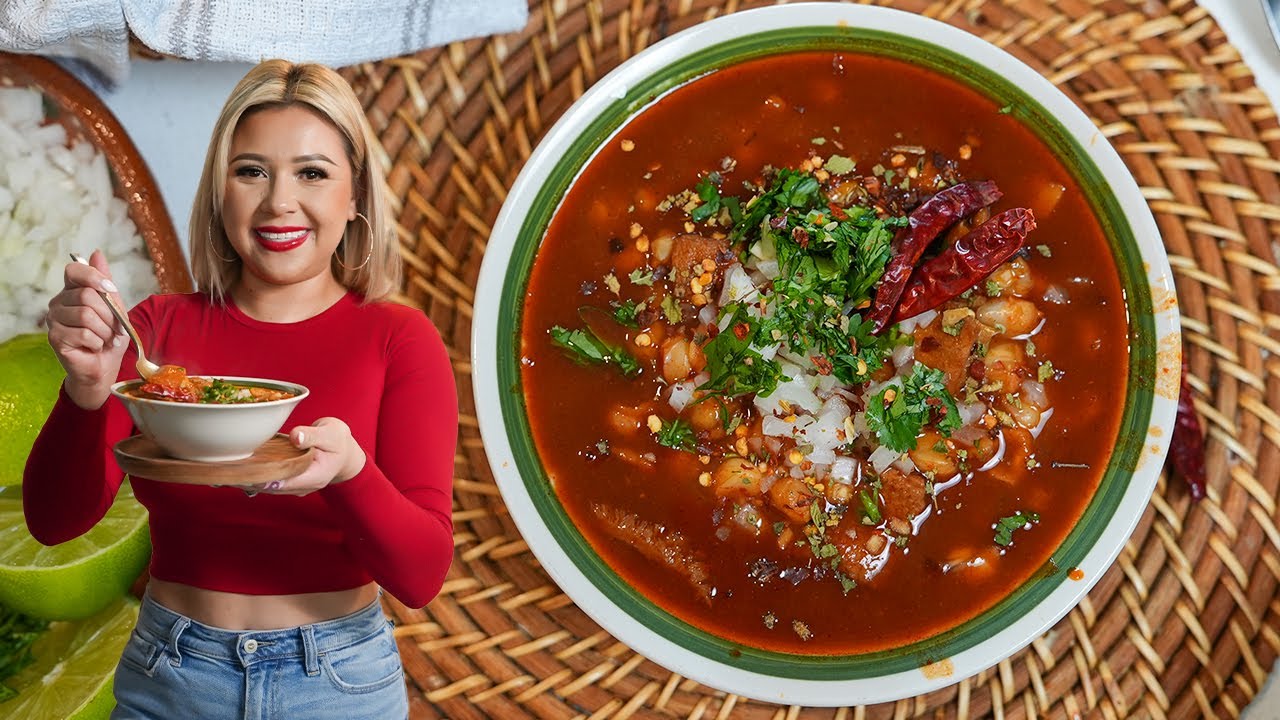
Corn tortillas are the default across most of Mexico, and the border towns reach for bolillo instead. Tostadas and flour tortillas turn up less often.
The split is regional. Menudo in Chihuahua often comes with bread, while Sonora leans toward tortillas, per Borderzine (2026).
Bolillo
Bowie Bakery in El Paso bakes around 70 bolillos on a weekday, and the count more than doubles on Sundays, according to Borderzine (2026).
Baker Lorena Rubio of Model Bakery credits the Chihuahua habit of eating menudo with bread, which El Paso inherited. Chef Pati Jinich said she was surprised the first time she tried menudo with a bolillo.
Toast the roll, then tear it and dip it into the red broth.
Corn and flour tortillas
Corn tortillas are the usual warm stack across most of Mexico, and the standard in Sonora. Flour tortillas get listed next to corn in Wikipedia’s menudo entry.
Wrap either one in a towel so the stack stays warm through a second bowl.
Tostadas

Tostadas add crunch, and they go soft fast in broth.
PBS Food’s red menudo recipe sets them out beside the bowl, not in it.
Bolillo soaks up the most broth, and corn tortillas do the scooping and rolling. Tostadas are mostly crunch on the side.
Side dishes that work with menudo

Keep sides small and plain. Mexican red rice, refried beans, tamales and something light and raw all fit, but menudo already fills the bowl, so none of them should compete with it.
Salt is the practical limit. The label on Juanita’s Foods canned hot and spicy menudo lists 1,100 mg of sodium per one-cup serving.
Homemade pots vary with the cook’s hand, but a seasoned broth leaves little room for salty sides.
Rice and beans

Mexican red rice (arroz rojo, also sold as Spanish rice) goes in a small scoop beside the bowl. Refried beans work the same way, spooned warm onto the plate.
Both add starch and body without adding heat, which helps when the broth is already hot.
Tamales
Menudo and tamales both show up on holiday tables, so they often share one meal. Because the regional styles of tamales run from sweet to heavily chile-based, a mild filling like chicken or cheese is the safer match for a red broth.
Light and raw sides
Sliced radishes show up on Food Network’s menudo garnish list, and pickled jalapenos or a plain green salad also work.
Keep the dressing to lime and a little oil.
What should you drink with menudo?
Cold and low in sugar is the rule, which points to an agua fresca or a beer. At breakfast, hot cafe de olla works too. Sweet sodas fight the lime and the chile.
Horchata and agua de jamaica
Agua de jamaica, which is steeped hibiscus, is tart enough to stand up to the broth. Horchata (rice and cinnamon) goes the other direction, creamy and cool next to red chile.
Mexico News Daily notes that most jamaica recipes use just four ingredients: water, hibiscus flowers, sugar and ice. That makes it easy to batch for a crowd.
Cafe de olla and other hot drinks

Cafe de olla suits breakfast menudo. It is brewed from ground coffee, cinnamon and piloncillo in a clay pot, per Wikipedia’s entry on the drink.
The piloncillo makes it sweet, so sip it between bites rather than with each spoonful.
Beer, micheladas and soda
Beer is the weekend drink, because menudo is also the hangover meal. Wikipedia notes that some people believe the soup alleviates hangovers, and one El Paso native told Texas Standard a good bowl “almost makes getting hungover worth it.”
A light Mexican-style lager, served cold with a lime wedge, is the easy default. A michelada (beer with lime juice, chile sauce and a salted rim) repeats the garnishes at the drink level and suits a weekend table. Watch the salt, since the rim stacks on top of a salty broth.
Bottled cola is fine for kids and drivers, though its sugar works against the lime.
Matching accompaniments to menudo rojo and menudo blanco

A rojo pot has its chile built in, which keeps the table simple. With blanco the table has to do more, supplying both the heat and the freshness.
| Attribute | Menudo rojo | Menudo blanco |
|---|---|---|
| Broth | Guajillo chile paste, red | No red chile, clear |
| Where it dominates | Chihuahua, Nuevo Leon, Durango | Sonora, Sinaloa |
| Source of heat | The pot | The table, or jalapeno in the pot |
| Usual table extras | Bread, lime, onion, oregano | Green onion, cilantro, lemon, ground chiltepin |
Wikipedia’s menudo entry places the red version in Chihuahua and Nuevo Leon and the white version in Sinaloa and Sonora. Sanborns, the Mexican restaurant chain, describes the same split, with rojo from the north served with bread and blanco from Sonora and Sinaloa served with chiltepin.
The line is a tendency, not a rule. A Dallas Observer column on Texas menu lore says Sonoran menudo can be blanco rather than rojo, which is a softer claim than Wikipedia’s “usually only.”
Both styles start from the same tripe-and-hominy base, covered in this primer on what menudo is. What changes at the table is where the heat comes from.
Menudo rojo needs little at the table
The chile is already in the pot.
Guajillo paste gives the broth its color and its heat, so the table only adds balance, meaning acid, raw onion and something to dunk.
A small bowl of crushed chile covers the guests who want more.
Menudo blanco builds its heat at the table
A blanco spread usually leans on ground chiltepin, the typical Southern Arizona garnish, along with the fresher stuff.
- Ground chiltepin
- Chopped green onion
- Cilantro
- Lemon wedges
Wikipedia adds that a blanco pot may carry jalapeno or chopped green chiles to replace the missing spice. Taste the broth first, then decide how much chile the table needs to cover.
How to set up a menudo table for breakfast, New Year’s Day or a crowd
Keep the pot hot, give every garnish its own bowl, and let guests build their own. The layout barely changes between a quiet Sunday breakfast and a holiday crowd. The quantities do.
When menudo gets served
Restaurants run it as a Saturday and Sunday special, per Wikipedia. New Year’s Day is the other big occasion, and Diana Kennedy confirms the tradition in The Cuisines of Mexico, according to the Dallas Observer.
Works Progress Administration documents from the 1930s, cited in Wikipedia’s menudo entry, record menudo parties among Arizona migrant workers for births, Christmas and other occasions.
Kennedy also notes that a pot needs at least four hours of simmering. That sets the schedule, and the walkthrough for making menudo from scratch shows where the hours go.
What the hangover claim rests on
A 2005 BMJ systematic review by Pittler, Verster and Ernst covered eight randomized trials of eight different interventions. It found no compelling evidence that any of them prevents or treats a hangover, and menudo was not among them.
The authors’ practical advice was abstinence or moderation. Serve menudo for the ritual and the warmth, not as a remedy.
Holding a pot for a crowd

USDA’s Food Safety and Inspection Service says hot food stays safe at 140 degrees F or above, and perishable food that sits at room temperature for two hours should be discarded. Above 90 degrees F, the limit drops to one hour.
A slow cooker on low or keep-warm holds a pot above that line, but it should not be used to reheat cold soup. Check with a food thermometer, since some warmers only hold 110 to 120 degrees F, according to Fight BAC.
Once service ends, move the pot to the fridge inside the two-hour window. For the days after the party, see how long menudo keeps in the fridge.
Setup order
- Time the pot to finish before guests arrive, then hold it at 140 degrees F or above.
- Set each garnish in its own small bowl with its own spoon.
- Cut limes into wedges, so one wedge covers one bowl.
- Put bread, tortillas and sides at one end of the table and the pot and bowls at the other.
- Replace garnish bowls when they run low instead of topping them off, as the FDA advises for buffet dishes.
- Pull the pot at the two-hour mark and refrigerate what is left.
What not to serve with menudo
Skip heavy fried or stuffed mains, sugary drinks and sweet bread, and keep rice out of the pot. A bowl of menudo is already a full meal, so anything fighting for the center of the plate works against it.
Heavy mains and casseroles
One roundup of side dishes for this soup lists carne asada burritos, taco casserole, chicken fajitas and cornbread.
Each of those is a second main course. Small, plain and starchy sides work. Anything that needs its own fork doesn’t.
Sweet drinks and sweet bread
The label on a 12-ounce can of Coca-Cola lists 39 g of added sugar. That is above American Heart Association guidance of 25 g a day for most women and 36 g for most men.
That much sweetness fights the lime and the chile, and pan dulce does the same thing on the plate. Save both for after the bowl.
Pot mistakes
Rice cooked in the pot absorbs the broth and thickens the whole batch, so keep it on the side.
On a red pot, stirring chile in for everyone stacks heat on heat. Put it in a bowl instead. Same story with raw onion and cilantro, which go limp in hot broth and lose the contrast they exist to provide.
When the rule bends
Tasting portions change the math. At Laredo Crime Stoppers’ Menudo Bowl cook-off, entries are judged from identical small cups, so a full side spread has no place there.
For a regular table with a regular bowl, garnishes, bread and one drink are enough.
Menudo Accompaniments FAQ
Are menudo garnishes the same as pozole toppings?
Only partly. Radishes appear on both tables, but pozole’s usual toppings also include shredded cabbage.
Menudo keeps to onion, herbs, lime, oregano and chile.
Do cheese and avocado belong on menudo?
Not in the traditional set. PBS Food’s recipe, Food Network’s recipes and Wikipedia’s entry list onion, herbs, lime, oregano and chile, with no cheese or avocado.
Both add richness to a broth that already has plenty, so offer sliced avocado on the side only if guests ask.
How much bread and garnish should you plan per guest?
Plan on one bolillo or two to three tortillas per bowl, plus a spare stack for second helpings.
Limes go first, so cut more than looks necessary.
Can you prep menudo garnishes ahead of time?
Yes, in part. Chop the onion and cut the limes a few hours ahead and keep them covered in the fridge.
Chop the cilantro just before serving so it stays bright. Dried oregano and crushed chile need no prep.
Which Menudo Accompaniments to Prepare First
If time is short, start with lime wedges, chopped white onion and bread or warm tortillas. Acid, raw crunch and starch correct what a fatty, chile-heavy broth lacks.
Limes go first because they need no prep. Bread or tortillas come next, since they replace the need for extra sides, and the onion is last because chopping takes minutes.
The cost is control. A bare table drops oregano, cilantro and chile, so guests can’t adjust heat or aroma bowl by bowl.
Menudo blanco changes the order. The pot carries no chile, so ground chiltepin takes third place ahead of the onion.


