

Arugula dressed with lemon, olive oil and shaved Parmesan is the salad I’d put beside roast beef nine times out of ten. The tenth time it’s a wedge with blue cheese, which is the steakhouse answer to the same problem.
The problem is a plate of fat, salt and gravy that needs something sharp next to it. Acid does most of the work. Pepper helps, and crunch is a bonus. Cold sliced beef loosens the rules a little and lets potato and tomato salads in.
In YouGov’s 2018 poll, 89% of Britons said roast potatoes belong on their ideal Sunday roast. The plate is already heavy on starch before anyone mentions a salad, so whatever you add should give contrast, not more bulk.
Which Salads Go Best With Roast Beef?

Arugula with lemon, olive oil and shaved Parmesan is the safest pick, and a wedge salad with blue cheese is the steakhouse alternative.
Both give the plate what roast beef lacks, which is a sharp edge and some crunch next to the richness of the meat and gravy.
- Arugula with lemon and Parmesan brings pepper and acid, and it takes minutes to make.
- A wedge salad is cold iceberg with tangy blue cheese.
- Waldorf salad means apple, celery and walnuts in a creamy dressing.
- Romaine with a plain vinaigrette is mild, crisp and hard to get wrong.
- Potato salad works with cold sliced beef. Not with a hot roast dinner.
Roundups of roast beef sides run long. A Pinch of Adventure lists 27 and Cooking Chat 40-plus, with salads as one category among potatoes, bread, pasta and desserts.
One salad is enough. When potatoes, Yorkshire pudding and a vegetable are already on the table, a second salad adds volume, not contrast.
| Salad | Best with | Dressing style | Effort |
|---|---|---|---|
| Arugula, lemon, Parmesan | Hot roast, prime rib | Lemon and oil | Low |
| Wedge salad | Prime rib, holiday table | Blue cheese, creamy | Low |
| Waldorf salad | Hot or cold beef | Mayonnaise-based | Medium |
| Romaine with vinaigrette | Any roast | Light vinaigrette | Low |
| Potato salad | Cold sliced beef | Creamy or mustard | Medium |
Why a Salad Balances Roast Beef

Roast beef is rich, salty and browned on the outside, so the salad has to supply what the meat doesn’t. Acid makes the meat taste lighter. Peppery leaves reset your mouth for the next bite, and crisp texture gives you something to chew besides tender slices.
Lemon juice and vinegar brighten a heavy plate. Kripalu executive chef Jeremy Rock Smith told Real Simple (2021) that acid is almost always what a flat-tasting dish is missing.
Arugula and watercress get their bite from glucosinolates, and acid with a pinch of salt tames the leaves when they run bitter (Chowhound). On the crunch side, chef Robert Irvine told Chowhound that the texture of wedge-salad lettuce contrasts with the richness of steak.
Creamy dressings pull the other way. A creamy Caesar-style dressing echoes the savory side of beef instead of opposing it (Talk of the House), so it needs crisp romaine underneath. Apple, pear and beet play supporting roles.
Rocket’s heat is not constant. University of Reading researchers found that leaves from repeated harvests of the same crop carry more glucosinolates, taste more bitter and pungent, and score lower with consumers (Bell, Lignou and Wagstaff, Foods, 2020).
The same university’s research blog adds that summer-grown leaves can be extremely pungent while winter leaves can be bland. Taste a leaf before dressing. Sharp ones need more lemon and a pinch of salt, and bland ones need more cheese or oil.
No controlled tasting study on roast beef and salad turned up in the search. The pairing logic here comes from chefs and food-science writing on fat, acid and pungency.
Salad Types That Work With Roast Beef, and Where Each One Fails
Every kind of salad has its own way of going wrong. Delicate leaves wilt, creamy ones pile richness on richness, and starchy ones add a second helping of potato nobody asked for.
Peppery greens such as arugula, watercress and fennel
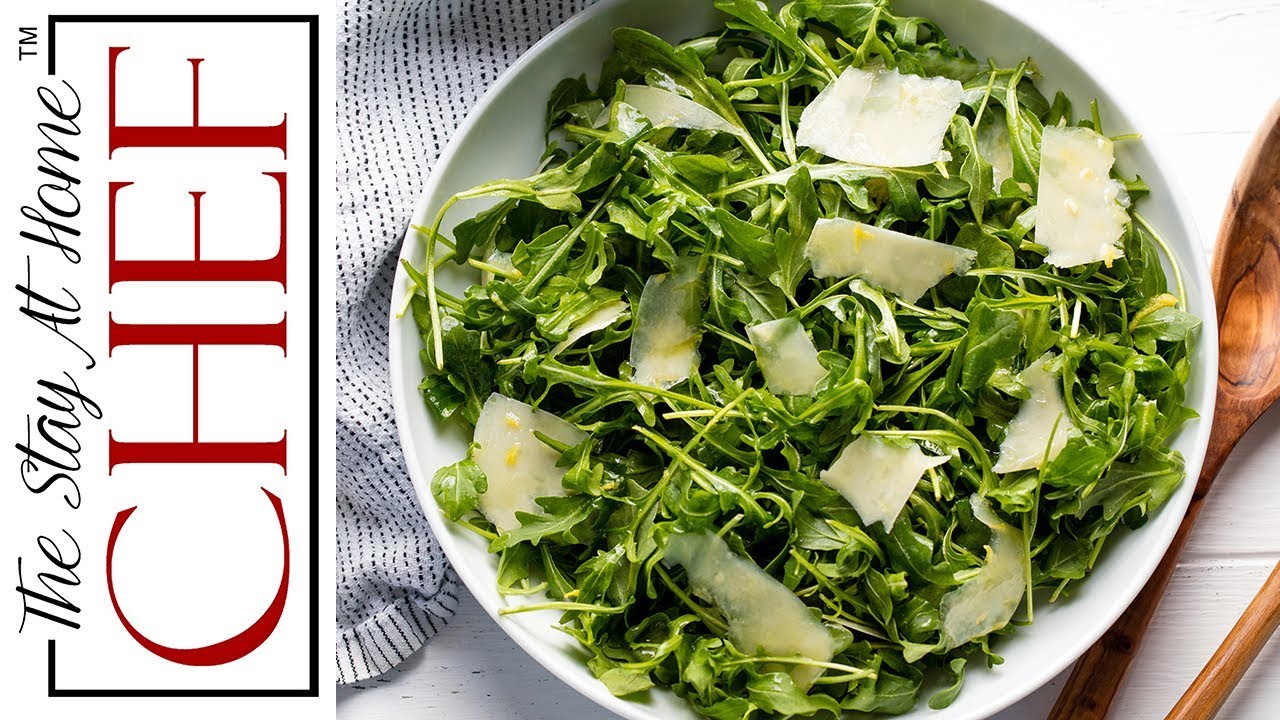
Peppery greens give the most contrast for the least effort. Arugula tossed with lemon juice, olive oil and shaved Parmesan is the combination Hilton Head Monthly recommends beside prime rib. Watercress is just as peppery, so the same lemon vinaigrette works.
Shaved fennel adds an anise note and crunch, and Cooking Chat pairs it with arugula for roast beef.
Delicate leaves collapse quickly once dressed, so toss at the table. Harsh summer leaves need extra lemon and salt.
Steakhouse salads, wedge and Caesar

Steakhouses built these salads for fatty beef, and the wedge leads the group. Delmonico’s in New York says it began serving its wedge in the 1930s, and the UK chain Miller & Carter still brings one out before the steaks.
A wedge is quartered iceberg with blue cheese dressing, tomato and bacon. Caesar is romaine, creamy dressing, croutons and Parmesan. Both are served cold and crisp.
The failure mode is richness stacked on richness. Blue cheese dressing, bacon and gravy leave nothing light on the plate, and a chef told Tasting Table that Caesar croutons soak up dressing and turn soggy when the salad is tossed early.
Crunchy salads like Waldorf, coleslaw, beet and cucumber

Oscar Tschirky’s 1896 Waldorf recipe called for apples, celery and mayonnaise, with no nuts. The Rector Cook Book had added them by 1928.
The Waldorf Hotel itself treated it as a game salad, served beside roasted game rather than as a course. That makes it a natural fit next to roast beef.
If you’d rather go sharp and light, a vinegar slaw or a cucumber and yogurt salad suits a plate that already carries gravy. Sweet and earthy leans toward beet. Taste magazine’s roast beef menu pairs cooked beetroot, apple or pear, cucumber and balsamic vinegar.
Beets stain whatever they touch, and a mayonnaise slaw gets heavy beside gravy.
Potato salad and other starchy cold salads

Potato salad fits cold sliced roast beef and rarely fits a hot roast dinner. Cooking Chat notes that potatoes come first for many roast beef meals, so potato salad beside roast potatoes is a double starch.
With cold sliced beef, a mustard or creamy dressing is fine. With a hot roast where potatoes are already served, skip it.
Pasta salad follows the same rule. A Pinch of Adventure’s roundup lists a sun-dried tomato pesto version among its salads.
How to Match the Dressing to the Salad

Peppery greens take a lemon or balsamic vinaigrette, wedge and Caesar salads take blue cheese or creamy dressings, and crunchy salads take a light mayonnaise or yogurt base. Keep the dressing lighter whenever gravy or au jus is on the plate.
| Dressing | Base | Pairs with | Watch for |
|---|---|---|---|
| Lemon vinaigrette | Lemon juice, olive oil | Arugula, watercress, fennel | Dress at the table |
| Balsamic vinaigrette | Balsamic vinegar, oil, Dijon | Romaine, beet, apple salads | Sweet on top of sweet fruit |
| Blue cheese dressing | Mayonnaise, sour cream, blue cheese | Wedge salad | Heavy beside gravy |
| Horseradish cream | Sour cream or heavy cream, horseradish | Beet, potato, wedge | Doubles up with horseradish sauce |
The classic French vinaigrette ratio is 3 parts oil to 1 part vinegar or lemon juice, a figure both Taste of Home and Fine Dining Lovers give. A spoonful of Dijon mustard acts as the emulsifier, so the oil and vinegar stay together and the dressing clings to the leaves.
For arugula, Fine Dining Lovers’ suggestion of swapping half the vinegar for citrus juice works well. Balsamic is sweeter than wine vinegars, which suits romaine and beets better than fruit salads.
If gravy or au jus is on the plate, go with lemon or balsamic. Dry slices with no sauce can take a creamy dressing. And if horseradish sauce is already being served, a horseradish dressing is one too many.
Arugula and horseradish get their heat from the same chemistry. Both release isothiocyanates when glucosinolates break down (America’s Test Kitchen on horseradish, University of Reading on rocket), so arugula under a horseradish dressing doubles one sensation instead of adding contrast.
If you do make a horseradish dressing, use the jarred kind. America’s Test Kitchen found that the vinegar in prepared horseradish slows the enzyme that produces the heat, so it keeps its punch for weeks while fresh-grated root fades.
How the Beef and the Serving Style Change the Salad

Temperature and sauce decide the salad more than doneness does. A hot roast with gravy wants a crisp, acidic salad at room temperature, and cold sliced beef opens the door to tomato and starchy salads.
For a hot roast dinner, serve the salad at room temperature. Matt Harding, chief culinary officer at Piada Italian Street Food, told The Takeout (2025) that an ice-cold salad beside a hot entree clashes instead of complementing it.
Cold sliced beef is a different meal. Country Life’s summer roast beef recipe serves it with jacket potatoes, followed by a tomato salad, plus Dijon mustard or horseradish sauce. The hot first helping from the same joint comes with a green salad wilted in the pan juices.
That wilting is deliberate, and it runs against the dress-at-the-table rule for most greens. The pan juices act as the dressing, so the leaves are meant to soften.
Thick gravy calls for a sharp dressing and a salad kept on its own side of the plate. Thin au jus runs across the plate, so crisp leaves wilt wherever they touch it. Cold beef with mustard or horseradish goes well with something cooling, like a cucumber or yogurt-based salad.
None of the pairing sources checked ties the salad to doneness. Country Life specifies a rare roast for its cold version, and the salad advice stays the same.
Cooked roast beef keeps for 3 to 4 days in the refrigerator, according to USDA FSIS (2020).
A Sunday roast reaches that limit by Wednesday or Thursday, so plan cold plates early in the week. FSIS also advises slicing whole roasts before chilling so they cool fast.
Which Salad Suits a Sunday Roast, a Holiday Table or a Summer Plate?

Match the salad to the season. Simple greens suit a Sunday roast, bitter chicories suit the holidays, and cold vegetable salads suit summer plates.
On a regular Sunday, keep the salad plain, because roast potatoes, Yorkshire pudding and gravy already carry the weight. A holiday table can handle a wedge, or bitter chicory and radicchio with orange and pomegranate. In summer, cold sliced beef sits well with tomato salad, cucumber, coleslaw or potato salad.
Chicories carry the bitterness and citrus carries the sweetness. Tasting Table’s test kitchen dresses chicory with white wine vinegar for acid and orange juice for sweetness, which makes the leaves less pungent.
Chefs Jaret Foster and Mona Johnson of the Portland catering company Tournant built a chicory salad as a counterpoint to a rich Thanksgiving dinner (Sunset).
The salad can also open the meal. Platings and Pairings’ sample prime rib menu starts with an arugula and Parmesan salad, and Nigella Lawson’s Christmas salad of red chicory, radicchio and pomegranate takes red pepper as a starter and drops it as a side (Nigella Christmas).
Rule of thumb: starter when guests are seated and the plate is already full, on the plate when the table is family-style.
Summer leans on the cold plate. A 2021 cold plate supper listed by the Diocese of Nova Scotia and Prince Edward Island paired ham and sliced roast beef with potato salad, coleslaw, lettuce, tomato and cucumber.
Platings and Pairings’ prime rib roundup lists sautéed sugar snap peas as a quick vegetable side, a cooked alternative to a salad.
How Far Ahead Can You Dress a Salad for Roast Beef?

It depends on the green and the dressing. Delicate leaves go on at the table, sturdy leaves hold for hours, and a fully emulsified vinaigrette slows wilting for everything in between.
- Delicate greens such as arugula, butter lettuce and green leaf last 15 to 20 minutes once dressed, according to cookbook author Molly Baz (Tasting Table, 2025).
- America’s Test Kitchen tossed 2 ounces of mixed greens and checked at 15 minutes. Oil-first greens were seriously wilted, vinegar-first slightly wilted, and emulsified-dressing greens barely wilted.
- America’s Test Kitchen holds dressed kale Caesar in the fridge for 20 minutes to 6 hours.
- A cold salad needs 10 to 15 minutes at room temperature before serving (Matt Harding, Piada, via The Takeout, 2025).
- Perishable food can sit at room temperature for 2 hours, or 1 hour above 90 F (USDA FSIS, 2020).
Sources disagree on arugula. America’s Test Kitchen lists it among sturdy greens, while Baz groups it with delicate leaves.
The two measure different things. America’s Test Kitchen’s entry describes the pepper standing up to heavy ingredients and gives no hold time, and Baz’s figure is for the dressed leaf. Treat arugula as dress-at-the-table.
Oil is what wilts leaves. Salad leaves carry a waxy cuticle that vinegar barely touches but oil passes through, so vinegar-first blocks the oil and an emulsified dressing keeps oil droplets off the leaf (America’s Test Kitchen).
- Wash the greens and dry them in a salad spinner. Wet leaves dilute the dressing and break down early.
- Whisk the vinaigrette ahead of time with mustard so it stays emulsified.
- Put the dressing in the bottom of the largest bowl you own.
- Add the greens and toppings on top, then carry the bowl to the table with servers.
- Toss right before serving. Take a cold salad such as potato salad out of the fridge early so it can rest.
Make-ahead fails in specific ways. Harding says dressing delicate lettuces and chilling them breaks down their cell structure, so the dressing runs back into the bowl, and pasta salads bloat and lose texture when dressed too early.
Mayonnaise-based Caesar dressing is heavier than a vinaigrette, so even moderately sturdy romaine waits until close to serving (Baz). Kale is the make-ahead exception, but America’s Test Kitchen gives it a hot soak first.
The time limit covers sliced beef and potato salad on a buffet, which is why FSIS tells hosts to nest dishes in ice or serve from small trays.
Work backward from the roast. A roast timer shows when the beef comes out, and the rest before carving is the window for tossing the salad.
Salad With Roast Beef FAQ
Can fruit salad go with roast beef?
Yes, as a light supporting side rather than the main salad. Bake It With Love suggests fresh fruit salad to balance a hearty beef dinner, and A Pinch of Adventure serves one with honey lemon dressing in summer.
Keep the dressing tart so the plate still has an edge.
Which salad suits a roast beef sandwich?

Waldorf salad and grated carrot with beetroot both work. Food Network’s Linda Gassenheimer pairs Waldorf salad with an open-faced roast beef sandwich, while NHS Healthier Families tucks grated carrot, beetroot and red onion dressed in vinegar inside the sandwich.
A French dip, the roast beef sandwich served with au jus, has its own salad pairings for a French dip.
Is a roast beef salad the same as a side salad?
No. A roast beef salad folds the beef into the dish, as chopped beef with mayonnaise, mustard and pickle relish or sliced beef over greens, while a side salad sits next to the meat.
Chowhound dates recipes for the beef-based version to 1902.
How long does dressed salad keep in the fridge?
Refrigerated leftovers stay safe for 3 to 4 days, according to USDA FSIS, but texture gives out long before that. The clock also only counts if the salad reached the fridge within 2 hours.
Store greens and dressing separately when you plan leftovers.
Picking a Default Salad for Any Roast Beef Dinner
The safe default salad with roast beef is a sharp green tossed at the table, with arugula and lemon as the first choice.
Look at the plate first. Gravy, au jus or no sauce at all sets how heavy the dressing can be, and the dressing decides which green will survive. Pick the green by how long it has to wait, and dress it last, after the leaves have rested.
A dressed delicate leaf lasts about 15 to 20 minutes, while cold salads need 10 to 15 minutes at room temperature to taste right, so rest the undressed leaves and dress them last.
The trade-off is effort for flavor. Arugula demands a last-minute toss, while kale holds for hours but lacks its pepper.


