


For butter chicken, go with kachumber. It’s chopped cucumber, tomato and red onion in lemon or lime juice, and the acid and cold crunch cut through the butter and cream in the gravy.
Laccha pyaaz and Shirazi salad pass the same acid-and-crunch test, and so does a carrot coconut salad. Green goddess is the odd one out. Its mayonnaise dressing piles more fat onto a gravy that already has plenty.
Cucumber, which anchors both kachumber and Shirazi salad, comes to 96.3 g water and 14.7 kcal per 100 g in Ciqual 2020 data published by Aprifel. The bowl adds crunch and cold and almost no calories.
Which salad is the best match for butter chicken?
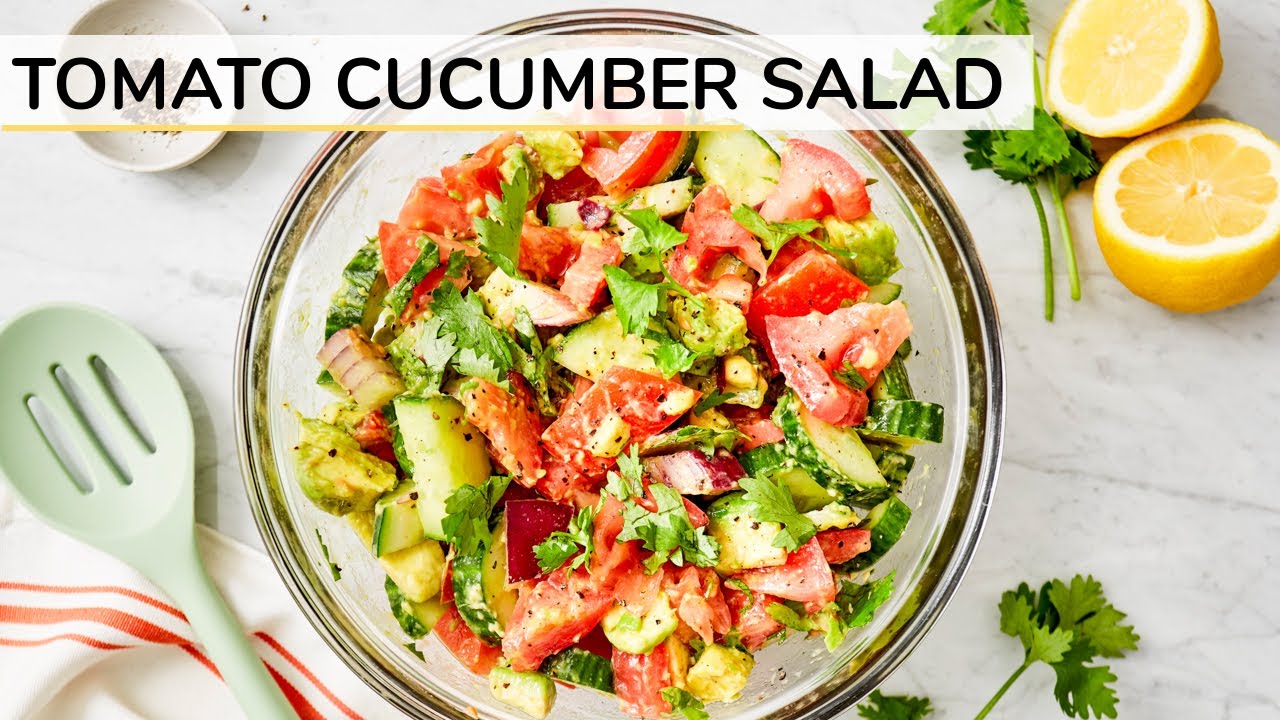
Kachumber, unless you have a reason not to. Cucumber, tomato and red onion get dressed with lemon or lime juice, and that’s about it. No cream. The sour crunch is what pushes back against the butter in the gravy.
The other picks depend on what the meal needs. If time is short, kachumber wins again. Laccha pyaaz is the bold, no-oil option. Shirazi salad suits a cool, minty side, and anyone who wants sweetness without raw onion should look at the carrot coconut salad.
| Salad | Main ingredients | Job next to the gravy | Notes |
|---|---|---|---|
| Kachumber | Cucumber, tomato, red onion, lemon, cilantro | Sour, juicy crunch | 5 minutes; vegan, gluten-free |
| Laccha pyaaz | Sliced red onion, chaat masala, lemon | Sharp, tangy reset | Gluten-free; can be oil-free |
| Shirazi salad | Cucumber, tomato, onion, dried mint, lime | Cool, minty crunch | About 10 minutes |
| Carrot coconut salad | Julienned carrot, coconut, lime, Thai chili | Sweet, bright contrast | No onion; served with butter chicken at Wild Ginger |
| Green goddess salad | Salad greens, mayonnaise and sour cream dressing | Herby, but adds more cream | Classic dressing contains dairy and anchovy |
Kachumber in more detail

The base is cucumber, tomato and red onion with lemon juice and cilantro. A Spicy Perspective adds radish and mint plus a dusting of Kashmiri chili. The Winged Fork (now Abby’s Hearth) keeps the dressing to salt, lime or lemon juice and a little chili powder, nothing heavy, and that recipe is vegan and gluten-free.
Chopping takes about 5 minutes and nothing gets cooked (Sandhya Hariharan).
The downside is water. Tomato and onion release it, and the onion gets louder the longer the bowl sits.
Other Indian-style salads

Laccha pyaaz is sliced raw onion with chaat masala, chili and lemon. The Spicery says its fresh tang balances rich, spicy food and suits any rich, meaty curry, and Piping Pot Curry notes Indian restaurants often serve it before the main course with green chutney and poppadoms.
Shirazi salad comes from Iran but is built much like kachumber, with dried mint as the signature seasoning. Platings and Pairings lists it among its butter chicken sides.
Wild Ginger, a restaurant, serves fine julienned carrot, coconut, lime juice and a little Thai chili next to its butter chicken. That one swaps sourness for sweetness and sets it against the rich sauce.
Laccha pyaaz is the sharpest of the bunch, so it suits people who like raw onion and want zero oil on the plate.
Western-style salads and when they fit

Western salads work when they bring acid and crunch. They stumble when they bring their own cream.
Pantry and Larder lists a simple tossed green salad and a tomato cucumber lettuce salad among its butter chicken sides, and Platings and Pairings adds a Mediterranean tomato cucumber salad. Any of them with a lemon and olive oil dressing does the job without another creamy layer.
Green goddess is the outlier. Pantry and Larder recommends it anyway, though the dressing section below argues against it.
Why a fresh salad balances a creamy tomato gravy
Butter, cream and tomato coat the palate with fat. Acid and cold crunch break that coat up, so each forkful of gravy tastes closer to the first.
A 2012 Current Biology study from Paul Breslin’s lab had 21 volunteers rate how their mouths felt while eating salami and sipping tea or water. The astringent drinks cleared the slippery, coated feel by breaking down lubricating proteins in saliva.
The study tested tea and water, not lemon juice, so it supports the principle of fat meeting a sharp contrast and not a specific citrus mechanism. Breslin also listed oil-and-vinegar salad dressing as another fat and astringency pairing.
Acid and crunch carry most of the weight.
Plain lettuce and cucumber add crunch but leave the fat alone, which is why the salads in the table above that work all carry citrus. Cold matters too. Sinfully Spicy advises adding cold cucumbers and tomatoes and chilling the bowl while it marinates.
Butter chicken isn’t a spicy dish, as Pantry and Larder points out, so the salad is there for contrast and not heat relief. Insanely Good Recipes frames kachumber the same way, as a way to lighten a heavy meal and give the palate a break from the curry.
Most rich gravies follow the same logic, so guidance on salads that suit curry in general carries over here.
What to dress the salad with

Lemon or lime juice, salt and one seasoning. Nothing creamy. The Winged Fork describes kachumber as needing only salt, citrus, chili powder and fresh coriander.
Sandhya Hariharan’s recipe puts 1/2 lemon and 1/2 teaspoon of salt on roughly 300 g of chopped vegetables (120 g cucumber, 120 g tomato, 60 g red onion).
- Chaat masala is a tangy blend of dried mango powder, black salt and cumin, in Ministry of Curry’s description.
- A Spicy Perspective sprinkles Kashmiri chili over kachumber for color and heat.
- Dried mint defines Shirazi salad. The Plant Based School uses 1 to 2 tablespoons with 4 tablespoons of lime or lemon juice for 1 pound each of cucumber and tomato.
- Cilantro and green chili bring fresh herb and fresh heat to kachumber and laccha pyaaz.
Squeeze the juice fresh. Ministry of Curry calls fresh citrus non-negotiable for laccha pyaaz, since the acid softens the raw onion and brightens the spices.
Go light on the juice and salt at first. Sandhya Hariharan’s recipe and Indian Healthy Recipes both end with a taste-and-adjust step.
The one thing to skip is a creamy dressing. America’s Test Kitchen’s green goddess dressing combines 3/4 cup of mayonnaise and 1/4 cup of sour cream with just 1 tablespoon of lemon juice.
That’s a cup of fat-heavy base against a spoonful of acid, poured over a gravy already built on butter and cream. Once Upon a Chef notes the lemon in that dressing is there to cut through its own mayonnaise and sour cream.
Green goddess reportedly started at San Francisco’s Palace Hotel in the 1920s, which explains why it sits closer to a French mayonnaise sauce than to anything Indian. For butter chicken, a plain citrus dressing does the work with less fat.
How to make kachumber for butter chicken

Cut everything to one even size, toss it with lemon juice, salt and cilantro, and give the bowl 10 to 15 minutes before serving. Use the proportions from the dressing section and keep the onion lighter than the cucumber and tomato.
- Chill the cucumber and tomato, then dice both into 1/4-inch cubes. A Spicy Perspective and Sandhya Hariharan use the same size.
- Dice the red onion to match. Sinfully Spicy keeps cucumber and tomato slightly ahead of the onion because the onion takes over otherwise.
- Chop the cilantro. Mint and radish are optional additions in A Spicy Perspective’s version.
- Combine everything in a bowl, add the lemon juice, salt and chili, then toss and taste.
- Rest the bowl, then serve it cold next to the butter chicken.
Sandhya Hariharan’s recipe card also calls for 3 tablespoons of chopped coriander leaves and a 10 to 15 minute rest so the flavors meld. It lands at 31 kcal per serving, from a recipe that makes 2 servings.
If the bowl turns watery, that’s the cucumber and tomato releasing juice the moment salt and acid reach them. The next section covers how fast.
Dull tomatoes usually trace back to the fridge. A 2016 PNAS study by Zhang and colleagues held red ripe tomatoes at 41 degrees F (5 C). Aroma compounds survived 1 and 3 days but dropped sharply by day 7, and a 76-person tasting panel rated the chilled fruit as blander.
Tomatoes chilled for up to three days kept their aroma in that study. A week in the fridge before chopping did not.
Onion that’s too sharp can be fixed with a soak. Slice it, hold it in very cold water for 10 minutes and drain it, the step Indian Healthy Recipes uses for laccha pyaaz. America’s Test Kitchen notes that salting and draining onion removes its sting.
How long can the salad sit before it goes watery?
Serve a dressed kachumber within a day or two, and hold the salt and lemon until the last minute if it has to wait. Published storage claims run from “serve immediately” to a full week, and the 3-to-4-day limit for cut produce from University of Maine Extension sits below the longest of them.
- Vegetarian Recipes of India and Sinfully Spicy say to serve immediately.
- The Winged Fork gives 1 to 2 days and warns that the onions start to smell and can taint the whole fridge.
- Sandhya Hariharan says up to 2 days.
- A Spicy Perspective says up to 1 week, with the vegetables crispest for the first few days.
- University of Maine Extension limits cut or peeled produce kept at 40 degrees F or below to 3 to 4 days, with cut tomatoes listed at 2 to 3 days.
The sources apply different standards. The short windows protect crunch, and the long one concedes in its own note that only the first few days stay crisp.
Water loss is quick. America’s Test Kitchen found that salted cucumber slices released no more water at 12 hours than at 3.
Those conditions were harsher than a kachumber gets, with 1 tablespoon of salt on three cucumbers pressed under a weight. Treat 3 hours as the speed limit, not the schedule.
That puts A Spicy Perspective’s week past the extension’s 3-to-4-day ceiling, while the 1-to-2-day sources sit well inside it. One side is answering a texture question and the other a safety question, so neither is wrong.
Laccha pyaaz splits the sources too. Ministry of Curry says it tastes better after an hour or two in the fridge as the flavors meld. Indian Healthy Recipes puts the limit at about an hour, and Jeyashri’s Kitchen says to make it just before serving, because the rings soften and lose crunch as they sit.
Pick by texture. Mellow, marinated onion needs the hour. For crunch, slice it at the last minute.
For kachumber, dice the cucumber and tomato a few hours ahead and keep them cold and undressed (Vegetarian Recipes of India). Slice the onion and chop the herbs shortly before serving, and add the lemon juice and salt at the table.
Plating the salad with rice and naan, and when to skip it
Serve the salad in its own bowl or on the plate’s edge next to the rice or bread. Skip it when the table can’t keep it cold or the meal leans on warm, soft sides.
Where the salad goes on the plate
A separate bowl keeps citrus and vegetable juice out of the gravy, and everyone scoops to taste.
With rice, basmati or turmeric both work, and Piping Pot Curry names both, along with kachumber, among its butter chicken sides.
With naan, paratha or chapati, laccha pyaaz or kachumber fits. Indian Healthy Recipes says onion salad sits well alongside roti, kulcha or naan served with curry.
USDA’s MyPlate message is to make half your plate fruits and vegetables. A plate of chicken, rice and bread sits far from that, so a generous scoop of salad closes some of the gap.
The salad itself has no gluten, so the bread decides whether the plate is gluten-free.
When a salad is not the right side
Cold-weather menus are one case. Insanely Good Recipes pitches dal as the cozy, warm winter partner for butter chicken, and a cold salad pulls against that mood.
Buffets and picnics are the other. USDA says cut or peeled produce belongs back in the refrigerator within two hours of cutting, or one hour at 90 degrees F or warmer. Jeyashri’s Kitchen hesitates to eat restaurant onion salads because the cut onions sit open for so long.
In both cases a warm side such as dal beats a salad that cannot stay cold.
Common Questions About Salad With Butter Chicken
Can the salad be served before the butter chicken instead of with it?
Yes, but it does its best work alongside. The acid and crunch reset the palate between forkfuls of gravy, so the bowl needs to be on the table while the curry is.
A small starter portion of laccha pyaaz is the one version that suits opening the meal.
Is cucumber raita a salad or a sauce?

Both. Insanely Good Recipes lists raita as a sauce, a condiment or a salad.
Next to butter chicken it cools the plate, but it brings yogurt instead of citrus. Serve it beside kachumber or laccha pyaaz, not in place of them.
Does kachumber bring heat to the plate, and how do you adjust it?
No, not by default. The base is cucumber, tomato, onion and lemon, and Sandhya Hariharan adds diced green chili or red chili powder only for a spicy version.
Start with a little, since butter chicken itself is a mild dish.
How can the salad be made more filling?

Sinfully Spicy says boiled chickpeas, red kidney beans or sprouted lentils turn it into a heartier side.
Roasted peanuts or cashews add crunch rather than bulk. Stir any of them in at the end, with the lemon juice.
Which salad works for a low carb plate?

Kachumber and Shirazi salad both work, since they’re mostly cucumber, which carries 2.23 g of carbohydrate per 100 g (Ciqual 2020 data published by Aprifel).
The rice and naan are the bigger carbohydrate lever on the plate.
Scaling the salad for a dinner party
Plan on about 150 g of chopped vegetables per guest, cut in stages so only the onion, lemon juice and salt wait for the last 15 minutes.
Sandhya Hariharan’s recipe makes 2 servings from about 300 g of vegetables, so eight guests need roughly 1.2 kg.
Cut the cucumber and tomato a few hours ahead, cold and undressed. Slice the onion and chop the herbs at the last minute, then dress the bowl 10 to 15 minutes before plates go out.
Two hours is the cap for a dressed bowl out of the fridge. That’s USDA’s limit for cut produce, and it sits inside the 3 hours in which America’s Test Kitchen’s salted cucumbers finished releasing water.
A second, smaller bowl helps. Refill from the fridge halfway through dinner instead of leaving one large bowl on the table.
A grams to cups converter turns the 1.2 kg into measuring cups.


