


Arugula with lemon juice and olive oil is the salad I’d put next to pesto pasta, and it isn’t a close call. Caprese, tomato and cucumber, panzanella and greek salad all work too, each for a slightly different reason.
The classic recipe from the Consorzio del Pesto Genovese has 7 ingredients (basil, extra virgin olive oil, Parmigiano Reggiano or Grana Padano, pecorino, garlic, pine nuts and coarse salt) (Il Fatto Alimentare, 2023). None of them is acidic. The salad has to cover that.
Which salads go best with pesto pasta?

The table below sorts the usual candidates by what they do against the sauce. None of them repeats the basil that’s already there.
| Salad | Role against pesto | Texture | Works best with |
|---|---|---|---|
| Arugula and lemon | Peppery bite, sharp acid | Tender, light | Pesto genovese, quick dinners |
| Caprese | Juicy acidity, mild cheese | Soft, juicy | Summer dinners, vegetarian plates |
| Tomato and cucumber | Cool, watery freshness | Crisp | Warm evenings, light dinners |
| Panzanella | Tangy bread and tomato | Chewy and crunchy | Guests, vegetarian mains |
| Greek salad | Briny feta, red wine acid | Crisp | Chicken pesto pasta, Mediterranean spreads |
A plain green salad with a tart red wine vinaigrette also works. MasterClass suggests exactly that next to pesto pasta.
Shaved fennel gives a crisp anise note, and cooled green beans with lemon add snap. Either one needs a bright dressing, otherwise the sauce wins.
Arugula and lemon salad
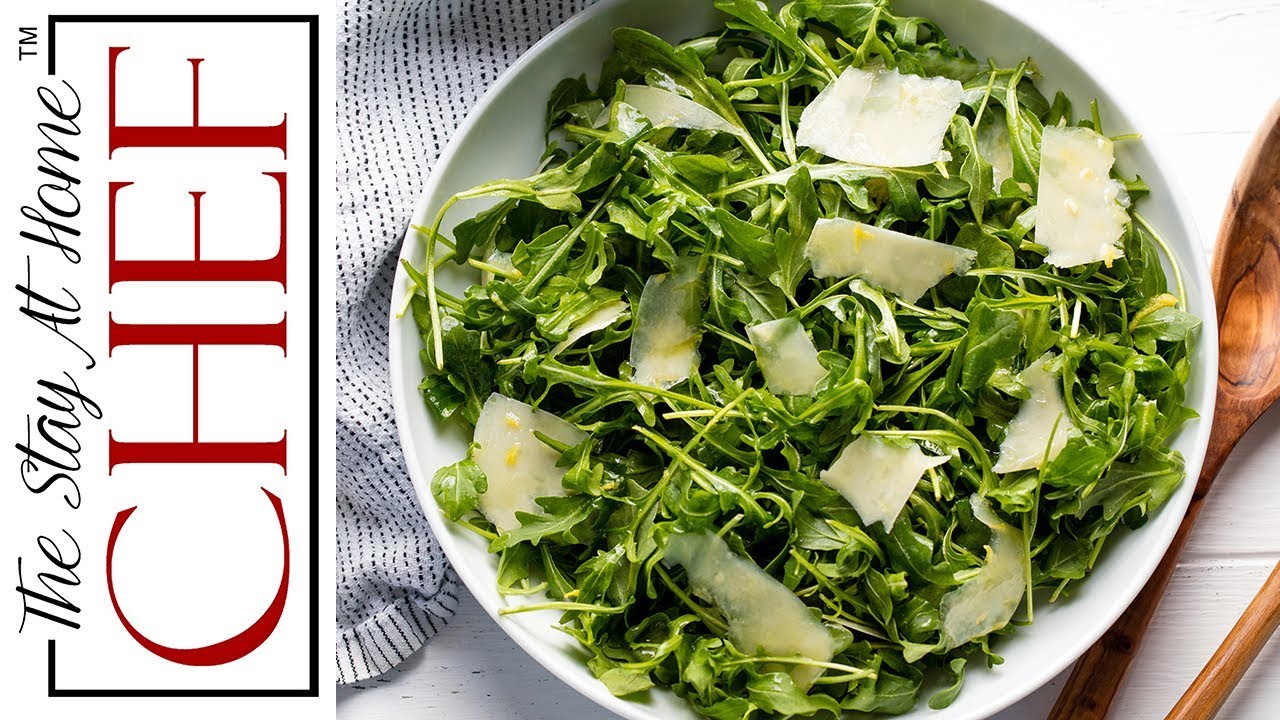
The pepper in arugula cuts against the sweet basil instead of echoing it. That’s the whole reason it works.
The bite varies by leaf, though. A 2020 study in Foods (Bell, Lignou and Wagstaff, University of Reading) linked higher glucosinolate levels in rocket leaves to more bitterness and pungency and lower consumer liking.
Taste a leaf first. If it burns, switch to baby arugula and let the lemon and a pinch of salt soften it.
The whole salad is baby arugula, lemon juice, olive oil and flaky salt. Skip the shaved parmesan most recipes add, since the pasta already carries that cheese.
Caprese salad

Ripe cherry tomatoes bring acid and juice. Fresh mozzarella or burrata adds mild, creamy cheese without the salty edge of the parmesan already in the pesto.
The catch is the basil. A classic caprese is topped with it, which doubles up on the herb on the plate.
Drop the basil, or swap in arugula, as a Co+op recipe does for its caprese pasta salad (lemon juice and zest replace the basil lift).
Balsamic over the tomatoes works when they’re in season. Out of season, pick a different salad.
Tomato and cucumber salad

This one suits hot evenings and light dinners. Cucumber has almost no flavor of its own, so it never competes with the sauce.
Halve the cherry tomatoes, chunk the cucumber, add some thin red onion, and dress it with olive oil, red wine vinegar and salt.
Salt it right before serving. Both vegetables release water, and a soupy bowl next to coated pasta makes for a sloppy plate.
Why acid and crunch work against pesto
Pesto is mostly fat and salt, so the salad has to bring what the sauce doesn’t have.
None of the 7 ingredients in the Consorzio del Pesto Genovese recipe is sour (basil, extra virgin olive oil, Parmigiano Reggiano or Grana Padano, Pecorino, garlic, pine nuts and coarse salt), according to Il Fatto Alimentare.
Lemon or vinegar cuts through the oil and cheese, so the next forkful tastes fresh instead of heavy.
Bitter greens like arugula push back against the sweet, grassy basil.
Crunch matters because the pasta is soft and coated in sauce, and raw vegetables give the plate a second texture. Charles Spence’s 2015 review in Flavour concludes that the sound of biting into crisp food shapes how crisp and enjoyable it seems.
Repeating basil is the common mistake. A salad heavy on basil, pine nuts or parmesan stacks the same flavors twice, and the plate turns one-note.
Store-bought jars add a wrinkle. No recognized production specification covers the name “pesto genovese”, and the Italian trade outlet notes that many jars swap in other oils and generic grana cheeses. Taste yours before picking a salad.
A quick test for any salad: it should add acid, bite or crunch, and it shouldn’t add more basil, nuts or cheese.
Lemon vinaigrette or balsamic: choosing the dressing

Go with lemon vinaigrette unless the salad is mostly tomato. Creamy dressings can stay in the fridge.
Lemon juice, olive oil and salt take about a minute to whisk, and the lemon echoes the brightness of the basil without adding more herb. It’s the right call for arugula and any plain green salad.
Balsamic suits caprese and other tomato salads. Its sweetness softens the acid, and a sweeter vinegar needs less oil for balance, as a vinaigrette column in The Gazette points out.
Red wine vinegar is the tart option for tomato and cucumber salad, a simple green salad and greek salad.
Acid strength barely separates them. Fresh lemon juice averages about 5 percent acidity (Iowa State University Extension, 2021), home vinegar is labeled 5 percent (Kansas State University, 2023), and Balsamic Vinegar of Modena IGP must reach at least 6 percent, or 5.5 percent for aged and reserve versions (Consorzio Aceto Balsamico di Modena, 2025 specification).
So choose by flavor and sweetness, not by strength.
Vinegars outside that 5 percent norm do exist. In a cooking instructor’s test reported by The Gazette, the same amount of oil swamped rice vinegar but barely balanced sherry vinegar.
The oil-to-acid ratio is where sources disagree. FreshFarm’s FoodPrints program teaches 3 parts oil to 1 part acid (and allows 2:1), while The Kitchn argues for equal parts oil and vinegar because it makes a brighter dressing.
Next to pesto, lean toward the sharper end. The sauce already supplies plenty of oil, so start at 2 parts oil to 1 part acid and taste.
Creamy ranch or blue cheese dressings stack more fat on a plate that already has plenty. A vinaigrette lets the salad do its job.
When a salad works against pesto pasta

A salad works against pesto when it repeats what the sauce already holds. More basil, more parmesan, more nuts, more fat.
| Salad | Why it clashes | Better swap |
|---|---|---|
| Caesar | Parmesan, garlic and anchovy repeat the sauce | Arugula with lemon |
| Ranch or blue cheese dressed greens | Fat on top of fat | Lemon or red wine vinaigrette |
| Pesto dressing or a heavy basil topping | Same herb twice | Arugula in place of basil |
| Salads topped with pine nuts or parmesan | Repeats the sauce’s nuts and cheese | Radish or cucumber for crunch |
| Potato or macaroni salad | Starch on starch | Tomato and cucumber |
Caesar is where sources disagree. Talk of the House (2026) calls it the most popular salad pairing for pasta in America, as a contrast to soft noodles.
That guide covers pasta in general, though, and its own pick for pesto is arugula with lemon. A Caesar stacks parmesan, garlic and anchovy on a sauce that already has cheese and garlic, and the Associated Press centennial recipe (2024) pairs an anchovy-and-garlic dressing with 1/2 cup of freshly grated parmesan tossed through the salad.
I’d skip it. If guests insist, dress the romaine lightly and leave off the extra parmesan.
How to match the salad to the pesto and the main dish

Pesto genovese takes almost any of the salads above. Pesto rosso and chicken change the answer, so it helps to look at what else is on the plate.
| Situation | Salad pick | Reason |
|---|---|---|
| Pesto genovese | Arugula and lemon, caprese | Peppery or juicy acid against basil and oil |
| Pesto rosso | Cucumber salad, simple green salad | Contrast instead of a second tomato layer |
| Chicken pesto pasta | Greek salad, shaved fennel | Brine and anise add the brightness chicken lacks |
| Vegetarian dinner | Panzanella, burrata with tomatoes | Bread and cheese add substance |
Pesto rosso is a tomato-based red pesto. The Sicilian pesto alla trapanese uses fresh tomatoes and almonds with considerably less basil than pesto genovese, and many jarred or home versions use sun-dried tomatoes. It tastes tangy and savory, so a tomato salad beside it doubles the same note.
Reach for cucumber or a green salad with red wine vinaigrette instead.
Chicken adds protein but no acid, so the salad still carries the brightness. A Globe and Mail recipe brushes pesto on grilled chicken breasts and sets them over grilled fennel, endive and radicchio dressed with balsamic and Dijon.
That bitter, sharp bowl shows the principle, and the wider list of salads that suit chicken carries over to a chicken pesto pasta plate.
On a weeknight, arugula and lemon wins because there’s nothing to chop and only one lemon to squeeze. For dinner guests, panzanella is the better bet since it improves with a rest and can sit while you cook. Once the tomatoes are ripe, a summer table suits caprese or tomato and cucumber.
How to serve the salad and what can be made ahead

Serve it cold or at room temperature, in its own bowl, at the same time as the pasta. Dress it last.
Traditional Italian menus run the other way. In Cucina Toscana’s guide, the contorno arrives with the secondo and a salad follows it, but with pesto pasta as the whole dinner, a bowl on the table next to the pasta is the practical call.
Toss the salad at the table. America’s Test Kitchen dressed 2 ounces of mixed greens three ways and checked them after 15 minutes. Oil first left the leaves seriously wilted, vinegar first a little wilted, and an emulsified dressing barely wilted.
If the bowl has to wait, add the acid first or use a vinaigrette emulsified with a little Dijon. Spin the greens dry, since water repels the oil.
Tomatoes are trickier, because flavor and food safety give different instructions. Zhang and colleagues (PNAS, 2016) found that tomato flavor volatiles are sensitive to temperatures below 12 degrees C, while USDA says to refrigerate cut produce within 2 hours, or within 1 hour at 90 degrees F and above.
Both hold, because they answer different questions: flavor loss in whole fruit versus bacterial growth in cut produce. Keep whole tomatoes out of the fridge, slice them just before serving, and treat the cut salad as perishable.
Plenty of the prep can happen earlier.
- Vinaigrette keeps up to a week in the fridge. Bring it to room temperature and shake before use.
- Wash and dry the greens ahead of time.
- Cut cucumber and onion can wait, covered and chilled.
- Panzanella is the odd one out. It needs about 30 minutes so the bread absorbs the dressing.
Plate the salad in its own bowl or on a side plate. Tomato juice and dressing run into the sauce and thin it.
FAQ About Salad With Pesto Pasta
Can you eat pesto pasta cold as a salad?
Yes. Pesto pasta holds well chilled or at room temperature, and short shapes such as fusilli and penne suit that format.
That dish is the pasta itself, though. A side salad still adds the acid and crunch the cold pasta lacks.
Do fruit salads work with pesto pasta?

In small doses, yes. Strawberries with arugula and a lemon-based dressing give sweetness and acid, which the sauce lacks.
Skip candied nuts and sugary dressings. Ripe fruit with a sharp dressing is the version that holds up.
Does pesto pasta need bread or protein besides the salad?
Only when the salad has to carry the whole meal. Grilled chicken or shrimp turns an arugula salad into a full dinner.
Bread is optional because the pasta already supplies the starch. Panzanella is the exception, since it puts the bread inside the salad.
How much dressing does a side salad need?
Enough to coat the leaves lightly, with nothing pooling at the bottom of the bowl. Talk of the House dresses 4 cups of arugula with the juice of half a lemon and 2 tablespoons of olive oil.
Start with less than that and add more after tossing.
How much salad should you serve per person?
One side-bowl portion, smaller than the pasta portion. The salad is there for contrast, and a big bowl of greens crowds the plate without adding anything the sauce needs.
A Ten-Minute Salad for Pesto Pasta Night
For a ten-minute salad with pesto pasta, make arugula with lemon vinaigrette, which is just baby arugula, lemon juice, olive oil and salt tossed at the table.
Texture, not food safety, sets the deadline. America’s Test Kitchen found that greens tossed with oil first were seriously wilted after 15 minutes, while USDA allows cut produce 2 hours, so the leaves lose their crunch 8 times sooner than they lose their safety margin.
Work backward from that 15-minute window. Whisk the dressing first and dry the leaves while it sits, then toss at the table.
The one downside is the pepper. Arugula is the sharpest pick, and consumer liking drops as bitterness rises, so a guest who dislikes it gets a simple green salad with red wine vinaigrette instead.


