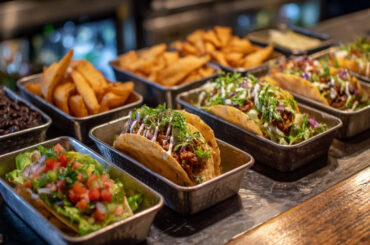
That first bite should be perfect, not a disaster zone across your shirt. Learning how to eat a taco properly separates confident diners from those wearing their lunch.
Taco eating disasters happen at Mexican restaurants, food trucks, and home kitchens every day. Hard shell tacos crack under pressure while soft tortilla wrapping creates slippery situations that end in filling spillage.
Mess prevention isn’t about luck or natural talent. Professional techniques exist for managing everything from ground beef tacos to fish taco assembly without wearing your meal.
This guide covers strategic eating approaches, proper hand positioning, and emergency damage control. You’ll learn workspace setup, grip techniques, and how to handle different filling types.
Master these methods and enjoy taco Tuesday traditions without the cleanup stress. Clean eating starts with the right preparation and proper technique execution.
Pre-Eating Preparation Strategies

Workspace Setup
Plate positioning creates your safety net against taco disasters. Place a large dinner plate directly beneath your eating zone.
The plate should extend at least 3 inches beyond where your taco will travel. This catches runaway fillings before they escape to your lap.
Napkin Placement Strategy
Strategic napkin distribution beats hoping for the best. Position napkins on both sides of your eating area for quick access.
Paper towels work better than cloth napkins for serious taco emergencies. Keep a full roll within arm’s reach, not across the table.
Taco Inspection and Adjustment
Shell Integrity Check
Hard shell vulnerability points show up as hairline cracks along the bottom edge. These spots will fail under pressure.
Gently flex the shell before loading. If it creaks or shows stress lines, switch to a backup shell immediately.
Filling Assessment
Overstuffed taco strategies start with ingredient redistribution. Remove excess filling rather than hoping it stays put.
Wet ingredients that leak need containment before eating begins. Dab excess moisture with a paper towel.
Temperature Management
Hot fillings create steam that weakens tortilla structure. Let assembled tacos rest for 60-90 seconds before eating.
Food temperature handling affects grip success more than most people realize. Room temperature components integrate better than hot-cold combinations.
Hand Preparation
Cleanliness Protocol
Clean hands provide the foundation for confident taco handling. Wash thoroughly and dry completely before starting.
Residual moisture on fingers creates slippery conditions. Pat hands dry with a dedicated hand towel, not your eating napkins.
Grip Strength Calibration
Finger placement requires practice on empty shells first. Test your natural grip before loading with ingredients.
Some people naturally squeeze too hard, others too lightly. Find your pressure sweet spot during practice rounds.
Final Setup Checklist
Essential Items Within Reach
- Extra napkins (at least 6)
- Paper towels for major spills
- Backup taco shells
- Small fork for emergency salvage
- Water glass for sauce emergencies
Surface Protection
Table surface protection matters more at home than restaurants. Use placemats or cutting boards as barriers.
Restaurant tables expect taco casualties. Home furniture doesn’t recover as easily from hot sauce stains.
The Perfect Taco Hold

Two-Handed Technique Fundamentals
Thumb and Pinky Support System
Your thumb and pinky create the structural foundation of mess-free eating. Position thumbs on the bottom shell edge for primary support.
Pinkies provide rear stability, preventing filling from sliding backward. This four-point contact system distributes pressure evenly.
Index Finger Shell Reinforcement
Index finger positioning along the top shell edges prevents catastrophic splits. Apply gentle downward pressure, not inward squeezing.
Think of your index fingers as clamps holding the shell walls steady. Too much pressure cracks shells, too little allows spillage.
Hand Architecture
The Cupping Method
Two-handed grip technique requires cupped palms beneath the taco body. Your hands form a safety net below the action.
This position catches falling ingredients before they hit your plate. Keep palms slightly separated to avoid crushing the shell.
Finger Coordination
Middle fingers provide filling containment by gently pressing loose ingredients inward. This prevents lettuce and tomatoes from escaping.
Ring fingers offer additional support without interfering with the primary grip points. Every finger has a job in professional taco eating.
Single-Handed Alternative Methods
When One Hand Works
Single-handed technique succeeds only with properly constructed tacos. The filling-to-shell ratio must be conservative.
Use this method when you need your other hand for drinks or napkins. Never attempt single-handed eating with overstuffed tacos.
Modified Grip Adjustments
Support the taco’s weight with your palm while fingers control the opening. Thumb placement shifts to the back edge for rear support.
Your other fingers wrap around the shell body like holding a submarine sandwich. Keep the grip firm but not crushing.
Angle and Positioning
Optimal Taco Tilt Degrees
Gravity-defying positions require a 15-degree upward tilt at the eating end. This keeps ingredients sliding toward the back of the shell.
Holding the taco completely level allows fillings to distribute toward the opening. A slight backward tilt works against gravity’s pull.
Mouth Alignment Strategies
Mouth positioning should align with the taco’s center point, not the opening edge. This prevents ingredients from falling out the sides during biting.
Approach the taco straight-on rather than from an angle. Side approaches create weak spots where filling can escape.
Advanced Grip Techniques
The Reinforcement Hold
For extra-loaded tacos, use the shell stabilization method. Place your index fingers inside the shell against the back wall.
This internal bracing prevents the shell from spreading under weight. Keep fingertips clean and use light pressure only.
Emergency Adjustments
When you feel the structural integrity failing mid-bite, don’t panic. Gently redistribute ingredients by tilting the taco backward.
Use your thumbs to guide loose pieces toward the shell’s interior. Sometimes a quick pause saves the entire eating experience.
Common Grip Mistakes
Pressure Problems
Grip strength errors cause more taco failures than bad ingredients. Squeezing too hard cracks shells, too soft allows spillage.
Practice the Goldilocks principle with pressure. Find the grip strength that’s just right for your hand size and taco type.
Positioning Errors
Holding tacos too close to the opening creates mess potential. Position your hands toward the shell’s middle section.
This gives you maximum control while keeping your fingers away from the messiest areas. Let the taco’s structure do most of the work.
Strategic Eating Approaches

The End-to-End Method
Starting from the Cleanest End
End-to-end technique begins with identifying which side has fewer ingredients hanging out. Start there for maximum control.
Most tacos have one end that looks more contained than the other. Choose the tidier side for your opening bite.
Working Toward Messier Sections
Structural integrity decreases with each bite, so tackle problem areas while you still have grip strength. Save the loosest fillings for when you’re committed to finishing.
As you progress, the shell becomes more flexible and harder to control. Plan your bite sequence accordingly.
Managing Progressive Weakening
Each bite creates new shell vulnerability points where cracks can develop. Monitor these spots and adjust your grip as needed.
The taco’s architecture changes constantly during eating. What worked for bite one might fail by bite three.
The Center-Out Technique
Targeting the Fullest Point First
Center-out approach starts with the taco’s most loaded section where failure risk is highest. Attack the problem area while your shell is strongest.
This method prevents catastrophic shell failure by removing weight from stress points early. It’s counterintuitive but effective.
Preventing Complete Collapse
By eating the heaviest section first, you redistribute weight toward the shell’s stronger edges. Filling distribution becomes more manageable with each subsequent bite.
The remaining bites become progressively easier as ingredient density decreases.
Dual-Direction Strategy
After clearing the center, work toward both ends simultaneously. Bite-sized portions from alternating sides maintain balance.
This prevents one end from becoming too heavy while the other stays light.
The Layered Approach
Eating Ingredients in Sequence
Sauce containment methods include eating surface toppings first before they slide around. Remove loose lettuce and tomatoes in the opening bites.
This exposes the more stable ingredients underneath that won’t escape as easily.
Shell Preservation Tactics
Taco shell carefully handling means avoiding the temptation to bite through both walls simultaneously. Focus on one layer at a time when possible.
Multiple small bites preserve shell integrity better than fewer large ones.
Flavor Balance Maintenance
Texture combination suffers when you eat ingredients separately, but it beats wearing your dinner. Accept that perfect flavor mixing isn’t always possible.
Sometimes successful eating trumps optimal taste distribution.
Managing Different Filling Types

Liquid and Semi-Liquid Ingredients
Salsa Containment Methods
Salsa spillage prevention starts with proper application technique during assembly. Keep salsa away from shell edges where it drips easiest.
When eating, tilt the taco slightly backward to keep liquid ingredients pooled away from the opening.
Sour Cream Distribution Control
Wet ingredients that leak require immediate attention before they saturate the shell. Dab excess moisture with napkins between bites.
Sour cream works best when applied in small dollops rather than continuous lines. This prevents sliding.
Grease and Oil Management
Hot sauce control includes managing the oil that separates from sauce during storage. Wipe bottle tops before applying.
Greasy ingredients make shells slippery and harder to grip securely. Consider blotting excess oil before eating.
Chunky and Loose Fillings
Lettuce and Vegetable Strategies
Shredded lettuce mess happens when pieces are too long and pull other ingredients along. Break up any strips longer than one inch.
Iceberg lettuce stays crisp longer than leaf varieties. Choose based on your eating timeline.
Ground Meat Handling
Ground beef tacos work best when the meat isn’t swimming in grease. Drain thoroughly before seasoning.
Well-seasoned meat sticks together better than bland meat. Taco seasoning packets help bind the mixture.
Bean Spillage Prevention
Loose ingredients that fall include poorly mashed beans that haven’t been integrated properly. Refried beans work better than whole beans for mess control.
If using whole beans, mash them slightly with a fork before adding to the shell.
Cheese and Sticky Components
Melted Cheese String Management
Cheese melting issues create long strings that pull other ingredients out with them. Let cheese cool slightly before eating.
When cheese strings form, twist your taco slightly to wind them up rather than pulling away.
Preventing Ingredient Adhesion
Sticky components like melted cheese can glue ingredients to your fingers. Keep napkins ready for quick cleanups between bites.
Cool temperatures reduce stickiness but affect flavor. Find the balance between safety and taste.
Temperature Considerations
Food temperature handling affects cheese behavior significantly. Hot cheese flows freely, room temperature cheese holds its shape.
Plan your eating speed based on cheese temperature. Slower eating works better with cooler cheese.
Advanced Filling Management
Multi-Texture Coordination
Filling overflow response requires quick decisions about which ingredients to save versus sacrifice. Prioritize expensive proteins over replaceable vegetables.
When multiple textures start sliding, focus on containing one type at a time rather than trying to save everything.
Sauce Integration Techniques
Sauce drip zones typically occur at the bottom shell corners where gravity pools liquids. Monitor these areas throughout eating.
Rotate the taco periodically to redistribute sauces before they concentrate in problem spots.
Emergency Consolidation
When fillings start escaping despite your best efforts, quick containment actions can salvage the situation. Use your free hand to guide ingredients back into the shell.
Sometimes stopping mid-bite to reorganize prevents total disaster. Don’t be too proud to pause and regroup.
Filling-Specific Techniques

Fish Taco Handling
Fish taco assembly creates unique challenges because fish flakes apart differently than ground meat. Use smaller bites to maintain control.
Fish requires gentler handling than beef or chicken. Adjust your grip pressure accordingly.
Vegetarian Options
Vegetarian taco options often include multiple small ingredients that behave differently than single protein sources. Bean and veggie combinations need different strategies.
Multiple small ingredients require more precise bite planning than uniform fillings.
Emergency Damage Control
Shell Crack Management
Immediate Stabilization Techniques
Shell breakage points require instant action to prevent total collapse. Apply gentle pressure with your thumbs to hold crack edges together.
Don’t try to eat through a crack. Stop immediately and assess the damage before proceeding.
Temporary Repair Methods
Structural reinforcement can be achieved by carefully redistributing fillings away from the crack zone. Move heavy ingredients toward stronger shell areas.
Use a napkin to create external support by wrapping it around the damaged section. This buys you time to finish eating.
Graceful Transition Strategies
When cracks become too extensive, emergency damage control means accepting defeat and transitioning to Plan B. There’s no shame in strategic retreat.
Switch to eating the intact portions first while you still have some shell structure remaining.
Filling Overflow Response
Quick Containment Actions
Filling spillage areas expand rapidly once they start, so act fast to minimize damage. Use your free hand to guide escaping ingredients back into the shell.
Tilt the taco backward immediately to use gravity as your ally instead of your enemy.
Salvage and Recovery Methods
Loose ingredients that fall onto your plate aren’t lost forever. Fork them back into the shell or eat them separately.
Priority goes to expensive proteins over replaceable vegetables. Save the meat, sacrifice the lettuce if necessary.
Mess Minimization Tactics
Quick containment actions include using napkins as barriers to prevent spread to clean areas. Create boundaries around the damage zone.
Don’t let minor spills become major disasters by trying to continue eating normally. Pause and clean up first.
Complete Structural Failure
Fork and Knife Transition
Complete structural failure calls for immediate tool deployment. Keep eating utensils nearby for exactly this scenario.
There’s no dishonor in finishing your meal with a fork. Mexican restaurants expect this occasionally.
Taco Bowl Conversion
Taco shell carefully broken into bite-sized pieces creates an impromptu taco salad. Mix the shell fragments with your fillings.
This technique salvages both ingredients and dignity when traditional eating becomes impossible.
Starting Over Decisions
Sometimes the best damage control strategy is abandoning the current taco and building a fresh one. Know when to cut your losses.
If you have backup shells available, don’t struggle with a doomed taco. Start fresh with lessons learned.
Advanced Techniques for Challenging Tacos

Overstuffed Taco Strategies
Filling Reduction Methods
Overstuffed taco strategies begin with honest assessment of what’s realistic to eat. Remove excess ingredients before attempting to hold the taco.
Use a fork to extract some filling and eat it separately. This reduces internal pressure on the shell walls.
Multiple Bite Planning
Bite-sized portions become even more critical with overloaded tacos. Plan smaller bites than you think you need.
Count on taking twice as many bites as normal. Rushing leads to catastrophic failure with heavy tacos.
Structural Reinforcement
Double-wrapped taco benefits include increased carrying capacity and backup protection. Use two tortillas when dealing with extreme filling loads.
The outer shell acts as insurance when the inner shell fails. This technique is common at food truck businesses.
Extra Saucy Taco Management
Sauce Absorption Techniques
Wet ingredients that leak require proactive moisture management. Use napkins to dab excess sauce before each bite.
Let the taco sit for 30 seconds between bites to allow shells to absorb some moisture naturally.
Controlled Drip Methods
Sauce drip zones can be managed by rotating the taco to distribute moisture evenly. Don’t let sauce pool in one corner.
Position your plate to catch drips at the taco’s lowest point. Anticipate where gravity will take the sauce.
Protective Barriers
Hot sauce control includes using napkin wraps around the shell bottom to absorb excess moisture. This creates a moisture barrier.
Some people wrap the entire lower half in napkins when dealing with particularly saucy tacos.
Multiple Taco Eating Sessions
Pacing Between Tacos
Multiple taco eating requires strategic rest periods to maintain hand control and prevent fatigue. Clean your hands between tacos.
Your grip strength decreases with each taco. Plan accordingly and don’t attempt difficult tacos late in the session.
Hand Cleaning Intervals
Clean hands importance multiplies when eating several tacos in sequence. Sauce buildup affects your grip quality.
Use wet wipes or wash hands completely between tacos rather than just wiping with napkins.
Workspace Maintenance
Dining establishment standards apply at home too. Clear away debris between tacos to maintain clean working conditions.
Replace dirty napkins and refresh your plate setup. A cluttered workspace increases accident probability.
Professional-Level Techniques
The Speed Eating Method
Fast food industry workers master rapid consumption techniques through necessity. Eat quickly but deliberately when shells are fresh.
Tortillas become soggy over time, so timing matters. Don’t let perfect tacos sit while you prepare for eating.
Advanced Grip Modifications
Two-handed technique variations include the “shell sandwich” method where you support the taco from both top and bottom. Advanced eaters can maintain control with this approach.
This technique works best with properly constructed tacos that aren’t overloaded.
Temperature Timing Strategy
Food temperature handling experts know that slightly cooled tacos hold together better than piping hot ones. Wait 2-3 minutes after assembly.
Hot ingredients create steam that weakens shell structure. Patience prevents problems.
Challenging Taco Scenarios
Drive-Through Eating
Car eating strategies require modified techniques due to limited space and movement. Use the steering wheel as a stabilizing surface.
Keep extra napkins in your glove compartment. Car taco eating has a higher failure rate than stationary eating.
Standing While Eating
Standing position optimal eating requires different balance considerations. Your feet become part of your stability system.
Lean slightly forward to position the taco over your plate rather than the floor.
Outdoor Challenges
Outdoor eating challenges include wind, uneven surfaces, and limited cleanup options. Choose simpler tacos for picnic table setup situations.
Wind affects both your balance and the taco’s stability. Find sheltered eating spots when possible.
FAQ on How To Eat A Taco
What’s the proper way to hold a taco without it falling apart?
Use two-handed grip technique with thumbs supporting the bottom shell edge and index fingers reinforcing the top. Keep pinkies at the back for stability. This four-point contact system distributes pressure evenly and prevents shell cracking while containing loose ingredients.
Should I eat tacos with hard or soft shells to avoid mess?
Soft tortilla wrapping offers more flexibility and forgiveness for beginners. Hard shell tacos provide structure but crack easily under pressure. For mess prevention, choose flour tortillas over corn tortilla options when learning proper eating techniques.
How do I prevent taco fillings from spilling out?
Filling spillage prevention starts with proper ingredient distribution away from shell edges. Tilt the taco slightly backward during eating to use gravity as your ally. Remove excess wet ingredients and avoid overstuffing beyond the shell’s capacity.
What’s the best angle to hold a taco while eating?
Maintain a 15-degree upward tilt at the eating end to keep ingredients sliding toward the back of the shell. Avoid holding tacos completely level, which allows fillings to distribute toward the opening and create mess potential.
How do I eat overstuffed tacos without making a mess?
Overstuffed taco strategies require ingredient reduction before eating. Remove excess filling with a fork and eat separately. Take smaller bite-sized portions and consider double-wrapping with an extra tortilla for structural reinforcement and backup protection.
What should I do if my taco shell cracks while eating?
Apply gentle pressure with thumbs to hold crack edges together immediately. Redistribute heavy ingredients away from the damaged area toward stronger shell sections. Use napkins for external support or transition to fork and knife if cracks become extensive.
How do I handle extra saucy tacos?
Hot sauce control requires proactive moisture management. Dab excess sauce with napkins before each bite and let the taco rest 30 seconds between bites for shell absorption. Rotate periodically to prevent sauce pooling in corner areas.
Is it okay to use a fork and knife for tacos?
Fork and knife transition is completely acceptable when shell integrity fails. Mexican restaurants expect this occasionally. There’s no dishonor in using utensils to finish your meal when traditional handheld methods become impractical or messy.
How do I eat fish tacos differently from regular tacos?
Fish taco assembly requires gentler handling because fish flakes apart differently than ground meat. Use smaller bites, reduce grip pressure, and eat more quickly since fish creates different structural challenges than beef or chicken fillings.
What’s the best workspace setup for eating tacos cleanly?
Position a large plate extending 3 inches beyond your taco’s travel zone. Keep multiple napkins on both sides, paper towels within reach, and backup shells available. Clear surfaces prevent accidents and dedicated hand towels maintain clean grip control.
Conclusion
Mastering how to eat a taco transforms messy disasters into confident dining experiences. These techniques work whether you’re at casual dining establishments, food truck vendors, or hosting taco night at home.
Proper grip technique and workspace preparation prevent most eating accidents before they happen.
Remember that corn tortilla flexibility beats hard shell brittleness for beginners learning mess prevention strategies.
Practice these methods with simple ground beef tacos before attempting challenging fish taco varieties or overstuffed combinations.
Sauce containment and ingredient distribution become second nature with repetition.
Keep backup shells, extra napkins, and emergency utensils ready for unexpected situations. Even experienced eaters face occasional structural failure that requires quick adaptation.
Your dining etiquette improves when you’re not worried about wearing your meal. Confidence comes from knowing you can handle any taco situation, from street food vendors to upscale Mexican cuisine restaurants.