

You’ve seen it on every sushi menu, but most people have no idea what ebi actually is beyond “the shrimp one.”
Ebi is the Japanese word for shrimp or prawn, and understanding what ebi is in sushi goes well beyond a single definition. It covers multiple varieties, preparation methods, and a place in Japanese culinary tradition that stretches far outside the sushi bar.
This guide breaks down the main ebi types, how each is prepared, what to order, and why this Japanese seafood ingredient holds a uniquely important role in both nigiri and everyday Japanese cooking.
What Is Ebi in Sushi
Ebi is the Japanese word for shrimp or prawn. In the context of sushi, it refers to shrimp used as a topping (neta) over vinegared rice, inside rolls, or served as sashimi.
It’s one of the most consumed sushi proteins globally. A Japan-Guide survey found ebi (shrimp nigiri) was eaten frequently by around 42-45% of respondents, placing it in the top six most commonly eaten sushi types in Japan.
What trips people up is that ebi isn’t one thing. It’s a category. Several distinct shrimp varieties fall under it, and each behaves differently in the kitchen.
The word itself (海老, エビ) can technically cover crab and lobster in Japanese, but in a sushi context, it almost always means shrimp. Outside Japan, the term gets used loosely across many species, which is part of why the quality and experience can vary so much from one restaurant to the next.
Worth knowing: ebi is one of the few nigiri sushi proteins typically served cooked rather than raw. That makes it a natural starting point for people new to sushi, and genuinely great for anyone who wants something approachable without sacrificing flavor.
—
Types of Ebi Used in Sushi
There are several distinct varieties. The one you get depends on where you’re eating and what the chef sources.
| Type | Japanese Name | Served | Key Trait |
| Japanese Tiger Prawn | Kuruma Ebi | Cooked | Savory, firm, and highly aromatic |
| Sweet Shrimp | Ama Ebi | Raw | Delicate, creamy, and translucent sweetness |
| Spot Prawn | Botan Ebi | Raw | Larger; rich, luxurious sweetness |
| Cherry Blossom Shrimp | Sakura Ebi | Raw/Dried | Tiny; used primarily as a crunchy topping |
| White Shrimp | Shiro Ebi | Raw/Marinated | Subtle sweetness; usually served as Gunkan |
Kuruma Ebi
The benchmark for traditional edomae sushi. Kuruma ebi (Marsupenaeus japonicus) is the Japanese tiger prawn. Wild specimens are rare. Most come from farms in Kyushu, and prices range from $40 to $130 per kilogram, making it one of the more expensive sushi proteins on any menu.
The name translates to “wheel shrimp.” It bends into a wheel shape when boiled, turning vivid red and white, colors Japanese chefs historically compared to kabuki makeup.
Almost always served cooked. Occasionally, experienced customers at high-end counters request it raw (odori style), but that’s not the standard.
Ama Ebi
Ama ebi means “sweet shrimp.” The species is Pandalus borealis, sourced from cold northern waters along Japan’s Sea of Japan coast and from Alaska.
Served raw. The sweetness comes from amino acids glycine and alanine, which develop after harvest through a process called autodigestion. Proteins break down into these amino acids over time, which is why ama ebi gets sweeter the longer it rests after catch.
- Translucent pink flesh with soft, almost creamy texture
- Frequently served with the deep-fried head on the side
- More popular with women than men according to Japan-Guide survey data
Botan Ebi
Ranked among Japan’s most prestigious shrimp varieties. Botan ebi (Pandalus nipponensis) grows 15-20cm, roughly double the size of ama ebi. Cold-water prawns, primarily sourced from Russia, Alaska, and Hokkaido.
Flavor peaks about 12 hours after harvest. At high-end sushi bars in North America, Canadian spot prawns from British Columbia show up on omakase menus during peak season as a comparable alternative.
Expect to pay $15-30 per piece at upscale counters. The head gets deep-fried and served alongside, same as ama ebi, but the botan ebi head is substantially larger and considered more flavorful.
Sakura Ebi and Shiro Ebi
Sakura ebi are tiny, growing only 4-5cm. Found mainly in Suruga Bay, Shizuoka Prefecture, and parts of Taiwan. Fishing is restricted to spring (March-June) and fall (October-December) to protect spawning populations.
Used as a garnish, dried topping, or inside gunkan maki rather than as a standard nigiri protein.
Shiro ebi (white shrimp) can go either way depending on size. Small ones fill gunkan maki. Larger specimens get marinated between sheets of seaweed to absorb glutamate salts, then made into nigiri.
—
How Ebi Is Prepared for Sushi
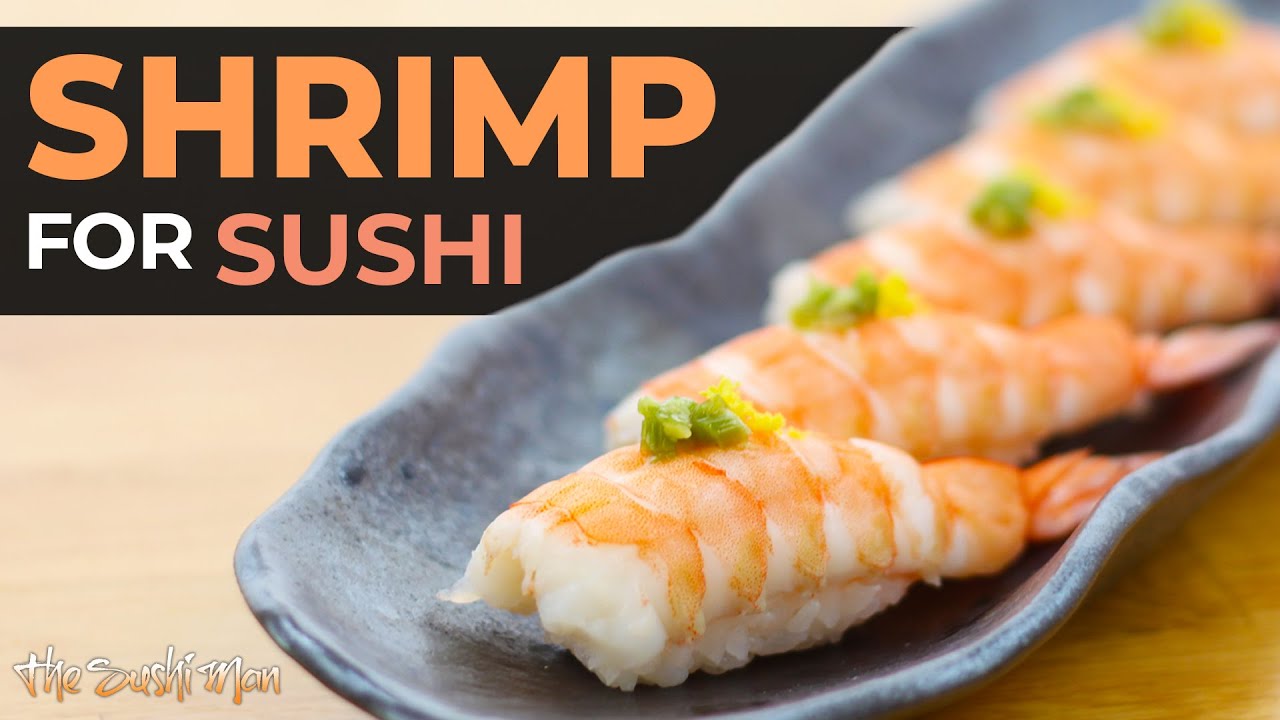
The preparation of cooked ebi nigiri is more involved than it looks. And it’s very different from how raw ebi varieties are handled.
The Kuruma Ebi Preparation Process
Master sushi chef Jiro Ono’s method calls for 3.5 to 4 minutes in boiling salted water. The bamboo skewer is the key step. Without it, the shrimp contracts and curves during cooking, making it impossible to lay flat over sushi rice.
Step by step:
- Insert bamboo skewer between shell and meat along the underside to keep it straight
- Plunge into boiling salted water until flesh becomes bouncy and color turns red
- Transfer to ice bath, cool just until the exterior is cold but interior is still warm
- Peel shell, butterfly along the belly, remove innards
- Serve immediately, tail intact for presentation
At Sukiyabashi Jiro, the tomalley (shrimp miso) from the head goes between the rice and shrimp. It adds richness and balances the wasabi. Most places skip this detail, which is part of why the same ingredient tastes so different across restaurants.
Kuruma ebi is served warm. Unlike other sushi proteins served at room temperature, the residual heat brings out its sweetness. Chefs split the meat open directly before service to preserve the aroma, which fades quickly once the flesh is exposed.
Preparing Raw Ebi (Ama Ebi and Botan Ebi)
No cooking. Freshness is everything here.
For ama ebi, freshness check: the flesh should look translucent and feel firm, not slimy. For botan ebi, the head should be pinkish-red with no dark spots. A darkening head signals age.
Botan ebi gets butterflied along the back, which lets the flesh spread across the rice for a dramatic presentation. Kuruma ebi, by contrast, gets cut along the front because its cooked, contracted flesh wouldn’t spread if cut from the back.
The fried head is served after the nigiri in most Japanese sushi bars. At omakase counters, this is a standard part of the sequence, not an add-on.
—
Ebi Nigiri vs. Ebi Rolls
Same ingredient. Completely different eating experiences depending on format.
| Format | Shrimp Type | Typical Additions | Texture Profile |
| Ebi Nigiri | Kuruma Ebi (Cooked) | Wasabi; sometimes tomalley | Springy, warm, and savory-sweet |
| Ama Ebi Nigiri | Ama Ebi (Raw) | Often topped with Ikura | Soft, creamy, and intensely sweet |
| Shrimp Tempura Roll | Any (Battered) | Cucumber, avocado, tobiko | Crunchy, rich, and filling |
| Ebi Maki | Cooked Shrimp | Minimal; traditional | Clean and straightforward |
Ebi Nigiri
The traditional format. Butterflied cooked shrimp over hand-pressed vinegared rice. Usually kuruma ebi at high-end Japanese restaurants. Outside Japan, most places use whatever cooked shrimp they source, often without specifying the variety.
It’s beginner-friendly. The shrimp is cooked, the flavor is mild and sweet, and it’s visually clear what you’re eating. Good entry point for anyone hesitant about raw fish.
The contrast between the springy shrimp and the slightly sour, soft sushi rice is actually what makes it satisfying. Neither element dominates.
Ebi Rolls and Maki
The shrimp tempura roll is the most common Western-style version. Battered and fried shrimp, usually with cucumber, avocado, and tobiko or masago. Sometimes tobiko gets swapped for masago depending on the restaurant’s sourcing.
Traditional ebi maki is simpler: cooked shrimp, nori, rice. No avocado, no sauce drizzled on top. The difference in simplicity is significant if you’ve only ever had the Western interpretation.
The shrimp tempura roll format also shows up in larger Western-style rolls (spider rolls, rainbow rolls, etc.) as a base ingredient. In those cases, the shrimp’s individual flavor gets partially obscured by everything else layered on top.
—
Ama Ebi: The Raw Shrimp Exception
Most ebi at a sushi bar is cooked. Ama ebi is the exception most people encounter first.
Ranked third among all favorite sushi types in Japan-Guide survey data, with 31% of respondents naming it a top pick. More popular with women than with men according to the same survey.
Why It’s Served Raw
Heat destroys what makes ama ebi worth ordering. The sweetness comes from amino acids glycine and alanine, both heat-sensitive. Cooking collapses that delicate flavor into something generic.
The sweetness isn’t there right after the shrimp dies. It builds over time through autodigestion. Proteins break down into amino acids over hours, which is why timing matters so much at the sourcing level. By the time the shrimp reaches a reputable sushi counter, the flavor has developed. That’s actually why fresh-caught isn’t always better here.
The Fried Head
Standard at most sushi bars that carry ama ebi. The head comes deep-fried, sometimes coated in potato starch, sometimes plain flour.
- Crispy exterior, rich and savory inside
- The brain is considered a delicacy at high-end Japanese counters
- Botan ebi heads are larger and considered even more flavorful when fried
Some diners find the fried head off-putting at first. Once you try it, it’s hard to leave on the plate. The texture contrast with the soft raw nigiri is genuinely good.
Sourcing and Availability
Ama ebi is found along Japan’s Sea of Japan coast, starting from Toyama Bay northward, and in cold Alaskan and Canadian Pacific waters. British Columbia spot prawns are the closest North American equivalent to botan ebi, while standard ama ebi from Alaska shows up across most North American sushi markets.
Availability shifts seasonally. Some sushi bars rotate it on and off the menu based on freshness. If you’re at an omakase counter and the chef doesn’t mention it, ask. Sometimes it’s available but not listed.
—
Nutritional Profile of Ebi
Shrimp is genuinely one of the more nutrient-dense proteins you can eat, especially relative to its calorie count.
Per 100 grams of raw shrimp: roughly 98-106 calories, approximately 20 grams of protein, and under 2 grams of fat (Nutrition Advance, USDA data).
| Nutrient | Per 100g (Raw) | Why It Matters |
| Protein | ~20g | Muscle repair, satiety, and metabolic health |
| Selenium | ~50mcg (57% RDI) | Potent antioxidant; supports immune function |
| Vitamin B12 | ~1.7mcg (69% RDI) | Neurological health and sustained energy |
| Phosphorus | ~306mg | Bone health and cellular repair |
| Iodine | Good Source | Essential for healthy thyroid function |
Selenium and Mercury
Shrimp contains lower mercury concentrations than almost any other seafood, according to Nutrition Advance. More notably, it has a selenium-to-mercury ratio above 1:1. Research suggests selenium plays a role in reducing mercury toxicity in the body.
That matters if you eat sushi regularly. The health profile of sushi varies significantly by ingredient, and ebi is on the safer end of the spectrum compared to larger fish like tuna.
Allergy Consideration
Shellfish allergy is one of the most common food allergies in adults. Tropomyosin is the protein responsible. Importantly, tropomyosin is sensitive to vinegar, which is why traditional preparation involving a brief vinegar marinade after boiling can reduce (but not eliminate) allergic reactivity.
Not a fix for someone with a diagnosed shellfish allergy. Just relevant context for understanding why traditional sushi preparation includes that step.
Calories Per Piece of Ebi Nigiri
A single piece of ebi nigiri runs roughly 35-50 calories depending on rice quantity and shrimp size. That’s on the lower end of the calorie range across sushi types. Ebi tempura rolls are a different story: batter and frying push a full roll toward 400-500 calories.
If you’re watching intake, nigiri ebi is a genuinely good choice. The tempura roll, not so much.
Ebi vs. Sakura Ebi vs. Shiba Ebi: Clearing Up the Confusion
Most sushi menus outside Japan just say “shrimp.” That one word covers wildly different products depending on where you’re eating.
The varieties that get confused most often are standard ebi (kuruma or ama ebi), sakura ebi, and shiba ebi. They’re not interchangeable.
| Type | Average Size | Primary Use | Global Availability |
| Standard Ebi | Medium to Large | Nigiri, rolls, tempura | High (Widely exported) |
| Sakura Ebi | Tiny ($4-5\text{cm}$) | Garnish, Gunkan, dried topping | Moderate (Usually dried) |
| Shiba Ebi | Small | Oboro (egg/shrimp paste) | Low (Mainly Japan) |
Sakura Ebi
Seasonally restricted. Sakura ebi (Lucensosergia lucens) can only be harvested in two places: Suruga Bay in Shizuoka Prefecture, and parts of Taiwan. Fishing runs spring (March-June) and fall (October-December). Summer is off-limits for conservation.
The pink color resembles Japan’s cherry blossoms, which is where the name comes from. Outside Japan, you’ll almost always find these dried, not fresh.
- Used in okonomiyaki batter, fried rice, and kakiage (vegetable tempura fritters)
- Rich in calcium, B12, and zinc according to Kikkoman’s ingredient guide
- Harvested at night and shipped the following morning when fresh
Shiba Ebi
Small bay shrimp, rarely served as nigiri. Primary use in Japanese cuisine: oboro, a sweet, finely shredded shrimp paste that appears as a garnish or filler in traditional sushi.
According to Sushi University’s reference guide, shiba ebi is described as “an essential ingredient in oboro but not often used in nigiri sushi.” That’s a pretty specific culinary role that most diners never encounter.
If a menu outside Japan says “shiba ebi,” ask questions. It’s almost certainly a different shrimp species using the label loosely.
Why Menus Rarely Clarify This
Standardized Western sushi menus don’t distinguish between varieties. The daily sourcing reality, where a Japanese chef might switch species based on what came in that morning, doesn’t translate to printed menus.
High-end omakase counters are the exception. At places like Sukiyabashi Jiro, the specific shrimp variety and size grade get explained verbally as part of the service.
If the variety isn’t specified on the menu and it matters to you, just ask. Most chefs at serious sushi bars are glad to tell you what they’re using.
—
How to Order Ebi at a Sushi Restaurant
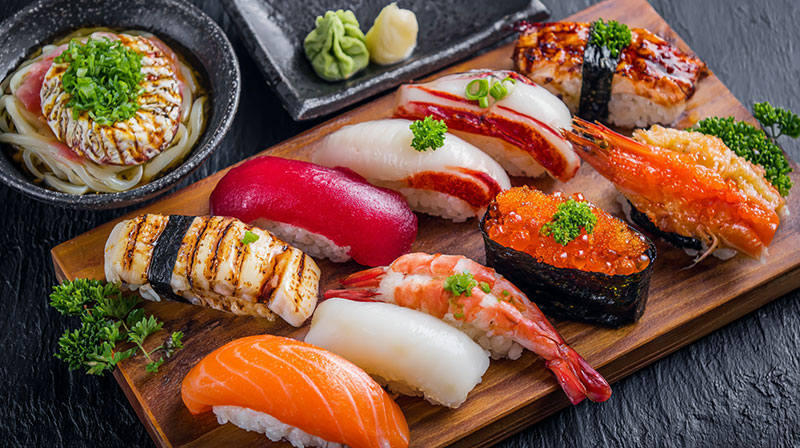
Ebi is one of the most straightforward things to order at any sushi bar. The terminology shifts slightly depending on the type of establishment.
At a Standard Sushi Bar
“Ebi” works at any Japanese restaurant. So does “shrimp nigiri” at Western-style sushi spots.
Key distinction: if you want the cooked version, you’re ordering standard ebi. If you want raw sweet shrimp, ask specifically for ama ebi or “sweet shrimp.” Many menus list them separately once you know to look.
- Cooked shrimp nigiri: standard ebi or “shrimp nigiri”
- Raw sweet shrimp: ama ebi, aka ebi, or “sweet shrimp”
- Large raw spot prawn: botan ebi (not always available)
In North America, most ebi at non-specialist restaurants comes from Southeast Asia, the Gulf of Mexico, or South America, according to The Japanese Bar’s sushi reference. The variety rarely gets specified.
At an Omakase Counter
Ebi is almost always included. At high-end omakase counters, kuruma ebi is standard. You don’t need to request it.
According to Tasting Table’s 2023 omakase guide, the chef’s tasting format (“I trust you, chef”) means the sequence and proteins are the chef’s call. Requesting specific ebi varieties is fine but usually unnecessary.
One useful question: ask whether the ama ebi head will be fried and served. Some counters include it automatically; others need the prompt.
Botan ebi sometimes appears on omakase menus seasonally. If it’s not mentioned, asking whether it’s available is completely normal. A good chef will tell you if it came in that day.
What to Ask About Sourcing
Freshness is everything with raw ebi. A few direct questions that work well:
- “Is the ama ebi fresh or previously frozen?”
- “Where does the botan ebi come from?” (BC spot prawns vs. Hokkaido vs. farmed)
Most reputable sushi bars will answer directly. If the answer is vague or the staff doesn’t know, that tells you something about sourcing standards.
The sushi restaurant industry in the US reached an estimated $33.2 billion in revenue in 2025, growing at an annualized 2.4% over five years (IBISWorld). More options mean more variation in quality. Knowing what to ask helps you find the better ones.
—
Ebi in Japanese Cuisine Beyond Sushi
Ebi shows up across Japanese cooking in forms that don’t look anything like a sushi counter. The same shrimp, treated completely differently.
Ebi Tempura
Tempura is a light batter (iced water, eggs, soft wheat flour) applied to shrimp and fried at high heat. The result is airy and crisp, not heavy.
Key difference from ebi furai: tempura uses a liquid batter. Ebi furai uses panko breadcrumbs, producing a thicker, golden crust. Outside Japan, the two get called the same thing constantly.
Tempura shrimp appears in several formats:
- Tendon: over rice in a bowl, with tentsuyu dipping sauce (dashi, soy, mirin)
- Tempura soba: alongside buckwheat noodles
- Inside maki rolls: the shrimp tempura roll is the Western staple
Tempura originated from Portuguese frying techniques introduced to Japan in the 16th century, according to Wikipedia’s tempura history. Ebi tempura became one of the “Edo Delicacies” alongside soba and sushi as street food in Tokyo.
Ebi Furai
Japan’s June 21 has been designated “Ebi Furai Day” by the Japan Anniversary Association, according to Ebi Furai history records from foodinjapan.org. The date comes from the shape of a curved shrimp resembling a “6” and a Japanese pun on “furai” (2-1).
The origin story is interesting. Ebi furai is widely associated with Nagoya, but the actual origin traces to Renga Tei, a Western-style restaurant in Ginza, Tokyo, established in 1895. The Nagoya connection started from a TV show mispronunciation that became cultural myth.
Served with tartar sauce or tonkatsu sauce. Found everywhere in Japan: school lunch boxes, family restaurants, izakayas, and high-end tonkatsu specialty shops that use kuruma ebi.
Ebi in Osechi Ryori
Osechi is Japan’s traditional New Year meal, served in lacquered jubako boxes over the first three days of January. Ebi is one of its centerpiece ingredients.
The symbolism is specific. A shrimp’s curved body and long antennae resemble an elderly person with a bent back and long beard. Eating ebi at New Year’s is a wish for long life. The kanji for ebi (海老) literally breaks down as “sea” and “old man.”
The red and white coloring of cooked kuruma ebi also matters. Red and white is Japan’s most auspicious color pairing, used to represent celebration and ward off evil spirits. Kuruma ebi placed in osechi boxes also carries this visual symbolism.
Ebi tempura on toshikoshi soba (New Year’s Eve noodles) serves a parallel purpose. The long noodles symbolize longevity; the shrimp tempura topping reinforces it. Regional customs vary, but in Tokyo specifically, ebi tempura on New Year’s Eve soba is standard practice according to Savvy Tokyo’s cultural guide.
Other Ebi Preparations
Ebi chili, a Chinese-influenced dish adapted into Japanese cuisine, features shrimp in a spicy-sweet chili sauce. It shows up regularly in Chinese-Japanese (chuka) restaurant menus across Japan.
Ebi also appears in nabe (hot pot) dishes, grilled as yakimono (grilled food), and inside datemaki, the sweet rolled omelette in osechi that’s made with mashed shrimp blended into the egg. Most diners eating datemaki don’t realize there’s shrimp in it.
Beyond Japan, ebi tempura has spread globally. It appears in Japanese food pairings across fine dining contexts, and shrimp tempura rolls are now a standard item at sushi restaurants from New York to London to Sydney. About 8 in 10 US consumers reported eating shrimp during the pandemic period, making it the most consumed shellfish category in the country (Rutgers/YouGov research, 2024). Ebi, in its various preparations, is a significant reason why.
FAQ on What Is Ebi In Sushi
What does ebi mean in sushi?
Ebi is the Japanese word for shrimp or prawn. In a sushi context, it refers to shrimp used as a neta (topping) in nigiri, inside maki rolls, or as sashimi. The term covers several distinct varieties, not just one species.
Is ebi raw or cooked?
Most ebi served in sushi is cooked. Standard ebi nigiri uses boiled, butterflied shrimp. The exception is ama ebi (sweet shrimp) and botan ebi, which are served raw due to their delicate sweetness that heat would destroy.
What does ebi taste like?
Cooked ebi is mildly sweet, slightly briny, and clean-tasting with a firm, springy texture. Raw ama ebi is softer and noticeably sweeter. Neither variety has any fishiness, which makes ebi a popular shrimp sushi choice for beginners.
What is the difference between ebi and ama ebi?
Standard ebi typically refers to cooked kuruma ebi (Japanese tiger prawn). Ama ebi is sweet shrimp served raw, with a creamy texture and more pronounced sweetness. They are different species prepared by entirely different methods.
Is ebi sushi healthy?
Yes. Shrimp provides around 20g of protein per 100g with only 98-106 calories. It is high in selenium, vitamin B12, and phosphorus. A single piece of ebi nigiri runs roughly 35-50 calories, making it a lean sushi protein option.
Can you eat ebi if you have a shellfish allergy?
No. Ebi is shrimp, a shellfish that contains tropomyosin, the protein responsible for most shellfish allergic reactions. Anyone with a diagnosed shellfish allergy should avoid all ebi varieties, whether cooked or raw.
What is kuruma ebi in sushi?
Kuruma ebi is the Japanese tiger prawn (Marsupenaeus japonicus), the benchmark shrimp in traditional edomae-style sushi. It is skewered, briefly boiled, and served warm. Wild specimens cost $40-$130 per kilogram and are rarely available outside Japan.
How is ebi prepared for nigiri?
A bamboo skewer is inserted along the shrimp’s underside to keep it straight. It is then boiled in salted water for 3.5-4 minutes, cooled in an ice bath, peeled, and butterflied before being pressed over sushi rice.
What is botan ebi?
Botan ebi is spot prawn (Pandalus nipponensis), a large raw shrimp served at high-end sushi bars. Sourced from Hokkaido or British Columbia, it is richer and sweeter than ama ebi. Its flavor peaks around 12 hours after harvest.
What wine goes with ebi sushi?
Light, crisp whites work best. Wine pairing with sushi generally favors low-tannin options. For cooked ebi nigiri, a dry Sauvignon Blanc or Pinot Grigio complements the shrimp’s mild sweetness without overpowering it.
Conclusion
This conclusion is for an article presenting what is ebi in sushi, and the core takeaway is simple: ebi is not one thing.
From the cooked kuruma ebi at a traditional edomae counter to the raw, creamy ama ebi with its fried head on the side, each variety has its own handling, flavor profile, and place in Japanese cuisine.
Knowing the difference between botan ebi, sakura ebi, and standard shrimp nigiri changes how you read a menu.
Ebi also carries real nutritional value, roughly 20g of protein per 100g with minimal fat, and a cultural weight that goes well beyond the omakase counter into New Year traditions and everyday Japanese cooking.
Order with more confidence. Ask what variety the chef is using. The difference matters.


