
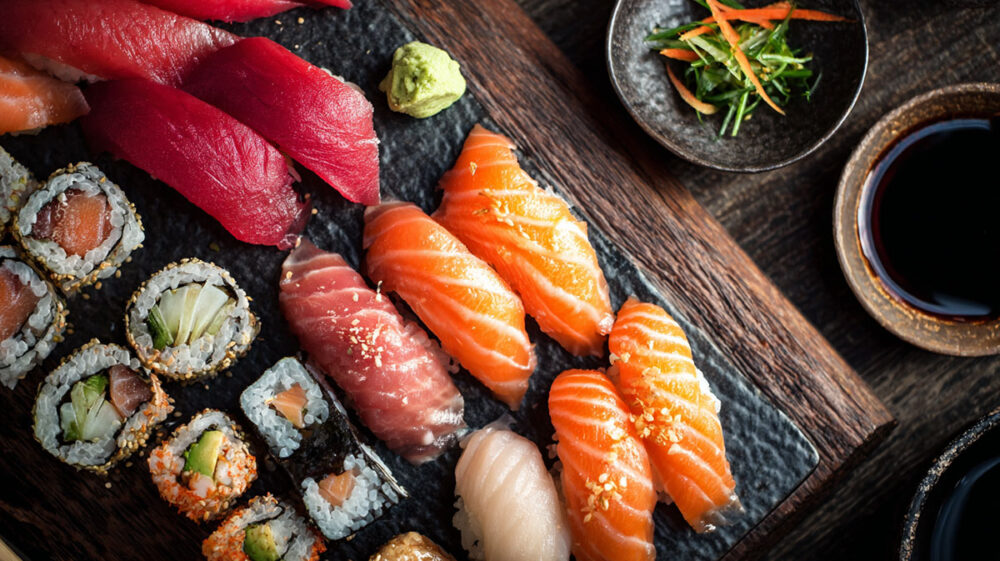
Raw fish and parasites go together more often than most sushi lovers want to know.
The short answer to does sushi have parasites is yes. Wild fish carry nematodes, tapeworms, and other parasitic larvae as a normal part of their biology. The real question is what happens to those parasites before the fish reaches your plate.
This article covers the specific parasites found in sushi fish, which species carry the highest risk, how FDA freezing requirements work, and what “sushi-grade” actually means for your safety. You will also find practical guidance on reducing parasite risk whether you are eating out or making sushi at home.
Parasites Found in Sushi Fish

Yes, raw fish used in sushi can carry parasites. It’s not a rare edge case. It’s a documented, well-studied reality of eating raw seafood.
Three main parasite groups show up in sushi fish: nematodes (roundworms), cestodes (tapeworms), and trematodes (flukes). Most human infections come from nematodes.
Anisakis simplex
The most common offender. Anisakis simplex is a roundworm (nematode) found in a wide range of saltwater fish. It’s behind the majority of parasite infections linked to raw fish consumption worldwide.
A University of Washington study found that Anisakis worms have increased 283-fold in abundance since the 1970s, raising public health concerns at a global scale.
- Lives in the muscle tissue and organs of marine fish and squid
- Larvae are roughly 2 centimeters long when uncoiled
- Infects a broad range of hosts: mackerel, herring, cod, salmon, squid
- Causes anisakiasis when live larvae are swallowed
Diphyllobothrium (Fish Tapeworm)
The fish tapeworm, primarily Diphyllobothrium latum and D. nihonkaiense, is the parasite most often linked to raw wild salmon. It’s a cestode, and it’s a different problem from Anisakis entirely.
D. nihonkaiense can grow up to 12 meters inside a human’s small intestine. CDC researchers confirmed its presence in wild pink salmon from Alaska, meaning Pacific salmon imported to restaurants across the U.S. and Europe can carry it.
- Spread through anadromous fish like Pacific salmon species
- Most infections are asymptomatic, discovered only when worm segments pass in stool
- Can persist in the body for decades if untreated
Other Parasites Worth Knowing
Gnathostoma spinigerum is a nematode found primarily in freshwater and some marine fish. Less common in sushi contexts, but infections have been reported in people eating raw fish dishes beyond Japanese cuisine.
According to Seafood Health Facts, trematode flukes like Nanophyetus salmonicola are also found in wild Pacific salmon and have caused confirmed human infections from raw fish.
| Parasite | Type | Primary Fish Host | Human Infection |
| Anisakis simplex | Nematode (Roundworm) | Salmon, mackerel, squid | Anisakiasis |
| Diphyllobothrium | Cestode (Tapeworm) | Wild Pacific salmon | Diphyllobothriasis |
| Gnathostoma | Nematode | Freshwater fish | Gnathostomiasis |
| Pseudoterranova | Nematode (Cod worm) | Cod, halibut, flatfish | Pseudoterranovosis |
How Common Are Parasites in Sushi-Grade Fish
This is where people get surprised. The short answer: parasite contamination in wild fish is common. Very common.
FAO data shows Anisakis prevalence reaching more than 75% in fresh commercial wild-caught salmon in the U.S. and nearly 100% in North Sea herring. Those numbers refer to unprocessed wild fish before any freezing or treatment.
Wild vs. Farmed Fish Infection Rates
Wild-caught fish carry significantly higher parasite loads than farmed fish. This is one of the most consistent findings across parasite research.
The European Food Safety Authority (EFSA) assessed farmed Atlantic salmon raised in floating marine cages and rated parasite infection probability as low. In contrast, EFSA also concluded that no marine fishing grounds anywhere in the world can be considered entirely free of Anisakis larvae.
- Wild salmon: High Anisakis and Diphyllobothrium risk, especially Pacific species
- Farmed Atlantic salmon: Low parasite risk, fed formulated pellets with no live prey
- Bluefin and yellowfin tuna: Lower Anisakis risk due to feeding habits and deep-water habitat
- Mackerel, herring, squid: Consistently high parasite prevalence in wild populations
Japan’s Reported Case Data
Japan gives us the clearest window into real-world infection rates because raw fish consumption is culturally central and reporting is better than most countries.
A 2022 study published in Emerging Infectious Diseases used Japanese health insurance claims data to estimate 19,737 anisakiasis cases annually, covering approximately 6% of Japan’s total population. Reported official figures were far lower, showing a significant gap between actual incidence and diagnosed cases.
Japan’s Ministry of Health data shows anisakiasis has consistently ranked first among all food poisoning causes since 2018, with 566 cases reported in 2022, 432 in 2023, and 330 in 2024.
Geographic Variation in Contamination
Parasite risk is not uniform across species or regions. Water temperature, marine mammal populations, and local fishing grounds all affect how much Anisakis a fish carries.
A 2024 study in Scientific Reports found that Spanish consumers eating untreated (non-frozen) raw anchovy consumed an average of 0.66 Anisakis per meal, with annual cases requiring medical attention estimated between 7,700 and 8,320.
In the Netherlands, a government mandate requiring herring to be frozen before sale virtually eliminated human anisakiasis in a country where it was previously widespread due to fermented herring consumption.
Health Risks of Eating Parasite-Infected Sushi
Most people who eat a parasite in sushi feel nothing. The worm dies, the body responds, and it passes. But that’s not always how it goes.
Anisakiasis: What Actually Happens
Analysis of 1,867 reported anisakidosis cases (published in Current Clinical Microbiology Reports, 2025) found that the most common symptoms were abdominal pain and nausea, typically emerging within 24 hours of consuming raw seafood.
The worm tries to burrow through the intestinal wall. It can’t penetrate fully, so it gets stuck. The immune system surrounds it, forming an inflamed mass that can cause severe pain, vomiting, and in some cases a partial bowel obstruction.
- Gastric form: sharp epigastric pain, nausea, vomiting within hours
- Intestinal form: lower abdominal pain, symptoms resembling appendicitis or Crohn’s disease
- Allergic form: urticaria, angioedema, or anaphylaxis in sensitized individuals
Diagnosis usually requires endoscopy. In most cases the worm is physically removed during the procedure. Surgical intervention is reserved for severe or complicated cases.
Tapeworm Infection from Raw Salmon
Diphyllobothriasis is sneaky. Most infected people have no symptoms at all for months or years.
When symptoms do show up, they typically include mild digestive discomfort, fatigue, and unexplained low B12 levels. The tapeworm competes for vitamin B12 absorption in the small intestine. Some patients only discover the infection when segments of the worm pass in their stool.
Treatment is a single dose of praziquantel. It works. But the infection can persist for decades if it’s never caught.
Who Faces Higher Risk
Higher risk groups:
- People with weakened immune systems (HIV, chemotherapy, autoimmune conditions)
- Pregnant women (advised by the FDA to avoid raw fish)
- Individuals who eat raw fish frequently, especially wild-caught species
- People with existing allergies, who face elevated risk of anaphylaxis from Anisakis
For healthy adults eating sushi from a properly run restaurant, the actual risk of symptomatic infection remains low, particularly in countries where freezing regulations are enforced. The U.S. has historically reported very few confirmed anisakiasis cases, in part because FDA freezing guidelines have been widely followed in commercial settings.
FDA Freezing Requirements for Raw Fish
This is the main defense against parasites in commercially prepared sushi. Freezing at the right temperature and for the right duration kills larvae. Full stop.
The Official Parameters
The FDA’s parasite destruction guidelines, established under the FDA Food Code, set specific time and temperature thresholds that must be met for fish served raw in ready-to-eat form:
| Method | Temperature | Duration |
| Standard Freezing | $-4^{\circ}\text{F}$ ($-20^{\circ}\text{C}$) or below | 7 days total |
| Hybrid Flash Freezing | $-31^{\circ}\text{F}$ ($-35^{\circ}\text{C}$) until solid, then $-4^{\circ}\text{F}$ ($-20^{\circ}\text{C}$) | 24 hours at final temp |
| Ultra-Cold Storage | $-31^{\circ}\text{F}$ ($-35^{\circ}\text{C}$) or below | 15 hours minimum |
Cooking fish to an internal temperature of 145°F (63°C) also kills all parasites. But that’s not relevant to sushi.
The Tuna Exception
Tuna gets a pass. The FDA exempts several tuna species from freezing requirements, including bluefin, yellowfin, albacore, bigeye, skipjack, and bonito.
The reasoning is species-specific. Tuna feed in deep, cold, open water and rarely encounter the intermediate hosts that carry Anisakis. Their muscle tissue also tends to be denser. Anisakis has rarely been detected in tuna flesh, which is why this exemption has held.
Compliance and Restaurant Obligations
Under the FDA Food Code (Section 3-402.12), restaurants that serve raw fish must either freeze the fish themselves according to the guidelines or obtain a written supplier statement confirming the fish was frozen to the required specifications. Records must be kept for 90 days beyond the date of service.
Aquaculture-raised fish like farmed Atlantic salmon may be exempt from the freezing requirement if the supplier confirms the fish were raised on formulated feed with no live parasites. Japan, by contrast, has no equivalent legally binding freezing mandate. Its approach relies on MHLW recommendations, chef expertise, and administrative consequences after the fact.
What “Sushi-Grade” Actually Means for Parasite Safety
“Sushi-grade” is marketing language. It has no legal definition. The FDA does not regulate the term, and there is no official certification process behind it.
What Suppliers Actually Mean by It
In practice, when a supplier labels fish as sushi-grade, they’re typically indicating one of two things: the fish was frozen according to FDA parasite destruction guidelines, or it comes from a species or aquaculture source considered low-risk for parasites.
It says nothing about freshness, texture, flavor quality, or where the fish was caught. A piece of tuna can be legally labeled “sushi-grade” with no freezing at all, simply because tuna is exempt from the requirement. Meanwhile, up to 30% of fish are mislabeled somewhere along the supply chain, according to industry research cited by Sushi Modern.
The Problem with Trusting the Label
The label is a starting point, not a guarantee.
- No third-party inspection is required to use the term
- No temperature logs need to accompany the fish at the retail level
- Visual inspection (candling) misses parasites embedded deep in dense or dark-colored flesh
- EFSA has confirmed that professional candling methods have limited reliability for comprehensive parasite detection
I’ve bought fish labeled sushi-grade from markets that couldn’t answer a single question about how it was stored or where it came from. That’s not unusual. Asking directly is always worth it.
How to Assess Supplier Practices
A few questions cut through the noise quickly. When sourcing raw fish, ask: Was this fish frozen, at what temperature, and for how long? Is this wild-caught or farmed? If wild-caught salmon, was it specifically frozen to FDA parasite destruction parameters?
Reputable suppliers have answers to these questions. Shops that sell fish for sushi-grade salmon purposes should be able to confirm freezing history in writing. If they can’t, treat the fish accordingly.
Fish With the Highest and Lowest Parasite Risk
Not all sushi fish carry the same risk. Species, habitat, and whether the fish is farmed or wild-caught make a real difference.
High-Risk Species
Wild-caught fish that feed on infected prey or spend time in freshwater carry the heaviest parasite burden. These are the species where proper freezing matters most.
- Wild Pacific salmon: Carries both Anisakis and Diphyllobothrium tapeworm; highest risk category
- Mackerel (saba): Consistently high Anisakis prevalence in wild populations
- Herring: Near 100% Anisakis prevalence recorded in North Sea wild herring
- Squid: Common Anisakis host; frequently implicated in anisakiasis cases in Japan
- Wild cod: High parasite prevalence; Pseudoterranova (cod worm) is a known contaminant
Lower-Risk Species
Bluefin tuna, yellowfin tuna, and most farmed fish fall into a much safer category.
Tuna’s lower risk comes from biology. They feed in open, deep-water columns and rarely encounter the crustacean intermediate hosts that carry Anisakis larvae. FAO data shows Anisakis has been essentially absent from aquaculture-raised salmon examined across multiple studies, because farmed fish are fed processed pellets that break the parasite life cycle entirely.
| Species | Risk Level | Key Reason |
| Bluefin / Yellowfin Tuna | Low | Deep-water habitat; rare contact with intermediate hosts. |
| Farmed Atlantic Salmon | Low | Strictly controlled pellet feed; no exposure to wild prey. |
| Wild Pacific Salmon | High | Complex life cycle; primary host for Anisakis and tapeworms. |
| Mackerel (Wild) | High | High documented Anisakis prevalence in the wild. |
| North Sea Herring (Wild) | Very High | Infection rates can approach $100\%$ in certain populations. |
| Farmed Sea Bream | Low–Med | Generally safer, but requires consistent monitoring. |
Freshwater Fish: A Hard No for Raw Consumption
Rainbow trout, perch, pike, and char should never be eaten raw. These species are primary hosts for Diphyllobothrium tapeworm larvae.
Freshwater fish are not typically used in Japanese-style sushi vs sashimi preparations, but they do appear in other raw or lightly cured dishes globally. Ceviche, carpaccio, and Scandinavian raw preparations have all been linked to tapeworm infections from freshwater species. Thorough cooking is the only safe option for these fish.
How Restaurants and Sushi Chefs Reduce Parasite Risk
Good sushi restaurants use layered controls, not a single fix. Supplier sourcing, commercial freezing, visual inspection, and chef training all work together to get parasite risk down to acceptable levels.
Commercial Freezing Protocols Before Service
Flash freezing is the most reliable method available. Commercial blast freezers bring fish to -40°F in roughly 14 hours, killing Anisakis and other nematode larvae in the process. Most reputable U.S. and EU restaurants rely on this happening at the supplier level before fish even arrives in the kitchen.
In Japan, the approach differs. As of 2022, freezing fish before raw consumption remains a recommendation by the Ministry of Health, Labour and Welfare, not a legal mandate. Japanese sushi chefs historically relied on trained visual inspection and fish expertise instead. That traditional approach works at the high end. It’s harder to guarantee at scale.
Candling and Visual Inspection: Useful but Limited
Candling involves holding fish fillets over a strong light source to spot parasites visible to the naked eye. Anisakis larvae are roughly 2 centimeters and curl into a coiled ring shape, making them detectable in translucent flesh.
The limitation is significant. Studies reviewed by EFSA and Sushi-Pedia confirm that professional candling methods have only limited reliability overall. Parasites embedded deep in dense or dark-colored flesh (salmon, tuna, octopus) are routinely missed.
- Candling works best on thin, translucent fillets like flounder or white-fleshed fish
- Belly flap trimming removes a high-concentration area where larvae accumulate
- Neither method meets regulatory standards as a standalone parasite control
Omakase vs. Budget Sushi Chains
The gap in fish handling between a high-end omakase counter and a fast-casual conveyor belt restaurant is real.
High-end omakase: direct supplier relationships, daily nightly shipments, whole fish graded by the distributor, chefs who have trained for years in species-specific inspection.
Budget sushi chains: typically rely on pre-portioned, previously frozen fish from centralized suppliers. This is actually fine from a parasite-safety standpoint, since commercial freezing is the most reliable kill step. The safety difference is not always in favor of “fresh” over frozen.
In Japan, a company called Japan Foods developed a 15,000-volt electrical pulse technology in 2021 that kills 99.9% of Anisakis in fish within a fraction of a second. As of 2022 it was still in experimental stages, but it shows where the industry is heading when visual inspection alone isn’t enough.
How to Reduce Parasite Risk When Eating or Making Sushi at Home

This is where most of the real-world risk actually lives. Restaurant compliance with FDA freezing rules is reasonably good in the U.S. Home preparation is a different story entirely.
Buying from Reputable Suppliers
The single most impactful decision is where you source the fish. A supplier who can confirm freezing history and temperature logs is meaningfully different from one who can’t answer the question.
What to ask your fish supplier:
- Was this fish commercially frozen to FDA parasite destruction specifications?
- Is this wild-caught or farmed? If wild, what species?
- Can you provide a written statement of freezing temperature and duration?
Japan imports most of its raw salmon from Norway and Chile as farmed Atlantic salmon, specifically because local wild Pacific salmon carries too high a parasite risk to eat raw. That sourcing decision is instructive. Farmed origin matters more than the “sushi-grade” label.
Why Your Home Freezer Is Not Enough
A standard home freezer runs between 0°F and 10°F. The FDA parasite destruction standard requires -4°F (-20°C) for 7 days. Most home freezers do not reach this temperature.
Seafood Health Facts confirms that home freezers may not be cold enough to reliably kill fish parasites, even after extended storage. Slow freezing also damages fish tissue through large ice crystal formation, making it poor quality for sushi even if the temperature were sufficient.
The practical answer for home cooks: buy fish that has already been commercially frozen and ask the supplier to confirm it. Do not rely on freezing supermarket fish in your home freezer and calling it safe.
Species Choices and Cooking as the Only Guarantee
Cooking fish to an internal temperature of 145°F kills all parasites. That’s the only method with a 100% success rate.
For home sushi makers who want to stay raw, a few practical choices reduce risk significantly:
- Choose tuna: bluefin, yellowfin, and albacore carry the lowest parasite risk of any common sushi fish
- Avoid wild salmon at home unless you have confirmed commercial freezing documentation
- Skip freshwater fish entirely: yellow perch, brook trout, pike, and similar species must be cooked to 145°F, no exceptions
- Consider farmed salmon from suppliers who can confirm aquaculture certification and pellet-fed rearing
A useful resource for understanding what sushi is made of and which ingredients carry different risk profiles is worth reading before you start buying fish for home preparation.
If you’re at all uncertain about the source, make the rolls with cooked shrimp, crab, or vegetables instead. How to make sushi at home with cooked fillings follows the same technique without the parasite question. The rolls taste just as good, honestly.
Cleveland Clinic notes that pregnant women, young children, older adults, and anyone with a compromised immune system should avoid raw fish sushi entirely. For these groups, the risk-benefit calculation simply doesn’t work out regardless of sourcing quality.
FAQ on Does Sushi Have Parasites
Does sushi actually have parasites?
Yes. Wild fish used in sushi can carry parasitic larvae, including Anisakis simplex nematodes and Diphyllobothrium tapeworms. Commercial freezing kills them before serving. Fish from reputable restaurants following FDA guidelines carries low parasite risk.
What parasites are found in raw fish?
The most common are Anisakis simplex (roundworm), Diphyllobothrium (tapeworm), Pseudoterranova (cod worm), and Gnathostoma. Anisakis is by far the most frequently linked to human infection from eating raw fish and sashimi.
Can you get sick from eating sushi?
Yes, but it’s uncommon in countries with strict freezing regulations. Anisakiasis causes abdominal pain, nausea, and vomiting within 24 hours. Most infections resolve on their own. Severe cases require endoscopy to physically remove the worm.
Does freezing fish kill parasites?
Yes. The FDA recommends freezing at -4°F (-20°C) for 7 days or -31°F (-35°C) for 15 hours. Both methods reliably kill Anisakis larvae and tapeworm cysts. Home freezers typically do not reach the required temperature.
Is farmed salmon safer than wild salmon for sushi?
Yes. Farmed Atlantic salmon raised on formulated pellets has a very low parasite risk because it never contacts infected wild prey. EFSA rates its infection probability as low. Wild Pacific salmon carries both Anisakis and Diphyllobothrium tapeworm risk.
Is tuna safe to eat raw?
Tuna is among the lowest-risk fish for raw consumption. The FDA exempts bluefin, yellowfin, albacore, and other tuna species from freezing requirements because Anisakis is rarely detected in their flesh due to deep-water feeding habits.
What does “sushi-grade” mean for parasite safety?
“Sushi-grade” is an unregulated marketing term. It has no legal definition in the U.S. It generally implies the fish was frozen to FDA parasite destruction specifications, but no certification process or third-party inspection is required to use the label.
Can you see parasites in raw fish?
Sometimes. Anisakis larvae are roughly 2 centimeters long and curl into a coil shape. They are visible in pale, translucent flesh but easily missed in dark-colored fish like salmon or tuna. Candling (backlighting fillets) helps but is not fully reliable.
Should pregnant women eat sushi?
No. The FDA and CDC advise pregnant women to avoid raw fish entirely. Beyond parasites, raw fish carries Listeria and other bacterial risks that pose serious harm during pregnancy. Fully cooked sushi options are the safe alternative.
Does wasabi or soy sauce kill parasites in sushi?
No. Neither wasabi, soy sauce, ginger, nor citrus-based marinades kill Anisakis larvae or tapeworm cysts. Only sufficient heat (145°F internal temperature) or validated commercial freezing reliably destroys parasites in raw fish.
Conclusion
This conclusion is for an article presenting the reality of parasitic worms in fish and what that means for anyone eating raw seafood regularly.
Wild-caught species like mackerel, herring, and Pacific salmon carry Anisakis simplex and Diphyllobothrium tapeworm larvae. Farmed Atlantic salmon and tuna sit at the opposite end of the risk scale.
Commercial freezing to FDA specifications remains the most reliable parasite destruction method available. The sushi-grade label means nothing without confirmed freezing documentation behind it.
Eating sushi safely comes down to sourcing, species choice, and trusting suppliers who can back their claims. Pregnant women and immunocompromised individuals should avoid raw fish entirely.
Know what you are eating. The risk is manageable when you understand it.


