
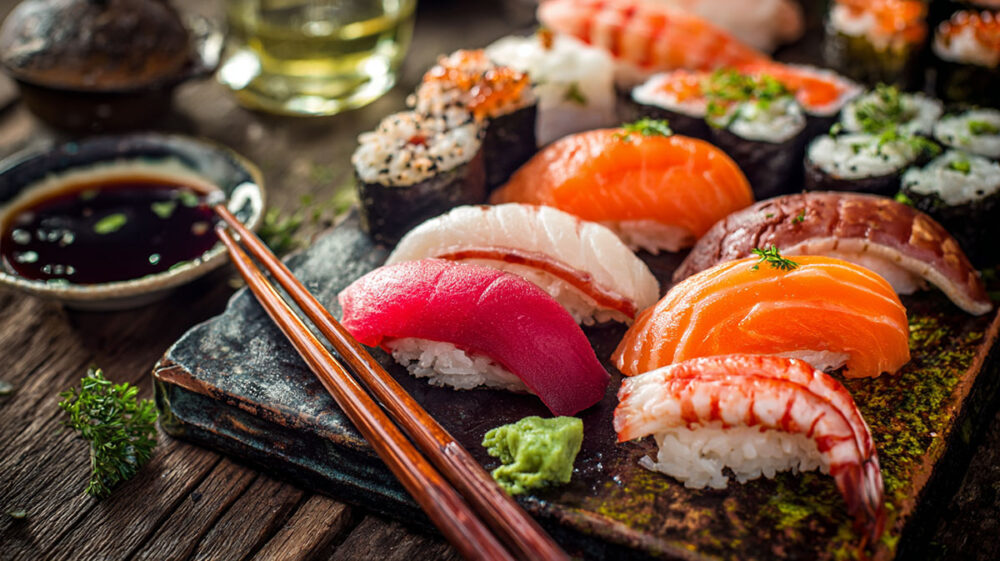
Most people order sushi and stop there. That’s a missed opportunity.
Knowing what to eat with sushi changes the entire meal. The right side dishes, condiments, and drinks don’t just fill the table. They protect the fish’s flavor, reset your palate between bites, and give the meal a structure that actually makes sense.
This guide covers everything from the three condiments served at every sushi table (and how most people use them wrong) to the drinks that clash with raw fish and why.
You’ll also find pairing advice broken down by sushi type, portion guidance, and the best desserts to close out the meal without undoing everything that came before it.
What “Eating With Sushi” Actually Means
If you’ve ever watched someone pile wasabi directly onto a nigiri and then wonder why the fish tastes like nothing, you already understand why pairing matters. Sushi is not a standalone appetizer you dress up with sides. It’s a complete meal format built around balance, and everything served alongside it either supports that balance or wrecks it.
There’s a real difference between three things people often confuse: condiments, accompaniments, and side dishes.
- Condiments (wasabi, soy sauce, pickled ginger): served at the table, used during eating
- Accompaniments (miso soup, edamame): ordered alongside, consumed before or between bites
- Side dishes (sunomono, seaweed salad): plated separately, eaten as part of the full meal
Japanese meal structure keeps flavor profiles intentionally light and neutral. The idea is that nothing at the table should compete with the fish. That’s why a traditional sushi meal rarely involves anything heavy, rich, or aggressively seasoned.
Tastewise data shows sushi is increasingly consumed as a meal set, with soup ranking as one of the top three dishes ordered alongside rolls and nigiri. Consumers aren’t just ordering sushi. They’re building a whole eating experience around it.
Understanding this framework first makes everything else on this page click. The “right” pairing isn’t about personal taste alone. It’s about what actually lets the sushi shine.
Condiments That Come With Sushi
These three show up on every sushi table. Most people use at least one of them wrong.
Soy Sauce
Purpose: Adds salinity and a mild umami boost without masking the fish.
Dip fish-side down, not rice-side. When you dip rice-side into soy sauce, the rice absorbs too much liquid and falls apart. You also oversaturate the bite. A quick, light touch on the fish is all it needs.
Low-sodium soy sauce is a solid option if you’re eating multiple pieces. Regular soy sauce adds up fast, especially across an omakase set.
Wasabi
Real vs. imitation: Most sushi outside Japan uses a paste made from horseradish, mustard, and green dye. Actual wasabi (Wasabia japonica) oxidizes within 15 minutes of grating and is rarely found outside high-end restaurants.
Apply it directly to the fish before eating. Mixing wasabi into your soy sauce is a habit, but it’s not what chefs intend. The ratios go off quickly and you lose control of how much you’re actually consuming.
A small amount goes a long way. The heat from real wasabi is sharp and clears fast. Imitation paste lingers longer and burns differently.
Pickled Ginger (Gari)
Gari is a palate cleanser, not a topping. Eat it between different types of sushi to reset your taste buds, not on top of a piece.
The pink color in most commercial gari comes from food coloring. Naturally made gari turns a pale beige or very faint pink from the young ginger itself. Both taste fine, but the natural version is noticeably less sharp.
| Condiment | Correct Use | Common Mistake |
| Soy Sauce | Light dip, fish-side down | Soaking the rice (breaks the structure) |
| Wasabi | Small amount directly on fish | “The Slurry” (mixing it into soy sauce) |
| Pickled Ginger | Palate cleanser between pieces | Eating it as a topping with each bite |
Side Dishes That Pair Well With Sushi
The global sushi restaurant market was valued at USD 9.52 billion in 2024 (Data Bridge Market Research), and the side dish culture has grown alongside it. What you order around your sushi matters almost as much as the sushi itself.
Miso Soup
The most classic sushi accompaniment. A 2003 epidemiology study in Japan found that people who eat miso soup daily show a lower risk of stomach cancer and heart disease (Yamamoto et al.).
Order it before your sushi, not after. It warms your stomach, prepares your palate for umami flavors, and works as a light hydration source between salty bites.
White miso (shiro): milder, slightly sweet, pairs well with delicate fish like flounder or sea bream. Red miso (aka): deeper and saltier, better alongside richer rolls or oily fish like salmon.
To learn more about this staple before your next sushi order, here’s a full breakdown of what miso soup actually is and how it’s made.
Edamame
Simple. Salted. Lightly steamed.
Edamame works as a neutral starter because it doesn’t introduce any strong flavors that compete with the fish. It’s also filling enough to take the edge off hunger while you wait for your sushi order.
The one thing people mess up: eating it too fast and filling up before the main event. Order one serving max for two people.
Gyoza
Pan-fried gyoza fits well at casual sushi restaurants. Not at omakase. The pan-seared exterior adds a mild crunch, and the filling (usually pork and cabbage) is light enough not to overwhelm your palate.
Steamed gyoza is the safer call if you’re ordering delicate sushi later. The fried version leaves a bit of oil on the palate that can dull the taste of subtle fish like white tuna or halibut.
Agedashi Tofu
Underrated. This deep-fried tofu served in a light dashi broth works well alongside sushi because the broth reinforces the same umami base already present in the meal.
It’s warm, soft, and low in competing flavors. Good for rounding out a sushi dinner without adding anything heavy.
Sides to Avoid
Heavy, oily, or aggressively seasoned dishes kill the sushi experience.
- Tempura (battered and fried) in large quantities leaves oil residue on the palate
- Ramen ordered alongside sushi creates flavor overload, the broth competes with everything
- Spicy wings or anything with heavy chili sauce numbs your ability to taste delicate fish
Soups and Broths That Work Alongside Sushi
Beyond miso, there are a few liquid accompaniments worth knowing. Most people outside Japan have never tried them.
Suimono (Clear Dashi Broth)
The most traditional option at high-end sushi restaurants. Suimono is a clear, delicate soup made from dashi stock, typically garnished with a small piece of seafood, a sliver of vegetable, and a sprig of mitsuba (Japanese parsley).
You won’t find it at casual sushi spots. It’s served at omakase counters and traditional kappo restaurants, usually as a palate cleanser between courses rather than a full side.
The flavor is subtle. That’s the point. It clears the palate without introducing anything new.
Clam Miso Soup (Asari no Misoshiru)
Clams add a second layer of oceanic flavor to the soup base, which creates a natural bridge to seafood-heavy sushi sets.
It’s a popular pairing in Tokyo sushi restaurants, especially with nigiri sets featuring shellfish like scallop or shrimp. The mineral quality of the clam broth echoes the taste of the sea in a way that plain miso doesn’t quite replicate.
| Soup Type | Best Paired With | Setting |
| White Miso (Shiro) | Delicate white fish, vegetarian rolls | Casual to mid-range |
| Red Miso (Aka) | Fatty fish, grilled items, spicy rolls | Casual to mid-range |
| Clam Miso (Asari) | Shellfish sets, rich seafood meals | Mid-range to upscale |
| Suimono (Clear) | High-end Omakase (between courses) | High-end only |
Salads and Vegetables That Complement Sushi
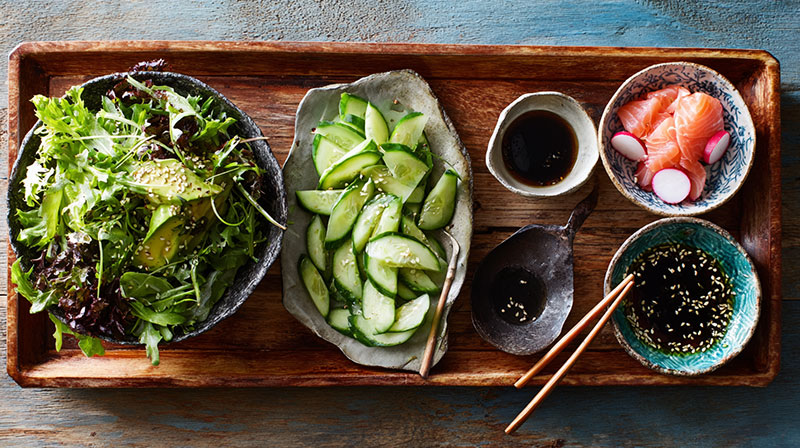
Plant-based sides do something that soups don’t: they add texture contrast and a different kind of freshness.
Sunomono (Cucumber Vinegar Salad)
According to Tastewise data, the fastest-growing consumer need around sushi is intense flavor, up 338% year over year. Sunomono cuts in the opposite direction, which is exactly why it works.
The vinegar base mirrors the seasoning in sushi rice. The cucumber is cool and crisp. Together, they act as a reset between rich or fatty pieces like toro or salmon belly.
Most restaurants serve it in small ceramic bowls. A little goes a long way.
Seaweed Salad (Wakame)
Wakame adds a chewy, oceanic texture that ties back to the sea flavors already present in the sushi.
Sesame oil is the usual dressing. It adds a mild nuttiness without being overpowering. This is one of the few sides where the flavoring actually reinforces the meal rather than competing with it.
Avoid versions loaded with artificial coloring. Bright green wakame has usually been dyed. The natural color is a muted olive-green.
Daikon Radish
You’ll often see it served shredded alongside sashimi. Raw daikon has a mild, slightly peppery bite that cleanses the palate in a similar way to pickled ginger, but without the sharpness.
It also has a high water content, which helps neutralize lingering fish oils on the tongue. Not flashy. Just effective.
Simple Dressed Greens
A light salad dressed with ponzu or sesame works at the start of a sushi meal. The acidity opens the palate.
Avoid heavy cream dressings or anything with a dominant flavor like blue cheese or Caesar. Those coat the mouth and make it harder to taste the fish accurately.
Drinks to Pair With Sushi
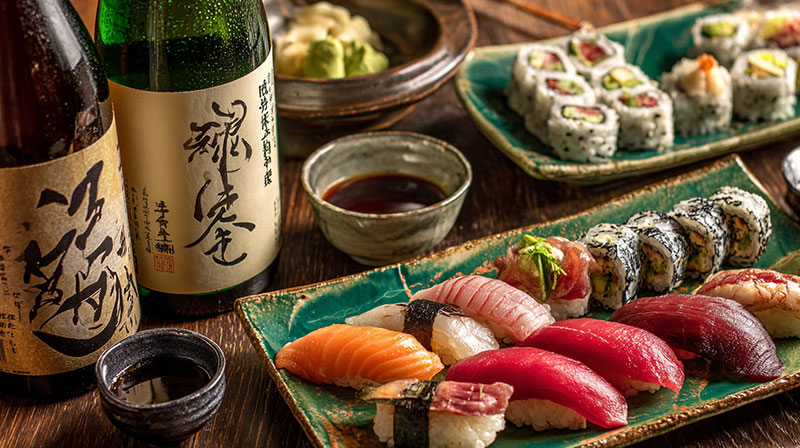
This is where most people either get it right instinctively or go completely off track. Red wine with delicate sashimi. Heavily sweetened cocktails with raw fish. I’ve seen it happen more times than I can count.
Green Tea
The default pairing, and for good reason. Hot or cold, green tea acts as a continuous palate cleanser between bites. The mild tannins cut through fat without introducing any flavor that competes with the fish.
Most sushi restaurants offer complimentary hot green tea (agari). Accept it. It’s not just a gesture. It’s functionally part of the meal.
Sake
In 2022, sake exports from Japan reached a record high of approximately USD 436 million, an 18% increase from 2021 (Japan Sake and Shochu Makers Association). Nearly 70% of Japanese restaurants in the U.S. serve sake as a menu item (Market Growth Reports, 2024).
For sushi pairing, drier styles work better.
- Junmai: earthy, fuller body, good with oily fish like mackerel or sardine nigiri
- Ginjo / Daiginjo: fruity, aromatic, pairs cleanly with white fish and shellfish
- Serving temperature: slightly chilled (around 10-15 degrees C) preserves the delicate aromatics
Japanese Beer
Light lagers. That’s the category. Sapporo, Asahi, Kirin. They’re engineered to be clean and neutral, which is exactly what you want alongside sushi.
Heavy craft beers, IPAs with aggressive hops, or anything with strong roasted malt flavors will overpower the fish. The bitterness lingers and gets in the way of tasting anything delicate.
White Wine and Sparkling Wine
If you’re thinking about which wine to pair with sushi, go dry, go high-acid, and go white or sparkling.
- Riesling: lively acidity, subtle sweetness, works with salmon and tuna
- Albarino: saline mineral quality, natural pairing for shellfish nigiri
- Sauvignon Blanc: citrus-forward, good with vegetarian rolls and lighter fish
- Champagne: the acidity and bubbles cut through fatty fish beautifully
Chablis deserves a specific mention. The mineral, chalky character of unoaked Chardonnay from that region is one of the cleanest pairings for ebi (shrimp) and hotate (scallop) nigiri you’ll find outside of sake itself.
Drinks That Clash With Sushi
Red wine is the most common mistake. Tannins bind to fish proteins and create a metallic, bitter taste. There’s no red wine that pairs well with raw fish, including lighter styles like Beaujolais. The chemistry just doesn’t work.
Other pairings to skip:
- Heavily sweetened cocktails (margaritas, sugary mojitos): the sugar coats the palate
- Orange juice and citrus-heavy drinks: too much acidity numbs the palate before you even start
- Anything with cream liqueur: fat-on-fat is too much alongside already rich fatty fish
What to Eat With Specific Types of Sushi
Not all sushi eats the same way. Nigiri, sashimi, and spicy rolls each have different fat content, texture, and flavor intensity. The pairing shifts accordingly.
| Sushi Type | Flavor Profile | Best Pairing |
| Sashimi | Pure, clean, delicate | Suimono, Ginjo sake, dry Riesling |
| Fatty Nigiri | Rich, oily, umami-heavy | Sunomono, Junmai sake, Champagne |
| Spicy Rolls | Bold, heat-forward | Nigori sake, Japanese lager, cool edamame |
| Vegetarian Sushi | Light, fresh, mild | Sauvignon Blanc, green tea, clear broth |
Sashimi
No rice means nothing to buffer the fish. Sashimi is the most naked form of the meal.
Keep everything alongside it light. Shredded daikon, a few shiso leaves, clear dashi broth. Ginjo sake is the most traditional pairing because its fruity, floral notes lift the fish without masking it.
Avoid anything acidic or heavily seasoned. The fish flavor has nowhere to hide, and a competing taste dominates the whole bite.
Fatty Nigiri (Toro, Salmon Belly)
Fatty fish like toro needs something that cuts through the richness. The fat coats the palate quickly, and without a cleansing element, the next piece tastes muted.
Best palate cleansers alongside fatty nigiri:
- Sunomono (vinegar cucumber salad): the acidity cuts cleanly
- Junmai sake: full-bodied, slightly acidic, works against the fat
- Brut Champagne: the bubbles and high acidity reset the palate between bites
Pickled ginger earns its spot here more than anywhere else on the menu. Use it between fatty pieces, not between a lighter white fish and the next piece.
Spicy Rolls
Spicy tuna, volcano rolls, anything with sriracha or spicy mayo falls into this category. The heat lingers, especially if you’re eating several in a row.
Cool, neutral sides work best. Edamame is the most practical: unseasoned, room temperature, gives your palate a break between bites. Nigori sake (cloudy, slightly sweet, unfiltered) balances the heat with its creamy texture.
Japanese lager is the casual crowd’s go-to. Carbonation cuts through the oil in the mayo, and the mild bitterness of the beer actually helps reset the spice level.
Vegetarian Sushi
Broader pairing territory. No fish oils, no strong umami. Cucumber rolls, avocado rolls, and inari sushi are sweet, fresh, and mild.
A citrus-forward Sauvignon Blanc highlights the green flavors in cucumber and avocado rolls without overpowering them. Sparkling water works just as well if you’re keeping it non-alcoholic.
How Portion and Meal Structure Affect Pairing
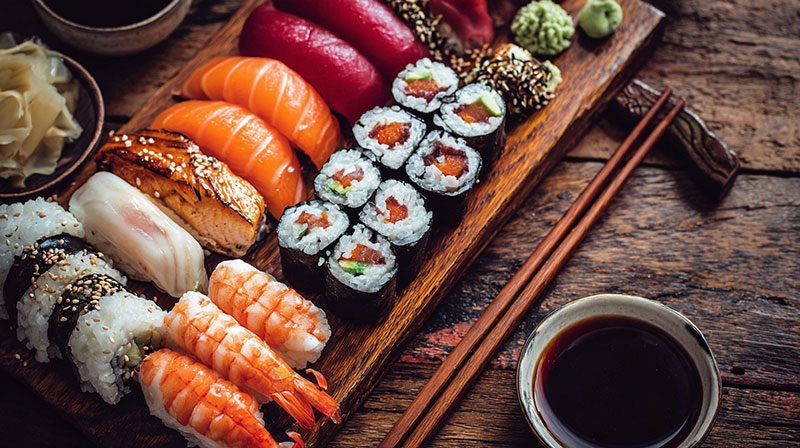
Easy Sushi’s portion guide recommends 8 to 12 pieces of maki per person for a full meal, plus 2 to 3 nigiri and 5 to 6 slices of sashimi if included. When you add sides into that equation, the sushi count should drop. The sides are doing work too.
Sushi as a Complete Meal vs. Part of a Spread
Sushi only: Higher piece count, minimal sides. One bowl of miso soup, edamame for the table. Clean and focused.
Sushi as part of a larger spread: Reduce the sushi order by about 30%. A seaweed salad, gyoza, and miso soup alongside a sushi set means you’re already well fed before you reach the 8-piece mark.
The mistake most people make is ordering sides as an afterthought. They arrive after the sushi and get eaten as leftovers. Order miso soup and edamame first, then sushi, then reassess whether you need anything else.
Ordering Sequence
Traditional Japanese sushi dining follows a clear order. Start light, build toward richer flavors, and end clean.
- Miso soup or clear broth first: warms the stomach, opens the palate
- Edamame or a light salad: neutral, fills the waiting period
- Sashimi before nigiri: lighter before richer
- Nigiri before rolls: traditional before fusion
- Pickled ginger throughout: between different fish types
- Light dessert or green tea to close
Sushi etiquette guidelines from Japan’s National Tourism Organization note that the traditional sequence starts with lighter dishes and progresses toward heavier items, allowing the diner to appreciate subtle flavors before bold ones arrive.
When to Stop Ordering Sides
One soup. One shared cold side. That’s the Japanese approach.
Loading the table with four or five sides defeats the purpose of eating sushi in the first place. The fish is the main event. Sides exist to support the experience, not compete with it or fill a Western-style expectation of a fully stacked table.
If you’re dining with more than four people, one extra shared side (like sunomono or seaweed salad) makes sense. Two soups for a table of six works. Beyond that, you’re in territory where the sides start undermining the sushi itself.
Desserts That Follow a Sushi Meal
Sales of mochi ice cream in North America exceeded 130 million units in 2024, up from 98 million in 2022 (Market Growth Reports). That growth tracks with what’s happening in sushi restaurants. Mochi has become the default dessert finish after a sushi meal, and it earns the spot.
Mochi Ice Cream
The chewy rice dough exterior and cold ice cream interior create a textural contrast that works well as a meal closer. It’s not heavy, and individual pieces are small enough that they don’t overwhelm a stomach that’s already carrying rice and fish.
Best flavors alongside sushi: matcha, mango, and lychee. Chocolate and vanilla work too, but they don’t carry the same connection to the meal’s flavor base.
Little Moons, the UK brand widely credited with driving mainstream mochi adoption in the West, reported revenues of PS53.4 million in 2023 and exports to over 35 countries (Uren Food Ingredients research). The format resonated because of its single-serving size and clean ingredient list.
Matcha-Based Desserts
The global matcha market was valued at USD 4.3 billion in 2023 and is growing at 7.9% annually through 2030 (Grand View Research). The dessert category is the fastest-growing application segment.
Green tea ice cream is the most familiar version for sushi diners. It’s bitter, creamy, and light enough not to feel like a second meal.
Matcha cake and matcha panna cotta are appearing more frequently on sushi restaurant menus. Both are low-sugar compared to Western desserts, which fits the overall restraint of a traditional Japanese meal.
Dorayaki
Two soft pancakes sandwiching sweet red bean (anko) paste. Traditional, not overly sweet, and directly rooted in Japanese food culture.
It doesn’t need explanation or dressing up. Eat it with green tea. That combination has existed in Japan for a long time and still works without any modifications.
Desserts to Skip
Anything heavy lands wrong after sushi.
- Rich chocolate cake: too dense after a rice-based meal
- Cheesecake: the fat-on-fat combination sits uncomfortably
- Deep-fried desserts like tempura ice cream: fried batter after raw fish is a texture mismatch
Fresh fruit is always a safe call if nothing else appeals. A small plate of sliced melon or mandarin cleans the palate, costs nothing calorically, and doesn’t compete with anything the meal already did.
If you want to explore more about what sushi actually is and how it’s made before your next restaurant visit, that context helps with every pairing decision covered here. Understanding the role of vinegared rice, the types of fish involved, and the balance the chef is aiming for makes it much easier to build a full meal around it rather than just ordering a roll and calling it done.
FAQ on What To Eat With Sushi
What soup goes well with sushi?
Miso soup is the standard. Order it before your sushi, not after. White miso suits delicate fish; red miso works better alongside richer, fattier pieces. Clear dashi broth is the traditional choice at high-end omakase restaurants.
What salad goes with sushi?
Sunomono (cucumber vinegar salad) is the most common pairing. Its acidity cuts through fatty fish cleanly. Seaweed salad dressed with sesame oil also works well, adding a mild oceanic note that ties back to the meal.
What vegetables go with sushi?
Shredded daikon radish is a classic. It cleanses the palate without introducing any strong flavor. Edamame works as a neutral starter, and pickled cucumber adds a light crunch between bites of richer nigiri.
What sauce goes with sushi besides soy sauce?
Ponzu is the most common alternative. It’s citrus-based, lighter than soy, and works especially well with white fish and scallop. Spicy mayo suits rolls but can mask delicate fish if overused. Yuzu kosho is worth trying with nigiri.
Can you eat sushi with rice?
Sushi already contains vinegared rice, so adding a separate rice dish doubles up on carbs unnecessarily. If you want something starchy alongside, a small bowl of plain steamed rice works better than a seasoned rice dish that competes with the fish.
What drinks pair best with sushi?
Green tea, sake, and light Japanese lagers are the traditional choices. Dry white wines like Riesling and Chablis work well too. Avoid red wine entirely. Tannins react badly with raw fish and leave a metallic taste.
What dessert goes with sushi?
Mochi ice cream is the most popular finish. It’s light, small, and doesn’t overload a stomach already carrying rice and fish. Matcha-based desserts like green tea ice cream or matcha cake also work well. Skip anything heavy or cream-rich.
Is it okay to eat sushi with bread?
Not really. Bread has no place in a traditional Japanese meal structure. It adds unnecessary bulk and its flavor competes with the clean, vinegared taste of sushi rice. Stick to Japanese sides like edamame or miso soup instead.
What appetizers go well before sushi?
Edamame, miso soup, and gyoza are the most common starters. Keep them light. Heavy or greasy appetizers coat the palate before you even reach the sushi. The goal is to open your appetite, not satisfy it before the main event.
What should you not eat with sushi?
Avoid heavy, oily, or strongly spiced dishes alongside sushi. Red wine, cream-based sauces, and anything with strong chili heat all interfere with the delicate flavor of the fish. Ramen ordered at the same time is also too much flavor in one sitting.
Conclusion
This conclusion is for an article presenting the full picture of what to eat with sushi, from condiments to dessert.
The core idea is simple. Every side dish, soup, and drink you order either supports the fish or gets in its way.
Miso soup before the meal. Light sides like sunomono or seaweed salad alongside it. Sake or green tea to drink. Mochi to finish. That structure works every time.
Pairing changes based on sushi type. Fatty nigiri needs acidity. Sashimi needs restraint. Spicy rolls need something cool and neutral.
Get the supporting elements right, and the Japanese dining experience clicks into place. The sushi does the work. Everything else just needs to stay out of its way.


